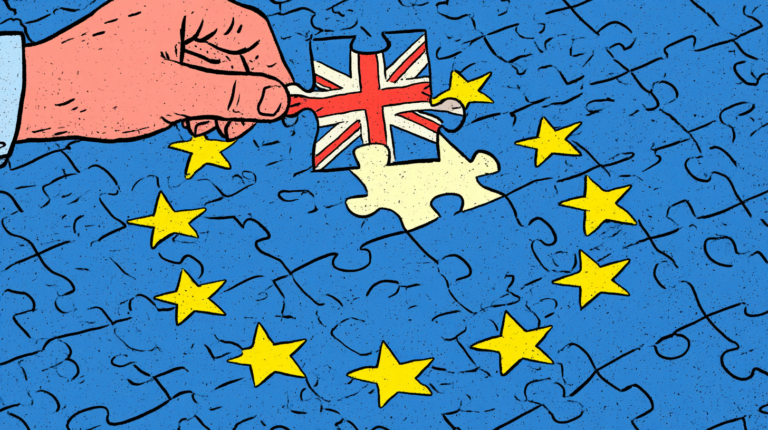

Britain is seeking closer integration with the EU.
When Andy Burnham took over for Keir Starmer as the UK’s Labour prime minister in July, he appeared to have a clear stance on Brexit. Though he believed that the country’s decision to leave the EU—voted for in a 2016 referendum and actioned four years later, in both cases under a Conservative government—had been “damaging,” he would not try to take Britain back into the bloc.
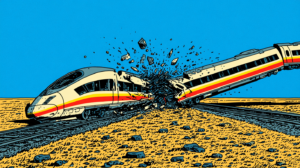
Ahead of a UK–EU summit in Brussels on November 20, however, Burnham has revealed plans to integrate more tightly with the EU. This Brexit backtrack—seen by many in the UK as prelude to rejoining further down the line—raises an important question about the result of the 2016 vote: Should it be seen as a hallowed decision, binding on successive British governments for at least a generation (like the Scottish independence referendum of 2014 was said to be)? Or would it be more beneficial for the UK to regard it as provisional, open to revision in the light of new evidence?
The UK–EU deal that will be announced at the summit spans agriculture, youth visas, and emissions trading. Border checks will be removed for fresh produce entering the EU from the UK, so that “entire truckloads” of goods (as Burnham put it) don’t spoil as officials quibble over paperwork; a reciprocal visa arrangement will enable British and EU citizens under 30 to live and work in each other’s territories; and Britain will join the “cap and trade” scheme, which makes companies pay for their pollution (in addition, London will pay the EU billions of pounds to avoid a cross-border carbon tax that takes effect in January). Brussels is also pushing London to hike tariffs on Chinese vehicles and drop a proposal to deport more European criminals to their countries of origin—although both of these remain under negotiation.
By seeking closer relations in these areas, Burnham claims that the UK economy will be boosted by £17 billion ($22.7 billion), equivalent to 0.4% of GDP. He is backed by Andrew Bailey, the governor of the Bank of England, who recently said that London would benefit from more open trading relations with its largest and closest external market. It’s a case that even the most diehard Brexiteers (a rapidly diminishing group) have trouble answering.
Ten years since the Brexit referendum, the recession predicted by many Remainers has failed to materialize. But so has the rosy future promised by Brexiteers, many of whom envisaged great things for a UK economy liberated from the cage of EU bureaucracy. A 2025 report for the US National Bureau of Economic Research found that the UK’s GDP is 8% lower than it would have been without Brexit, and that employment and productivity have both slumped by about 4%.
The pro-Brexit argument that leaving the EU would reduce bureaucracy has also been refuted. The Independent recently revealed that UK businesses have spent almost £8 billion ($10.7 billion) complying with post-Brexit trade regulations in the last four years. Department store M&S has reportedly hired a warehouse in which to store its paperwork. John Powell, chief executive of the British Meat Processors Association, told the paper that Brexit hadn’t freed UK companies from EU regulations, only forced them to prove their compliance “with a mountain of costly paperwork, certificates and checks.” Consequently, UK exports to and imports from the EU in 2025 were down 14% and 10%, respectively, compared to 2019 (the year before the UK finally left the bloc).
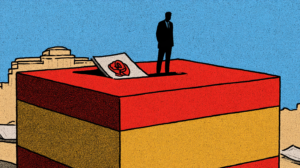
Burnham says that he’s responding to changing public opinion, rather than “running ahead” of a nation still confident that it made the right decision 10 years ago. In a phenomenon dubbed “Bregret,” polls since July 2022 have consistently shown that more than 50% of Brits think that Brexit was a mistake; as of June, that figure stands at 57%. A poll published that same month for the European Council on Foreign Relations revealed that three quarters of British voters want a closer relationship with Europe and that 52% would vote to rejoin if another referendum were held today. The authors claim that this shows “the folly of relying on how Brits voted in the 2016 referendum to understand their politics today,” and that the Leave/Remain division is outdated. Instead, they say, Brits now fall into one of three camps: “‘Optimists’ (for confident reintegration), ‘Realists’ (for negotiated closer relations) and ‘Loners’ (for continued distance).” Burnham falls somewhere between the first two categories, as apparently do most British voters.
Why, then, cling to a status quo that is reducing the UK’s competitiveness? Conservative leader Kemi Badenoch has criticized Burnham for “unpicking the deal this country signed with the EU a decade after the referendum,” and revealing “his entire negotiating hand” ahead of the EU–UK summit. She insists that he won’t improve on the free trade agreement signed between London and Brussels in 2020, which according to then-Conservative Prime Minister Boris Johnson enabled Britain to regain “control of [its] laws and [its] destiny.” While it’s true that Burnham could improve his negotiating skills, the UK clearly isn’t prospering under the 2020 deal (as for law, “large swathes” of EU legislation remain on Britain’s statute book, according to experts). Nor does that agreement cover new trading and economic realities.
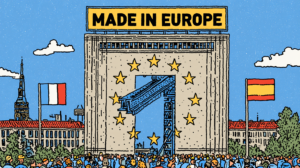
The most important of these is Brussels’s “Made in Europe” initiative. Announced in March, it aims to boost key European industries such as steel and energy by placing low-carbon and/or EU-made requirements on products bought by European public authorities, or manufactured with EU subsidies. This has started a debate about what counts as “Made in Europe,” and whether the UK, which has maintained a free trade relationship with the bloc since leaving, should be included. Citing the damage that exclusion would do to the UK’s car industry, Burnham has proposed subsidizing fees for European students at British universities in return for inclusion. If this deal goes through, Brussels will emerge the winner: shutting out the UK from the EU’s automotive industry would likely damage European manufacturers, too, so Burnham could probably have offered less.
Six years ago, Boris Johnson talked as if the UK’s “destiny” (whatever that is) could be realized independently of integration with Europe. But for many UK businesses, Brexit has proved an encumbrance rather than a liberation. Bregret is a reflection of the fact that the decision to leave was made in a world very different from today’s. Burnham’s proposed reset looks to the future; its opponents are living in the past.