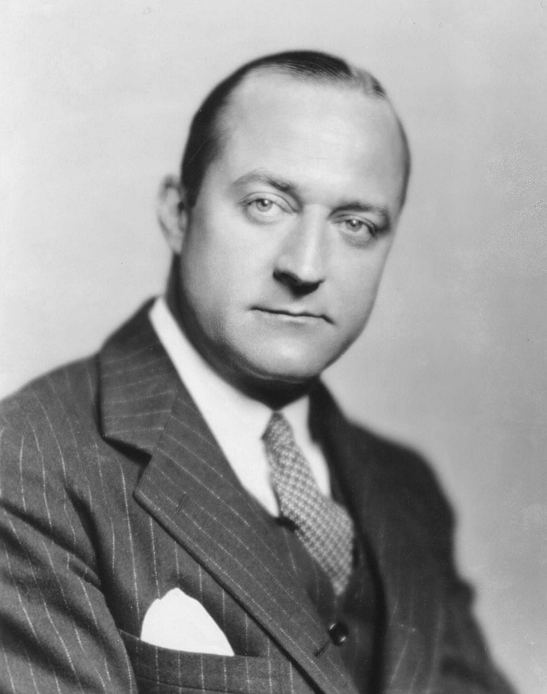
Henry Hazlitt, noted economist, author, editor, reviewer and columnist, is well known to readers of the New York Times, Newsweek, The Freeman, Barron’s, Human Events and many others. Best known of his books are Economics in One Lesson. The Failure of the “New Economics,” The Foundations of Morality, and What You Should Know About Inflation.
For the first time in the history of the world, practically every country is on a paper money basis and every country is inflating. It is instructive to recall how this has come about.
For a full explanation, we must go back at least 63 years to the outbreak of World War I in 1914. The first thing that happened, almost on the day the war broke out, was that the belligerents suspended the convertibility of their currencies into gold.
It is important to remember why they did this. They did not do it because they suddenly discovered that gold was out of date, that it was a “barbarous relic,” that a paper standard was altogether more modern, efficient, and scientific. They did it, on the contrary, because gold had suddenly become too valuable. It was a precious war resource. The belligerent governments knew they would need it to buy arms and food from neutrals abroad, and that gold was the only currency other countries would accept. They found this out very quickly. England, for example, declared war on Germany on August 4. A run developed on the Bank of England. The gold reserve, which had been £38.6 million in July, was pulled down within a few days to £26 million. Convertibility was suspended on August 5. In addition, export controls were imposed on gold.
On Again, Off Again
When the First World War ended, some of the belligerents went back to the gold standard. England again is the outstanding example of the problems of doing this and of the mistakes that were made. Resumption of gold payments was undertaken—at the pre-war rate for the pound—in 1925. But two greatly changed circumstances were overlooked. First, there had been an enormous expansion meanwhile in the issuance of British currency and credit—that is, in the amount of paper promises that people might want to convert into gold. And second, as a result of that, prices had risen substantially. If in 1925 the currency had been made convertible only at a correspondingly higher “price” for gold, the resumption of gold payments might have worked. But the resumption at the old rate made gold too much of a bargain, and forced a contraction of British credit and a fall in prices.
In September, 1931, England went off the gold standard once again. The U.S. likewise abandoned the gold standard, at its old rate of $20.67 an ounce, in 1933. Unfortunately, it was not the war and postwar inflations in both countries that were blamed for this result, or the ill-advised retention of the old gold-conversion rates, but the gold standard itself.
When the Second World War broke out, in September, 1939, many of the world’s currencies were again thrown into chaos, and for substantially the same reasons as in World War I. But this time, before the war had even ended in May, 1945, the representatives of some 43 nations were invited by the United States to a conference at Bretton Woods, New Hampshire, to try to set up a new international currency system.
A Tenuous Link to Gold
What they set up, under the leadership of Lord Keynes of England and Harry Dexter White of the United States, was a compromise designed to please the advocates of paper money, “flexibility,” and “national independence” or “self-determination” of currencies, but at the same time to reassure conservatives that these currencies would retain a “link” to gold. The supposed great merit of the new system was that the monetary role of gold—the “tyranny” of gold—would be drastically reduced.
Only one currency, the U.S. dollar, would have to be convertible into gold—and even then no longer at the demand of anybody who held dollars, but only at the request of foreign central banks. All the other currencies were to be kept convertible merely into the dollar. With the dollar anchored to gold, and all the other currencies tied to the dollar, stability was to be assured, and the need for gold reserves to be minimized.
The system seemed to relieve every other country but the United States from strict monetary discipline. If any country got into trouble, it was assured almost automatic loans and credit to bail it out. The agreement also provided that any nation could at any time devalue its currency by up to 10 per cent, and explicitly stipulated that “the Fund shall raise no objection.” The real but unstated and unacknowledged purpose of the Bretton Woods Agreements, as the present writer pointed out at the time (in The American Scholar, Winter 1944-45) was “to make resort to inflation easy, smooth, and above all respectable.”
Signs of Breakdown
As early as 1949 the system started to break down. The British pound was devalued 30 per cent on Sept. 18 of that year—from $4.03 to $2.80. Twenty-five other currencies were devalued within the following week. In succeeding years there were literally hundreds of devaluations of currencies in the Fund.
What had been overlooked from the beginning was the enormous increase in the burden and responsibility that the Bretton Woods arrangements put upon the United States. For the other countries could hold dollar reserves on the assumption that this was just as good as holding gold. But their currency stability was, in fact, made dependent on the soundness of the dollar.
Yet successive U.S. governments remained completely oblivious of the gravity of the responsibility we had assumed. Our officials kept undermining the dollar—by foreign aid, huge domestic spending, chronic and mounting budget deficits, and by pushing down domestic interest rates and increasing the money supply. By 1968 we had practically ceased keeping the dollar convertible into gold, even for central banks. And on August 15, 1971 we abandoned the gold standard openly and officially.
Our repudiation of our solemn commitment was followed by mounting inflation, devaluations, and monetary demoralization everywhere. There seemed no longer any point in maintaining fixed exchange rates. There was not even any agreement on what they could be fixed to.
At the end of this article I append three tables, published over a 20-year period by Citibank (formerly First National City Bank of New York) in its Monthly Economic Letter.
What I have labeled Table I appeared in the bank’s letter of December, 1956. It shows the depreciation of the purchasing power of money in each of 16 countries listed, in the ten years from 1946 to 1956, as measured by the rise in official cost of living figures. The third column calculates the annual rate of depreciation in those years, compounded.
The bank’s original purpose in making this calculation was to show how much annual interest a saver in each country would have had to receive, and reinvest at compound interest, to have the same amount of purchasing power in 1956 as he had in 1946. In nearly every country, the table revealed, if he had bought and held his own government’s bonds, he would not only have received no net interest, but would have lost heavily on his real principal.
Table II, published in the bank’s monthly letter of July 1967, shows the depreciation of the purchasing power of the money of 45 countries. It carries the record from 1956 to 1966. In addition, it calculates the annual rate of currency depreciation in each of these countries during the ten years 1956 to 1966.
Table III, which appeared in the September 1976 letter, compares the purchasing power of money for 50 countries-25 industrial countries and others in Europe, and 25 “less developed” countries—from 1965 to 1975. It also calculates their annual rate of depreciation for the five years 1965 to 1970, and for the five years 1970 to 1975.
Depreciation Rates Compared
From these tables the interested reader can calculate the approximate depreciation over the full 30-year period of any one of at least 16 of these currencies, and the 20-year depreciation of most of the rest. I had originally intended to consolidate these three tables into a single one, but it seems to me more instructive to present them separately in their original form, because much more is brought out by comparisons between them, and consolidated tables would add little of importance.
What the three tables show is not only that for nearly all these countries the inflation is at least 30 years old, but that its long-term tendency has been to accelerate rather than diminish. In the ten years 1946 to 1956, the median depreciation among the 16 currencies included in the table was 4.3 per cent a year. In the next ten years-1956 to 1966—the median depreciation among the 45 currencies included was still only 3.4 per cent per year. In the five years from 1965 to 1970, however, the median annual depreciation among the currencies of 25 industrial countries was back to 4.4 per cent and of 25 less developed countries to 4.2 per cent. And in the five years from 1970 to 1975 the median annual depreciation among the industrial countries had risen to 8.5 per cent, and among the less developed countries to 10.3 per cent.
I have compared the median rates of currency depreciation in these four periods—that is, the annual rate of depreciation in the middle country in each table—because to have figured and presented the average annual rate of depreciation shown in the respective tables would have given a much exaggerated impression of the extent of the general worldwide inflation. To cite only the median depreciation, on the other hand, greatly understates what has happened. In the first decade listed-1946-1956—for example, the Chilean peso lost 95 per cent of its value. In the second decade-1956-1966—the Brazilian cruzeiro lost 98 per cent even of its 1956 value, though it had already lost 74 per cent of its 1946 value in the preceding decade. Then in the decade 1965-1975 the Chilean and Argentine pesos lost more than 99 per cent even of their appallingly shrunken 1965 purchasing powers. Few of us can adequately conceive the extent of the tragedies that these depreciations brought to millions of families in the countries involved.
A Bad Example
In one regard, the generally increased worldwide rate of inflation since 1970 was what might have been expected. For when the United States abandoned convertibility of the dollar into gold, it not only set an example in itself demoralizing, but it left no fixed standard for other currencies to hook themselves on to.
(The Special Drawing Rights—SDRs—issued by the International Monetary Fund, had never been directly convertible into gold, and they were quickly revalued as a daily-fluctuating average or “market basket” of sixteen paper currencies, each itself hourly changing.)
But the American desertion of gold convertibility in 1971 was, of course, merely an additional cause of a worldwide inflation that had been going on ever since the outbreak of World War II. That inflation started when the governments directly involved had to increase their budget expenditures at almost any cost in order to prosecute the war. But when the war was over, they did not prudently return to their previous level of expenditures. They had also enormously increased their tax revenues, even if not proportionately to their war expenditures, and instead of cutting taxes back to peacetime levels, they increased or added all sorts of “welfare” measures—mainly vote-buying handouts to pressure groups—to make use of the new revenues. What no one sufficiently realized was that once these welfare measures were established, it would come to be regarded as political suicide by the politicians in power to attempt to cut them off or even diminish them.
There has been still a third reason for the increasingly widespread inflation in recent years. The Bretton Woods Agreements, as we have seen, gave explicit sanction to devaluation—provided it did not exceed 10 per cent in any single step. Now when Alphasia, which borders on and does a lot of trade with Betavia, devalues, a first effect is for the citizens of Alphasia to in crease their exports to Betavia, and o reduce their imports from it, because immediately following the devaluation the cost of Alphasia’s goods are lower in Betavia and the cost of Betavia’s goods are higher n Alphasia. But this means that Aphasia’s devaluation can seriously unbalance and disrupt Betavia’s trade. This may lead Betavia to declare a “protective” devaluation. The only thing that seems likely to diminish such competitive devaluation, if not to bring it to a Malt, is an increasing recognition within each country that the supposed trade “advantages” of a devaluation are both transitory and illusory; and that the great body of the citizens of the country that either initiates or follows the practice are in the long run hurt far more than helped by it.
Cure for Unemployment
But on top of all these there has been still a fourth major reason for worldwide inflation. This is the fixed idea that inflation is necessary to prevent or reduce unemployment. To the extent that there is any truth in this, it is true only for one season: As long as the special legal immunities and privileges now granted to labor unions in most countries enable those unions to exact wage-rates higher than the ex-sting market can sustain, more inflation—higher prices—will seem necessary to make the higher wage-rates payable. Otherwise-as I have shown elsewhere the belief in the necessity for inflation as a remedy for unemployment has no real basis.
Lord Keynes gets perhaps too much credit-or blame-as the inventor of this myth. When his General Theory of Employment, Interest, and Money appeared in 1936, our own government, for one, had already been following policies of uninterrupted deficit spending for six fiscal years. Keynes’s theories simply supplied a more elaborate rationale to justify what politicians had already been doing. But his authority and prestige prolonged and intensified the disease.
|
Country |
TABLE I Indexes of value of money* 1946 1956t |
Annual depreciation, compounded |
|
|
Switzerland |
100 |
86 |
1.5% |
|
Germany |
100 |
72 |
3.2 |
|
India |
100 |
72 |
3.2 |
|
United States |
100 |
71 |
3.4 |
|
Venezuela |
100 |
70 |
3.5 |
|
Netherlands |
100 |
67 |
4.9 |
|
Canada |
100 |
65 |
4.2 |
|
South Africa |
100 |
65 |
4.2 |
|
Sweden |
100 |
65 |
4.3 |
|
United Kingdom |
100 |
65 |
4.6 |
|
New Zealand |
100 |
59 |
5.2 |
|
France |
100 |
58 |
6.5 |
|
Mexico |
100 |
47 |
7.4 |
|
Australia |
100 |
46 |
7.5 |
|
Brazil |
100 |
26 |
12.7 |
|
Chile |
100 |
5 |
25.3 |
|
Note: depreciation computed |
from unrounded data. |
||
|
*Measured by rise in official cost of living or consumers’ price index. |
|||
|
1-Latest month available. 81947 #1948. |
|||
|
TABLE II Indexes of value of money Country 1956 1966 |
Annual depreciation, compounded |
||
|
Guatemala |
100 |
100 |
0.0% |
|
Venezuela |
100 |
90 |
1.1 |
|
Honduras |
100 |
86 |
1.5 |
|
United States |
100 |
84 |
1.8 |
|
Luxembourg |
100 |
83 |
1.9 |
|
Canada |
100 |
82 |
2.0 |
|
Australia |
100 |
82 |
2.0 |
|
Greece |
100 |
81 |
2.1 |
|
Thailand |
100 |
80 |
2.2 |
|
Belgium |
100 |
80 |
2.2 |
|
South Africa |
100 |
80 |
2.2 |