
Old rules for new screens.
If a regulator struggles to decide whether a live transmission on YouTube should be considered “television,” the real problem may not be the platform, but the rules and the state’s insistence on continuing to apply them.
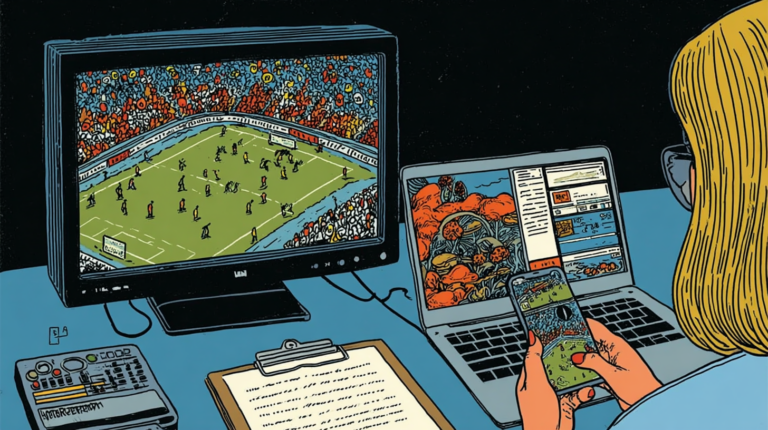
During the 2026 FIFA World Cup, the Brazilian company LiveMode broadcasted 34 matches for free on YouTube, including every game played by the Portuguese national team, using an advertising and sponsorship-funded model. The initiative drew strong audiences. Yet the company found itself caught in regulatory bureaucracy.
Portugal’s media regulator, the ERC, first classified it as a web TV service and later as an on-demand audiovisual service. The problem is that each classification determines the legal regime that applies and the obligations the company must meet.
This raises a broader issue: whether Europe’s audiovisual framework still reflects today’s digital media landscape, or whether regulators are trying to force new business models into legal categories designed for a completely different technological era.
For most of the 20th century, television regulation had a relatively solid justification. Radio spectrum was scarce. In a genuine context of scarcity, licensing and certain obligations could reasonably be defended as a way to manage a limited resource.
The Internet destroyed that premise. Content distribution no longer depended on scarce infrastructure, and the cost of reaching audiences collapsed. The original justification for state intervention largely disappeared. Instead of recognizing this change and reducing the scope of regulation, the European state did the opposite.
The Audiovisual Media Services Directive (AVMSD) and its national transpositions continue to operate with categories created for the age of scarcity. Whenever a new distribution model appears, the automatic response is to find which legal box it can be fitted into and which obligations can be attached to it.
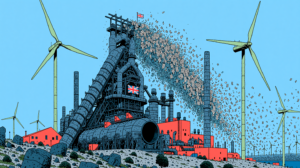
The same impulse appears in the United Kingdom, where the government proposed requiring private platforms such as YouTube to give greater prominence to BBC content. This is a morally questionable measure: taxpayers are required to fund, through the television license fee, a public channel that the state, acting as both regulator and content producer, now seeks to impose by administrative means on private platforms.
In both cases, the state acts as though the original justification for its intervention (spectrum scarcity) has not disappeared, and its claim to continue organizing the content market remains necessary.
In a free society, state intervention in private economic activity should not be the rule, but the exception that must be justified. This does not mean that no regulation makes sense. Clear rules on the protection of minors, commercial transparency, or competition can remain legitimate.
The problem arises when the original market failure no longer exists and yet the scope of rules created for a different context is maintained or automatically expanded. These rules end up functioning as barriers to entry for new operators. They impose compliance costs such as registration, legal advice, and possible financial contributions that large platforms can absorb. For small companies starting out or experimenting with a new model, those costs weigh much more heavily.
The result is less competition and willingness to experiment with different formats. For consumers, this means fewer alternatives, especially free or lower-cost ones, and a market increasingly dominated by the same large players.
The frequent rhetoric of “public interest” and “pluralism” ends up, in practice, protecting those already established and reducing the options available to the public.
We see this in both the LiveMode case and the British proposals. In Portugal, the regulator focused on classifying and reclassifying a free transmission, creating a process that the company was forced to accept and did so under protest.
In the United Kingdom, the response to technological change was to propose requiring private platforms to prioritize content from a public channel. In neither case did the process begin with a clear demonstration that those specific obligations still address a concrete and proportionate problem for consumers.
Before applying rules created for 20th-century television to new distribution models, regulators should be required to show that those rules still serve a clear and justified public interest. If they cannot do so, the presumption should favor the freedom to experiment rather than the automatic expansion of regulatory power.