
Will environmental regulations signal the end of the Single Market?
After World War II, a group of European countries had an idea for rebuilding their economies: tear down the trade barriers between them by eliminating customs tariffs and allowing goods, people, services, and capital to move freely. The idea of a single market eventually became reality and grew into one of Europe’s greatest achievements of the 20th century.
Starting in 1993, a small business owner in any EU member state could sell to another member state without having to face new bureaucratic or financial barriers at every border.
The potential size of a new business was no longer determined by the size of the country where it was based.
Today, the European Commission estimates that the Single Market has increased the European Union’s GDP by 3–4% and created 3.6 million jobs since its creation. A study by Bertelsmann Stiftung estimated that integration increases European citizens’ incomes by an average of about €840 ($974) per person per year.
Yet the benefits created by this integration, and the freedom that made these benefits possible, began to come under threat on August 12, 2026, quietly and through an apparently harmless packaging regulation.
The Packaging and Packaging Waste Regulation (PPWR) will force sellers, both European and foreign, to comply with a complex set of rules that may be manageable for large brands but suffocating for small businesses.
The most problematic requirement is that sellers shipping packaged products to an EU country where they are not established must appoint a local authorized representative. That representative will act on behalf of the seller before that country’s recycling authorities. The representative must register the company in the national Extended Producer Responsibility, or EPR, system, file annual reports on the packaging the company places on that market, and charge a service fee of between €200 ($232) and €500 ($580).
The process of appointing a representative in one country is both bureaucratic and expensive. Doing so across several countries can become impractical for small sellers, who lack the scale to spread these fixed costs across a large volume of sales, especially since the PPWR does not provide a volume-based exemption.
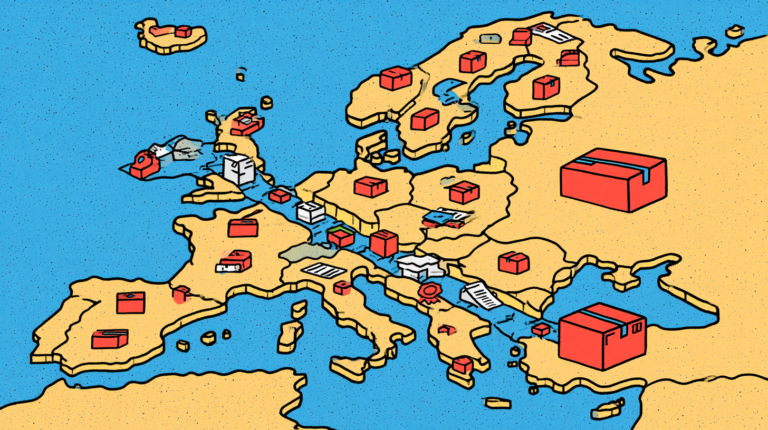
Several businesses are already announcing the suspension of shipments to other EU countries or disabling shipping options to the EU altogether. The German company Copiaro, for example, suspended shipments to other EU member states while continuing to ship to European markets such as Switzerland, Norway, and the United Kingdom, which are outside the EU’s regulatory framework.
We are therefore returning to something resembling the old national markets, with barriers to entry.
The entire model of cross-border trade for small businesses risks being undermined in the name of environmental protection. Yet if larger companies, which produce far more packaging waste, are the ones best able to absorb these costs, we are facing a contradiction. Packaging regulations can shield large sellers from competition by smaller businesses, creating a more closed and concentrated market.
Europe may become greener by becoming poorer. European entrepreneurship is being strangled, and small business owners are paying the price.
In the United States, a similar measure, but with a different purpose and an explicitly protectionist aim, ended the de minimis exemption for low-value shipments. Until 2025, packages worth less than $800 could enter the US market with little bureaucracy and without paying customs duties. It was a crucial gateway for small sellers around the world (and allowed American consumers to purchase goods from around the world via online retailers).
When the exemption was eliminated, the impact affected large platforms such as SHEIN and Temu, but fell even more heavily on smaller operators and, consequently, on consumers. American consumers began paying more for low-value goods, generating an estimated loss of between $11 billion and $13 billion, with lower-income households particularly affected.
Despite the different motivations behind these interventionist measures on both sides of the Atlantic, the result is the same: economic freedom is being squeezed.
In Europe, this regulation arrives at a time when the bloc’s relevance is already under serious pressure.
Although the Single Market accounts for roughly 18% of global economic output, Europe is losing ground to direct competitors in technology and digital business, in part because of its growing regulatory burden.
A decade ago, Europe still had a significant presence among the world’s largest publicly traded companies by market capitalization. Today, only a handful remain in the global top rankings. Almost none of the world’s leading startups are born in the bloc.
The PPWR is the latest catalyst for this decline, directly penalizing the foundation of Europe’s economy: microenterprises and small businesses.
In its blind pursuit of becoming the world’s greenest continent, Europe risks becoming its most stagnant, driving entrepreneurship away.
The European Union wants to lead the future through regulation, even if doing so comes at the cost of undermining the very Single Market that made European economic integration possible.