
Dutch players sue over video game charges.
The average Dutch gamer has lost €130 ($148). At least, that is a claim being made in the Hague by a foundation. On June 11, the Stichting Consumenten Competition Claims (SCCC), acting under the banner GameClaim on behalf of every Dutch personal computer (PC) gamer, filed a €220 million ($250 million) claim against the Valve Corporation, the business that operates the Steam gaming platform.
The SCCC claims that roughly 2 million accounts have lost collectively those €220 million on the basis that the Valve Corporation commands some 85% of the market, and defends that position through Most-Favored-Nation clauses—terms that forbid developers from undercutting their Steam price on rival storefronts such as Epic Games Store (EGS). With an additional 30% commission, a Steam Wallet that captures in-game payments at the same rate, and rules barring developers from steering players toward alternative storefronts, the SCCC claim is, at base, the idea that Valve has an unacceptable monopoly over PC gaming.
PC gaming is, in many ways, an industry that has outgrown its critics. Condescension and derision were what gamers had come to expect for many, many years when mentioning their hobby in polite society; but that attitude has since died. In 2025, games revenue globally reached $197 billion, a figure that comfortably exceeds the worldwide cinema box office and recorded music combined, and the PC segment alone returned an estimated $43 billion, growing faster than the console and mobile markets behind which it was expected to fall sharply. Nearly half the global population now play something, and the industry that surrounds gaming is absolutely enormous. In fact, since 2020, roughly 20 films have been made inspired by video games, such as Sonic the Hedgehog and its sequels, The Super Mario Bros. Movie, and A Minecraft Movie, while on television The Last of Us, Fallout, The Witcher, and Cyberpunk: Edgerunners have all been major successes.
Steam’s place in this industry is one that has grown organically, and it has come to be a cornerstone of the worldwide video games market. Established in 2003 by Valve, also known as Valve Software, an American video game developer, publisher, hardware, and digital distribution company, Steam was envisioned as a platform for Valve to update their own games. The infrastructure was scaled rapidly to meet the demand of a wider market. As of January 2026, more than 42 million players were online playing games through the platform at once, the games catalogue exceeds 120,000 titles (2025 alone saw over 20,000 new releases), and revenue is estimated to have climbed past $16 billion.
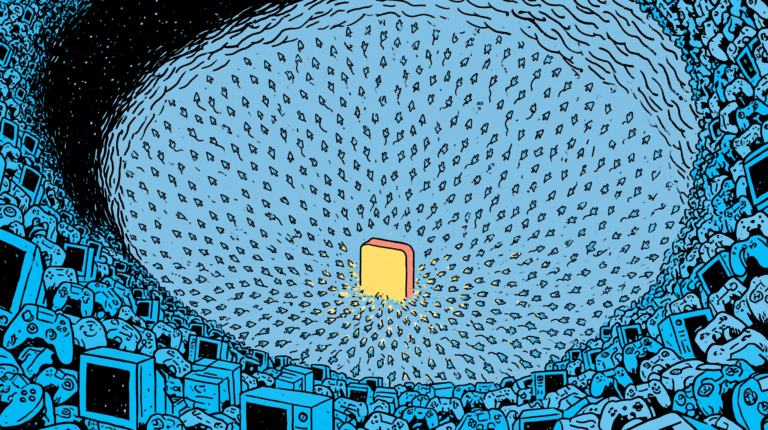
The model is one that even Adam Smith would recognize at a glance: the more developers the platform hosts, the more players it draws; and the more players, the more developers it must host. It is a classic network effect in action; and network effects do not share their winnings evenly, but concentrate them. The Prussian-dominated Zollverein in the 1850s bound the German states closer not by decree, but because membership grew more valuable as more members joined. The EU is a union that draws increased numbers because it is better to be in the market than outside of it; and Steam’s gravity is the same physics, in a very 21st-century sense.
And this gravity attracts controversy as much as attention. The GameClaim case is not the first one that Steam has faced, with a recognizable argument across all of them—the 30% cut, the parity clauses, the anti-steering rules. In the US in 2021, Wolfire Games and Dark Catt Studios sued Valve, a case that was subsequently dismissed, refiled, then consolidated, eventually winning class-action status in late 2024 and now embraces any developer who has paid Valve a commission for the games sold on their platform since 2017. In Britain, a campaigner brought a collective action for some 14 million users, which has been cleared by the Competition Appeal Tribunal to proceed, with roughly £656 million ($866 million) at stake. And as for Brussels, precedent has been set already, with the European Commission fining Valve for unlawful geo-blocking practices.
Gabe Newell (GabeN, to his supporters), who founded Valve with Mike Harrington after leaving Microsoft, has rejected all of these claims, pointing to the open video game market as his defense: consoles available at much cheaper rates than mainline gaming PCs; rival stores operating, like EGS; and direct downloads that players can purchase. In other words, no gamer is forced to use Steam; it’s just superior to the alternatives. The defense is a rather unfashionable one—but that does not mean it is any less correct.
Valve’s dominance is a visible consequence of what consumers actually chose. No Dutch, British, American, or any other gamer with an Internet connection was conscripted to the platform. Many gamers, the author included, migrated to PC gaming because of Steam’s superiority in customer support, variety of products, and well-regarded seasonal sales. EGS, by contrast, has spent years and a small fortune on free giveaways to try and tempt players to their stall; some of the most popular games in the world are put up for gamers to “buy,” for free, every week, including in June 2026 alone Warhammer 40,000: Speed Freeks, Citizen Sleeper, RollerCoaster Tycoon 3, and many more. For all its trouble, EGS holds an estimated 3% of the global market share.
As for developers, neither are they bound to sell on Steam, or even exclusively; they choose Steam because that is where the buyers have gathered. Why do brands seek to sell their wares in the Wal-Marts, Targets, Aldis, and Tescos of the world? For the same reason: footfall, exposure, and distribution. And the 30% fee (that has itself stayed consistent since the early 2000s) that the claims challenge is nothing more than Steam charging for distribution, refunds, mod hosting, and access to a staggering market, the same as Wal-Mart charging for shelf space—and it’s a fee the market has repeatedly proved it cannot undercut.
Revealed preference is an inconvenient truth, but a truth nonetheless. Competition allows dominance to emerge. If, one day, Steam bungles its dominance or is edged out by a disruptor, then so be it. To end this dominance by judicial fiat instead of consumer choice is to prefer the regulator’s taste to the customer’s.