
Takaichi’s economic agenda faces a new reality.
On Monday, September 7, in Tokyo, an economist who has spent a year arguing that the Bank of Japan (BoJ) should wait to hike interest rates published a note saying it no longer can. Takuji Aida, who advises Prime Minister Sanae Takaichi, sits on her flagship growth-strategy panel, and 10 months ago he warned that a December rate rise would be quite risky. He now expects a rate rise from 1% on September 18, followed by three more rate hikes after that.
Aida’s forecast is, in itself, unremarkable: markets seem prepared for such a shift, having nearly fully priced a quarter-point move to 1.25%, the highest rate the BoJ has risen to since 1995. What is remarkable is the source of the rise. Aida is a reflationist, the doctrine upon which Takaichi’s government was built—cheap money, proactive fiscal policy, and the conviction that tightening belts will return Japan to deflation. Inflation in Japan currently stands at 1.9% in July, having risen from 1.6% in June. This was the policy that Takaichi’s landslide win in February ratified, but, seven months later, the prime minister’s own adviser is laying out a roadmap away from this flagship policy.
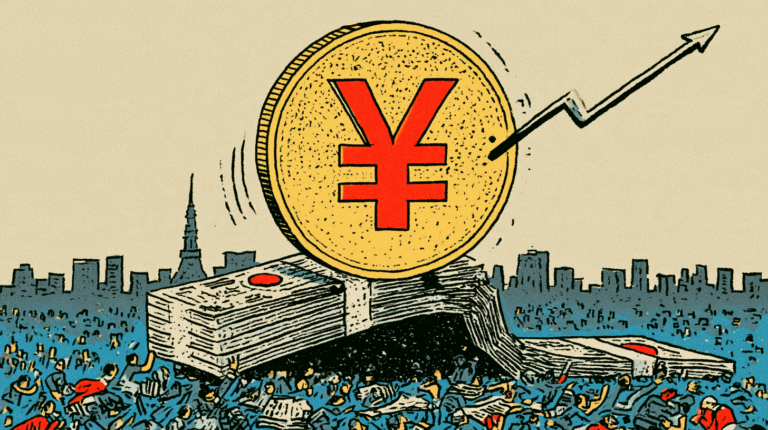
The main cause of this change of course is the historic fall of the yen in late July 2026. Falling to about ¥164 to the dollar, the weakest the currency had reached in nearly 40 years, Tokyo scrambled to address the problem and spent an estimated $85 billion over the course of two days buying it back. Assisting the Japanese government, the US Treasury joined in, selling euros from its reserves to buy yen—the first coordinated operation to support the yen since 1998.
It worked, but not permanently, because it could not address the interest-rate differential that produced the weakness in the first place, and selling off reserves is, definitionally, a finite instrument against a potentially infinite problem.
The reflationist approach is the direct casualty of this currency collapse, as the weaker yen raised the price of imported food and energy, with food inflation the exact target of Takaichi’s signature policy: a cut in food consumption tax from 8% to 1%, for a period of two years beginning in April 2027. The currency collapse has started undermining the policy before the legislation has even hit the parliamentary floor.
But while the currency is the cause, the timing is political. Aida has brought his forecast forward because September offers a narrow window before an extraordinary session of the Diet convenes in October. Aida, however, is not the only driver behind the change—Bloomberg reported on August 13 that the government already favored a rise in the immediate term, while BoJ Governor Kazuo Ueda has said that the Bank will debate a move in September:
From the perspective of conducting policy with a risk-management approach as the underlying inflation rate approaches 2%, we have come to believe that we need to pay greater attention than before to upside risks in our policy conduct.
What would this rate rise lead to? The first consequence is fiscal: Japan’s 10-year bond yield came within reaching distance of 3% on September 1, a level unseen since 1996, and the government’s current debt is already above 200% of GDP. Maurice Obstfeld, for the Peterson Institute for International Economics, put it starkly and plainly: “…the Japanese authorities face a dilemma between raising interest rates—to strengthen the yen and dampen inflation pressures—and worsening fiscal sustainability. At best, intervention can paper over these conflicting forces for a short time.” It is a zero-sum trade-off, and there is no configuration available to the BoJ in which both problems improve.
Moreover, this is not a preemptive move on the Bank’s behalf, with its own April 2026 projection already forecasting core inflation between 2.5–3% for the current fiscal year, driven by crude oil and firms passing wage increases into prices. September 18 is, in many ways, a Bank making a decision to catch up with its own projections from six months earlier.
The second consequence ripples beyond Japan itself as the impact is felt regionally. As Brad Setser, who worked on currency policy at the US Treasury, notes: “A weak yen tends to put pressure on other Asian currencies, and it could make it harder for China to continue to allow a slow appreciation of its currency.”
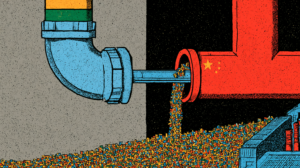
But the third consequence may be the most significant. Japan is the world’s third-biggest creditor nation (behind China and Germany), and for a generation, since the beginning of the Lost Decades, Japan’s institutions have exported savings in an attempt to offset the poor economic outlook at home. This all looks set to change now. Banks, insurers, and pension funds can now meet yen liabilities with yen assets, without paying to hedge or gambling on the currency, and the global consequences would be far-reaching. A tightening cycle that encourages Japanese money to stay in Japan could be a withdrawal of one of the deepest pools of funding in the global system.
This puts the Bank of Japan in a position to make a decision that is increasingly uncomfortable, because there is no easy answer. The government, having pursued reflationary policies and signaling its preference for restraint, has now indicated a course-correction—whether it will do so remains to be seen, but the consequences are real and reach beyond Japan’s coastline.