LifeSharers Uses Voluntary Action to Solve a Problem
When the French social commentator Alexis de Tocqueville visited a young, bustling America in the 1830s, he was amazed to discover that its industrious and self-reliant citizens were constantly forming “associations” to advance the arts, build libraries and hospitals, and meet social needs of every kind. If something good needed done, Americans of that day rarely expected politicians and bureaucrats, who were distant in both space and spirit, to do it for them. In Democracy in America, Tocqueville wrote, “If men are to remain civilized, or to become more so, the art of associating together must grow and improve.”
If Tocqueville were touring America today, he would surely cite a non-profit group known as LifeSharers as a superlative example of this penchant to solve problems through voluntary initiative. This group deserves special attention, and your support, because it deals with something as important as life itself. Moreover, it must overcome both law and conventional sentiments to do its good work.
The problem LifeSharers seeks to ameliorate is the nationwide shortage of human body organs. Federal law and many people’s sensibilities prevent a genuine market in human organs, but the effect of those inhibitions is the deaths of about 17 Americans every day. That’s how many die waiting for a heart, kidney, lung, or another organ—a daily toll that adds up to over 6,200 a year. Here’s another way to look at it: people on the transplant waiting list are dying at the rate of one every 90 minutes.
Today’s donation system relies on little more than altruism: Leave your organs for others because it’s a good thing to do. That may be an admirable motive, but it has nonetheless yielded an intractable shortage. The sad fact is that only about 30 percent of Americans who die with harvestable organs ever consented to donating. Making matters worse, the families of those who did sign donor cards often veto the wishes of the deceased by refusing consent. There is a movement afoot to promote “donor authorization,” which would allow organs to be recovered if the deceased had signed donor cards, even if their families disapprove. If widely adopted, that would modestly alleviate the crisis—but still leave us with needless deaths among potential organ recipients.
The altruistic approach has left us in a crisis because it fights human nature. We’ve been asking people to think about something that is very unpleasant, and to commit to doing something that is very scary, without giving them anything in return except a good feeling. Clearly, the number of people generous enough to make that trade isn’t nearly enough to supply all the organs needed.
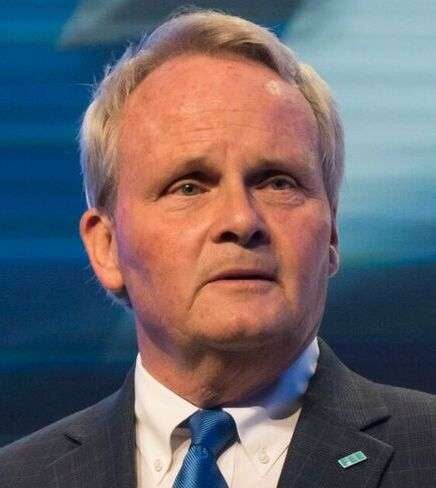
Enter David J. Undis, a 49-year-old retired insurance executive from Nashville, Tennessee. A former economics student, Undis reasoned that some old-fashioned incentive could be the cure for the organ shortage. The law prohibits monetary payment for organs, so he came up with another powerful motivator: putting organ donors at the front of the transplant waiting list. By doing so, he figured everybody would have a strong incentive to sign a donor card because anybody who didn’t would have to go to the back of the waiting list. So he launched LifeSharers in May 2002.
LifeSharers members agree to donate their organs when they die, but they give fellow members “first dibs” on them. Nonmembers can have a member’s organs if no member who is a suitable match for them wants them. The Internet makes it easy to sign up. Anyone can join at www.lifesharers.com. Membership is free and open to everyone.
Directing your donation first to other members of the network creates an incentive for others to join. To date, members of the infant organization number fewer than 2,000. To understand the enormous potential, Undis asks us to imagine what it will be like when LifeSharers has a million members: “You’ll be crazy not to join if you think you’ll ever need an organ. By not joining, you’ll be reducing your access to 1,000,000 hearts, 1,000,000 livers, 2,000,000 kidneys, 2,000,000 lungs, 2,000,000 corneas, and more. Let’s face it—if only organ donors could receive organs, just about everybody would be a donor.”
Incentive Increases
As LifeSharers grows so does the incentive to become a registered donor: preferred access to an ever-larger pool of donated organs. That will also make the system fairer, because your chances of receiving an organ will be greater if you’ve agreed to be a donor. LifeSharers is good for all transplant constituencies—donors, recipients, the medical profession, and the community at large.
But LifeSharers is not without its critics. They say it’s not fair to give special treatment to those who have agreed to donate their organs when they die. But it’s actually people who don’t donate their organs who are getting special treatment. They receive about 70 percent of all donated organs, while registered organ donors receive only about 30 percent. LifeSharers doesn’t create an inequity; it corrects one.
Critics also say that medical factors alone should decide who gets organs. But this straw man doesn’t stand up. Many non-medical factors, including ability to pay, already play an important role in the organ allocation system. And the system gives live donors preferential treatment if they later need an organ, so there is already precedent for giving preference to people who agree to donate in the future.
The critics of LifeSharers seem to miss the most important point: LifeSharers is increasing the number of organ donors. More donors means fewer deaths. Philosophical nitpicking pales in comparison.
Congress is considering whether to allow limited financial incentives to encourage more people to become organ donors. But while politicians debate and people on the transplant waiting list die, creative individuals like Dave Undis are already at work to solve the problem. The LifeSharers phenomenon is a civil-society venture that isn’t waiting for the slow and creaky wheels of government to start rolling.