
Britain’s new prime minister unveils his vision.
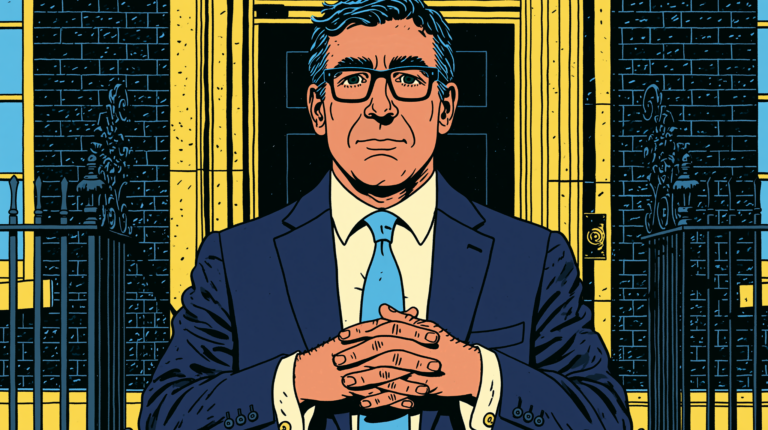
On July 20, Andy Burnham attended Buckingham Palace, where King Charles III invited him to form a government—making him Britain’s seventh prime minister in a decade. Burnham is nicknamed “the King of the North,” inspired by the Game of Thrones series and also speaks to his extremely popular tenure as mayor of Greater Manchester since 2017. As a politician, he reflects all of the establishment’s trusted elements and very little of its baggage. Having served as a minister in Blair’s government and won three landslide re-elections since becoming Manchester’s mayor, Burnham has managed to avoid the scandals associated with the Labour Party of the last two decades while building a prominent personal brand—and has cast a shadow over Sir Keir Starmer’s leadership as a result.
His route back to power has been managed extremely well. Although he was blocked from standing in the Gorton and Denton by-election in February 2026 by the Labour Party’s National Executive Committee, his opening came in May when an ally of his, Josh Simons, resigned from the Makerfield seat. The resignation was explicitly intended to let Burnham stand for Parliament, making this the first time a by-election has been engineered to allow a candidate to parachute into a seat since 1965. Strictly speaking, the leader of a party does not need to be an MP, but the practical developments of the 19th century still very much influence how our politics work.
Even so, there remains a certain degree of ambiguity over what Burnham’s ideological position is, and what policies he would seek to advance as prime minister; so much so that Aiden Hayes, a contributor to Sky News, confidently declared that “nobody knows what he stands for.” This is not strictly true: Burnham’s tenure as Manchester’s mayor offers great insight into his economic beliefs and wider ideology, and he has hardly been quiet when it comes to the direction of British politics.
Burnham, already widely popular in Manchester, became a national figure during the COVID-19 pandemic when he became a vocal opponent of Westminster’s distribution of resources in response to the crisis and the perception that there was not enough financial support going to Manchester—or, indeed, most regions of the UK.
As he became prime minister, Burnham promised to give away a slice of the power he was about to inherit, pledging to move part of the prime minister’s operation north and hand economic authority to the regions, in what he called the biggest rebalancing of power the country has seen. Burnham calls this doctrine “Manchesterism.”
What is Manchesterism? At its center sits a single proposition: that the essentials of life (water, energy, housing, and transport) cost too much because they have been surrendered to private profit, and that greater public control can drive down those costs for citizens and the state alike. As Burnham himself put it in an essay for The Guardian in January 2026: “The four horsemen of Britain’s apocalypse are deindustrialisation, privatisation, austerity and Brexit.”
It is, in many ways, regionalist socialism and is not too dissimilar from criticisms made of the existing economic settlement in the UK by much of the Labour Party. Burnham frames this as the “Manchester model” and proposes expanding it nationwide to counter the major issue in contemporary British politics: the cost of living.
Manchesterism has a longer history than Burnham’s tenure as mayor. Ian Harvey explains in The Conversation:
Manchesterism is bigger than any one politician. It is the product of decades of collaboration between institutions, communities, leaders, councils, businesses, universities, the NHS and public services… It is less an ideology than a way of governing. It combines long-term leadership with devolved decision-making and a belief that many of society’s biggest challenges are best addressed at the level of place rather than directed from Whitehall.
But can Manchesterism survive the realities of the UK Treasury?
On tax, there’s a recognizable trajectory. Burnham has said that there is “definitely a case” for restructuring the tax brackets to help lower earners pay less while raising taxes on higher earners, principally through a 10% starting band for lower earners, down from 20%, and restoring the 50% top tax rate. At the same time, he has called council tax—an annual fee for local services, primarily health and social care—“deeply regressive” due to its reliance on a home’s 1991 value as a base calculation. Likewise, Burnham has recommitted himself to the Labour Party’s 2024 pledge not to raise income tax, national insurance, or value-added tax (VAT) on working people.
The deepest point of conviction for Burnham is, quite obviously, housing. In his first speech as prime minister, Burnham promised the biggest council-housing building program since the postwar period, and has pointed approvingly to Finland’s national housing philosophy, which is premised on the idea that a home is infrastructure, and not a speculative asset.
Fortunately for Burnham, much of the legislative infrastructure needed to implement Manchesterism at the national level was put into place by his predecessor. For one, the Great British Energy Act (2025) created a publicly owned energy company to facilitate the delivery of domestic clean energy. For another, the Passenger Railway Services (Public Ownership) Act is returning train operators to the state as their contracts expire under a new Great British Railways. And, for particularly Burnham’s own interests, the English Devolution and Community Empowerment Act (2026)—on the statute book since April—hands metro mayors a standardized framework of powers, with established authorities granted a “right to request” further devolution over time.
Ultimately, the doctrine faces a test far greater than anything it has encountered in a region like Greater Manchester—in the gilt market. Burnham takes office with a legislative apparatus purpose-built to deliver much of what he wants, but what he lacks is fiscal room. Burnham insists that his program reassures rather than alarms, arguing that restoring public control lowers the long-run cost to the state. Whether the markets will agree with him remains to be seen.