
A new deal would cement trading partnerships across the Pacific.
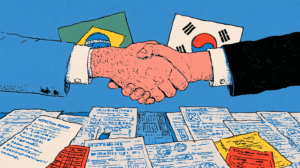
In mid-June, on the margins of the G7 France summit, Japanese premier Sanae Takaichi will tell Luiz Inácio Lula da Silva, the president of Brazil, that Japan wishes to begin negotiating an economic partnership agreement with the Southern Common Market—or, Mercosur, the South American customs union comprised of Brazil, Argentina, Bolivia, Paraguay, and Uruguay. The overture to the South American trade bloc, confirmed in the last week of May by Japanese officials familiar with the plan, would be the first large-scale trade negotiation launched under Takaichi’s administration.
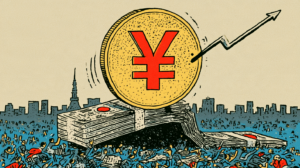
The potential for Japan is enormous—not just for international trade, but also for buttressing its free-market economic mission at home. Composed of some 300 million people across the bulk of South America, the nations that form Mercosur have a combined GDP of $4.7 trillion as of 2025, which is marginally higher than Japan’s own GDP of $4.4 trillion.
Tokyo, according to Jiji Press, is moving to diversify its sources of critical minerals as it absorbs three simultaneous pressures: President Donald Trump’s high tariffs (a minimum of 15% for automotives, for example); China’s restrictions on rare-earth exports; and the ongoing impact of the Middle East crisis. While each factor on its own acts like a chokepoint, all of them act together to create a particular pressure on Japan’s already vulnerable critical minerals industry. Engaging with Mercosur, however, offers Japan a route out of this.
The promise of access to the natural resources many Mercosur nations possess—Brazilian iron ore, Argentine and Bolivian lithium, Andean copper—will be a major appeal for Japan in seeking to deepen connections with Latin America and shore up future supplies of critical materials. Likewise, the member nations are major food producers, especially of soybeans, beef, and corn, which are popular in Japan and capable of being shipped in bulk across the Pacific Ocean.
These commodities, already directly identified in December 2025 in the Strategic Partnership Framework between Japan and Mercosur, are vital to Japan’s interests. Tariff removal does its real work at the level of particular industries, with one particular benefit that no single growth figure can capture: resilience. A standing channel to South American minerals and grain is insurance against the next disruption, something that has taken on a currency all its own in an era of just-in-time supply chains vulnerable to disruption, and the increasing geopolitical use of supply lines as a tool of statecraft.
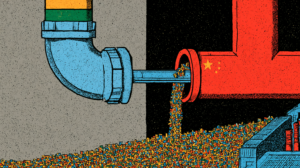
The minerals question, moreover, is really a China question. The rare-earth curbs squeezing Tokyo are Beijing’s, and China’s grip reaches well beyond its borders: it processes most of the world’s lithium and the overwhelming share of its rare-earths. In 2023 alone, it absorbed roughly a third of all Latin American mineral exports. Chinese capital is already embedded across the region’s lithium fields, and Brazil has signaled Mercosur’s openness to a free-trade agreement with Beijing of its own.
For Japan to gain access to Argentine lithium and Brazilian rare-earths is as much about countering Chinese hegemony over supply. Diversification here means seeking alternative supply lines.
Japan’s agreement with the European Union, negotiated in 2018—later projected to produce long-run welfare benefits of $18 billion for Japan—was highly instructive for Japan’s global engagement policies and the potential benefit a single trade deal can produce domestically. Mercosur is, therefore, an obvious and attractive opportunity for Japan; not only this, but the South American nations fit the rare niche of being both large enough to matter, and unaligned enough to deal with. It might not match the level of economic benefit that the 2018 Japan–EU deal could create; but it is still worth pursuing.
But the appeal for a potential deal is not one-directional, and Japan’s hand is actually stronger than the headline economics might suggest. Mercosur’s external tariff is steep exactly where Japan is competitive, such as automobiles, machinery, electronics, and electrical equipment, and there are already nearly a thousand locations operated by Japanese firms from these industries inside the bloc. As a joint appeal from a collection of Japanese–Uruguayan companies, from 2024, urging the deal on, said, “Japan and Mercosur have a mutually complementary relationship and are strategically vital economic partners.”
The deal offers, therefore, not new demand but liberated demand. Goods that Japanese companies already sell to the region and get taxed at the customs line—driving up prices for South Americans—are simply waiting for the tariff to fall, and the market grows. The value of the deal for Tokyo lies abroad, much more than at home. Japan has spent the last two decades assembling trade agreements—most recently with Bangladesh, as of March 2026—with each pact a hedge against the disruption of global trade.
Moreover, the competition for access to Mercosur markets is heating up. Already in January 2026 in Paraguay, the EU has signed its own trade agreement negotiated in December 2024, with the trade pillar applying provisionally from May 2026, meaning European carmakers—primary competitors to Japan’s automotive industry—are already watching tariffs fall in markets Japan is keen to enter. The EU Commission’s own trade directorate projects the deal could add some €77 billion ($89 billion) and lift European exports to Mercosur by nearly two-fifths by 2040. Takaichi’s overture is an opening, but also an attempt not to be left behind.
The handshake in France will open a market and secure a supply line. It will also mark the latest in a long line of Japan’s attempts to secure large-scale bilateral trade agreements, one more nation concluding that, in a world it can no longer assume to be open, the prudent course is to forge your own relationships.