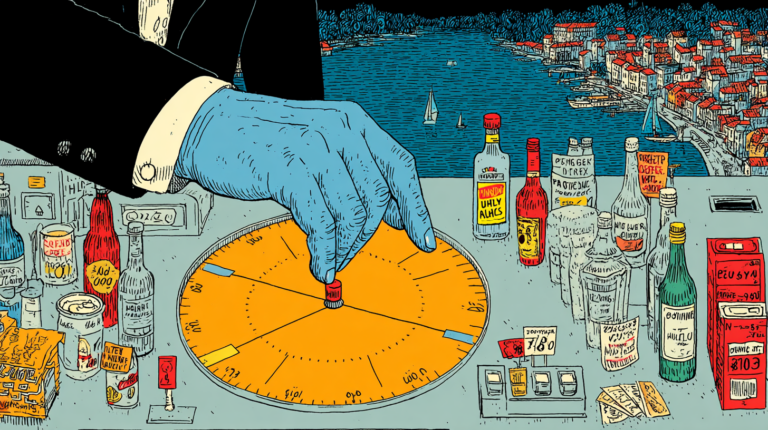
Governments want to tell us how much is too high or too low.
If you are in sync with meddlesome government bureaucrats, you probably believe that price gouging is profoundly evil. That charging higher prices than normal, especially during emergencies, is an economic abomination. That any seller who does this is taking advantage of people who are in precarious economic circumstances.
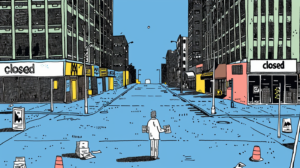
When a storm hits, or a flood, or a tornado, heavy snow, ice, the closing of the Hormuz Strait, many of us will be without gas for our car, food, medical help, or other such necessities.
Yet we face jacked-up prices to fulfill these needs. Just when we need them the most, these things are more expensive. To anyone who doesn’t understand basic economics, this seems outrageous and unfair.
But to those who do understand supply and demand, it makes sense.
When Hurricane Katrina hit New Orleans in 2005, the city was in dire straits. Help poured in from every one of the other 49 states and even from abroad. There were several motivations underlying this aid. One was simple benevolence. The thought that there, but for fortuitous circumstances, go I; and I would be happy if others helped me in my hour of distress. That is natural compassion that drives much charitable support.
But some who went in were incentivized by profit. They took a risk to go into an undesirable circumstance, and charged a higher premium to offer their goods or services because of it. What some call “gouging” is the market at work.
On a good day, in a peaceful town, there may be three bakeries. Competition keeps their prices low. But if disaster befalls the town, there is no power supply, and if two of the bakers and their staff leave town, that means that there is one baker. He’s having to operate with an emergency generator. He’s braving flood waters to get in supplies. Yes, he charges more, in order to justify the effort and additional challenges.
The other option isn’t forcing him to sell bread at normal prices. It’s him shutting his doors and selling nothing. Meanwhile, the fact that he can charge more incentivizes him to stay open. It may entice one of the other bakers to return, too. Laws against price gouging are counterproductive.
When hikers are lost in the wilderness, they call for help. Laws against price gouging are akin to decibel control for such cries for aid. They impart the message to those in such trouble that you can yell for help, all right, but not too loudly; better keep these requests down to a whisper. Unusually high prices are a market signal for assistance. Price controls reduce their effectiveness.
Yet policymakers continually try to fix prices using the argument that providers are “gouging” their customers. Governor Hochul of New York claims that insurance firms are charging higher prices than she deems reasonable. She wants to force them to charge less. California already tried it—the result is not cheaper policies; it’s insurance companies leaving the state altogether.
But not only is price gouging under the microscopic glare of the price controllers; so is price cutting! For one thing, Happy Hour bargains are severely restricted, and even prohibited, in several states. One of the supposed justifications for these incursions is to limit the intake of alcohol. The idea, here, is that lower prices will encourage more inebriation, which will in turn increase highway fatalities.
But this is a creeping partial violation of the 21st Amendment to the Constitution which overcame the 18th, which instituted prohibition. Either beer, wine, and spirits are legal, or they are not. If they are now licit, then banning lower prices for them is problematic. In any case, a far better way of reducing, radically, traffic deaths would be to privatize highways, streets, and roads. Free-market competition would bring about human flourishing in this arena as it does in all others touched by it.
However, Happy Hours feature lower prices not only for alcohol but for food as well. This is thus an attack on yet another aspect of Economics 101: peak load pricing. Entrepreneurs lower fees all throughout the economy. Movies are cheaper for Tuesday afternoon matinees than on Friday and Saturday date nights. Ski lifts impose lower prices during the summer than the winter. Dinners are pricier than lunches, even for identical meals.
There we have it. Prices too high? No good. Too low, ditto. Only the economic interventionists know the correct payments for all goods and services, and they are not at all behindhand in imposing them on the rest of us. How do they possess such accurate information? Don’t ask. They just do. One wonders whether or not they even know the answer to that question. Maybe they just flip a coin. If the entrepreneur errs in setting prices, he suffers a loss in profits. Not so, the government price regulator. Says Thomas Sowell of this state of affairs: “It is hard to imagine a more stupid or more dangerous way of making decisions than by putting those decisions in the hands of people who pay no price for being wrong.”
Hayek has taught us this lesson about pricing, over and over again. Free-market prices have an important role to play in our society, in our economy. They convey precious information. This is how “Paris gets fed,” in the immortal words of Bastiat.
So far, we have been discussing only economics and the counterproductivity of price controls. There is, however, also, the matter of elemental justice. If you prohibit people from setting prices on what they legitimately own, you are in effect (partially) stealing from them. I own the pencil I am now holding. As its proper owner, I may set any price on it I wish. I am now offering it for sale to any reader of this article, for $1 million. I may not get any takers, but that is beside the point. If I am prohibited from setting my chosen price on this writing implement, part of my ownership rights have been abrogated.