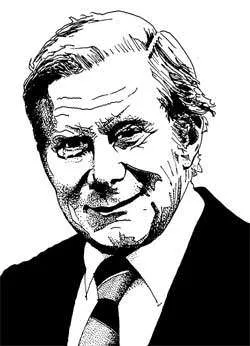
The Reverend Mr. Opitz is a member of the staff of the Foundation for Economic Education.
Books are instruments of culture and indispensable aids to personal cultivation; but reading may also be a substitute for thinking. It depends on what is read. And in our time things have conspired to place obstacles in the path of the person who has the capacity to use books as instruments of his own upgrading.
In such a time and place as eighteenth century England, for example, literature was produced by a relatively small number of writers for the delectation of each other and of a not much greater number of discriminating readers. The larger public was illiterate. Thus the canons which then guided the writing, publishing, and reading of a book were, for the most part, literary canons. But now, however, things are different. In this age of the many-too-many, when everybody can read and nearly anybody can write, there is a deep and broad public, demand for books which have no literary pretensions at all. The public hunger for distractions and sensations in book form puts the catering publisher’s head in a noose; his enterprise, to the extent it serves this public, ceases to be literary and becomes merely commercial. When this happens, the markets are flooded by books which have no excuse for being except that a vast public will buy them. In an environment of this sort the individual who has an innate gift for dealing with ideas is in danger of having this divine spark smothered by the avalanche of trash disgorging off the presses.
Man is poorly equipped with sensibilities at birth. Such powers as he may develop in the course of growing up are evoked by his environment from latent and rudimentary capacities possessed as an infant, a child, or an adolescent. Men differ in their native talent for handling ideas, but even the most gifted will fall far short of his potential unless he somehow gets into an intellectually stimulating environment. Such an environment is inconceivable without books —the right books. But there’s the rub! How does one encounter the right books when each one has to be retrieved by wading through a sea of trash to get at it?
Know the Literature
The men of Dr. Samuel Johnson’s circle could discourse with facility on the large questions of religion, art, literature, music, economics, and politics. It is inconceivable that a monumental work in any of these fields, or in a field that impinges on any of these, should be unknown to any member of the circle. Today, the reverse appears to hold true. Men make their reputations by the resolution with which they exclude any reference to relevant but minority opinion. And this is especially true in the fields of economic and political theory.
Here, for example, is a theologian with one of the most penetrating minds in his field in our time. He was already well-known by the mid-1930′s and a full professor in a graduate school of divinity. In 1935 he wrote a widely read book on ethics, constructing his theory within a social framework supplied by Marxian economic and political theory. In 1956 he is forced to say, “I was only dimly feeling my way in this book toward a realistic and valid Christian ethic. I disavowed some of my ideas and amended others in later works, which roughly represent my present position. I am not, therefore, able to defend, or interested in defending, any position I took in An Interpretation of Christian Ethics.”
It takes a broad-gauged man to acknowledge his own error publicly, and all credit to a thinker for this. But the point is that in 1935, a man possessed of his intellectual gifts and standing so high in the academic world should disregard the abundant literature which, even by the thirties, had divested socialism of all claim to intellectual merit. By 1935, Ludwig von Mises’ monumental Socialism had been available in German for thirteen years, and there were numerous books in English. When it is so hard to write a book for which one recants two decades later, and so easy not to write a book, what on earth persuades a man to indulge in such an effort?
Political passion, probably. The intellectual creed of our time is that while speculative thought, or knowledge for its own sake, might have been all right for the quiet times in history, the thinker in these revolutionary times must seek to guide the forces of revolution. In embracing this position the intellectual betrays himself, and abandons his indispensable leavening role in society. The average man is thus left without proper guidance and must rub along by himself as best he can. Yet, if he scrabbles around hard enough, he can uncover contemporary works of an intellectual stature to do credit to any age.
Neglect of Economics
The characteristic intellectual of our time is above taking any interest in economics. He is, apparently, as prudish in his grasp of how economic goods are produced as was the worst Victorian prig on the subject of how babies are produced. Nevertheless, even our inauspicious age has witnessed the appearance of works on economics that take their place with the classics in the field. Mises’ massive Human Action is one of these; Carl Snyder’s Capitalism the Creator is another. If so many of the intellectuals of our time were not as immune as they appear to be to the basic facts of economics, the political insanities that bedevil us would shrink to man size. The bulk of our present political trouble stems from sheer, willful ignorance of the rules governing the production, distribution, and consumption of material goods. In no field is ignorance a self-curing disease; in economics, perhaps, least of all. There is no cure but the self-imposed discipline of hard study.
Libertarians, generally speaking, have given themselves a pretty fair grounding in basic economics. Their trouble is a tendency to double back on themselves, to get lost in self-contemplation and read nothing outside the narrow confines of their own orthodoxy. This is understandable, but not excusable. It is to follow the line of least resistance. No man has thoroughly explored even his own orthodoxy who has not examined every facet of it in the light of some heresy. To shield an orthodoxy behind a sterile moat is not to protect it ; it is only to guarantee that it will die pure. A body of thought must grow or perish, and to grow it must be fertilized by the deliberate practice of exposing it to ideas which raise the blood pressure. What could be healthier, in the long run, than for the libertarian who feels he has his case well in hand to expose it for a few months to the mordant irony of Joseph Schumpeter’s Capitalism, Socialism and Democracy? This might be one way to separate the men from the boys; there are others.
A Broader Perspective
Those who feel that all the irritation they want comes to them in the course of a normal day might not like the idea of deliberately rubbing themselves the wrong way. Indeed, the wiser course may be to start working with the general premises one already uses and then deliberately push them out so as to lengthen the perimeter of his frame of reference. Government is doing what it shouldn’t do, the libertarian contends. Very well, but why this misplaced faith in political action at this particular juncture in human affairs? There is no better constructive analysis of the present predicament than Wilhelm Roepke’s The Social Crisis of Our Time. An even broader perspective of the problem of man upon the earth is to be gained from two books by Gerald Heard, one old and one new: The Third Morality and The Human Venture. These books will stretch the mind out toward its potential horizons.
Crucial Questions
Having gone thus far, one can no longer postpone a real facing up to the problems which constitute the traditional issues of philosophy, such as, What is the universe like? What is the place of man in it? How do we obtain knowledge? What is good? These are some of the most complex questions a man can ask. Their very abstractness is forbidding to some minds whose bent lies in a different direction. Nevertheless, these questions must be wrestled with. But the books which wrestle most successfully might as well be written in a foreign language, so far as the uninitiated is concerned. His first impulse is to push them aside with an impatient gesture. A morsel which delights the gourmet’s educated palate may repel the man who knows only mashed potatoes and vanilla ice cream. For example, open up C. D. Broad’s The Mind and Its Place in Nature. This is a book, Aldous Huxley has said, “which for subtlety and exhaustiveness of analysis and limpid clarity of exposition takes rank among the masterpieces of modern philosophical literature.” So speaks the connoisseur. But one needs a fairly comprehensive acquaintance with the landscape and terminology of philosophy before tackling such a book as this.
For the man who wants to walk in on the ground floor and get his orientation in philosophy, there is no book to equal C. E. M. Joad’s Guide to Philosophy. Although Joad did not achieve top rank, even among modern philosophers, he is far and away the most lucid of the tribe. Nevertheless, even this book will keep the mind on tiptoes as it provides a guided tour through the major problems and systems of philosophy. With this in hand, one may go on to Joad’s Matter, Life and Value, a long and comprehensive exposition of Joad’s own system which endeavors not to slight any facet of this universe—either the world of material nature, the domain of life and mind, or the realm of value.
Ethical questions occupy a prominent place in libertarian discussions of economics and politics, but the implications of the ethical premises are seldom explored. They are thoroughly investigated from every angle in a modern classic, The Faith of a Moralist by A. E. Taylor of Edinburgh. This huge work will amply repay the hard work it requires. It is a wise book, beautifully written, completely free of technical jargon. Taylor, incidentally, is one of the few moralists who has acquainted himself with the subjective evaluation theory which plays so important a role in free market economics, and who understands that this theory does not necessarily commit the believer to a denial of the proposition that values have objective reality.
Processes of Growth
We live in an age of digests, popularizations, and simplified versions. There are people who want Plato explained in a paragraph, when even the master himself took a score of volumes without exhausting his subject. But even if the conclusions of a philosopher could be summarized in a few sentences, which is dubious, the more important thing is the processes of thought by which the man reached his conclusions. It is only by long exposure to these processes that the mind of the average man is enlivened, his habitual outlook and attitudes reoriented, his thought disciplined, his stance corrected. These are processes of growth; there is no substitute for them, and growth takes time.
When a man undertakes a well-considered program of study, he grows in knowledge and understanding. But in addition, the program pays him an extra dividend—his life takes on new meanings. He can say, with Matthew Arnold, “One must, I think, be struck more and more the longer one lives, to find how much in our present society a man’s life of each day depends for its solidity and value upon whether he reads during that day, and far more still on what he reads during it.”