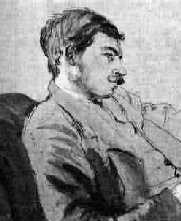

Keynesian ideas seem to pop up time and time again, especially in times of crisis. Keynes himself even sensed the impact his theories were going to have. When Keynes was writing the General Theory he wrote to George Bernard Shaw in 1935, “…you have to know that I believe myself to be writing a book on economic theory which will largely revolutionize – not, I suppose, at once but in the course of the next ten years – the way the world thinks about economic problems.”
Sadly, Keynes prediction turned out to be true. Naturally, Austrian Economists were some of the leading critics of Keynes’s ideas. In fact, many believe the debate in economics in the 20th century boils down the ideas of Keynes vs. the ideas of F.A. Hayek and Keynes, at least initially, won the battle. As Paul Samuelson had brought the Keynesian revolution to America with his 1948 textbook, Economics, which by this time Keynesian ideas were the norm.
Samuelson’s textbook, however, was only the second textbook to present Keynesian ideas. Stanford economist Lorie Tarshis wrote the first Textbook to bring Keynes to American universities with The Elements of Economics, published in 1947. The Foundation for Economic Education, being at this time, the only free market think tank published many critiques of Keynesianism. So, it was natural for the Foundation to question whether they should attack Tarshis’s book. In today’s document Henry Hazlitt writes to Leonard Read on October 22, 1947 about Tarshis’s textbook.
He argues it is not necessary for the Foundation to attack the book. He believed the Foundation had more important things to do and should instead attack Keynes directly because all Tarshis had done was to take Keynes’s ideas and “simply added a dash of mud and dishwater.” So, there was no reason to give the book attention. In hindsight, Hazlitt may have been right as Tarshis’s book quickly lost popularity, arguably due to its excessive sympathy to communism, in favor of Samuelson’s book.
What lesson should we take away from this today? The problem is that Keynes does not seem to be going away anytime soon. Keynes’s ideas may continue to pop up in books like Tarshis’s, where it is quickly forgotten, but they have also been popping up in books like Samuelson’s, where it has continuing influence. Hazlitt was right in a sense, we should not worry about attacking every watered down Keynesian argument that comes our way but instead attack the ideas at its foundation. To do so we must learn to make better and stronger arguments if we want to see Keynesian ideas gone forever.
Download Henry Hazlitt’s Letter to Leonard Read about Tarshis’s Textbook here.