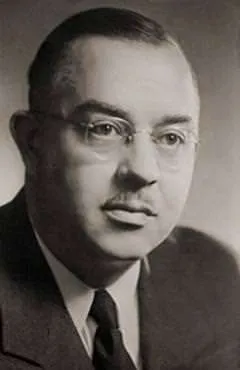
Dr. Harper is a member of the staff of the Foundation for Economic Education.
In the previous article two types of so-called fringe benefits were discussed—taking some of one’s pay to buy things he may not want, and paying him when he does not work.
One type is not a benefit at all for most wage earners; it is a detriment instead. Part of one’s pay is taken to buy something he does not want at the price. Under a centrally controlled plan, which follows the communist-socialist ideal of “to each according to his need,” all employees of one corporation or perhaps all members of one union are forced, by a deduction from their wages, to purchase a certain item whether they want it or not. Their “need” is deter-mined by someone else, not by the wage earner himself. And when the purchase is not his own preference, the worth of his wage is thus reduced.
The other type of so-called fringe benefit does not affect, in this sense, how much one receives in total pay. It affects the time when he receives the pay due him. He may receive it either more or less frequently. He may receive a part of it during periods of idleness, rather than all of it when he is actually working. In the sense of his total wages, this is not a monetary benefit to him; it is at best a convenience.
We all seem to yearn for idleness—all we can get of it. But do we, really?
Surely we do not want unlimited inactivity. Even in sleep one is uncomfortable if he cannot move and turn about now and then. If a thoroughly well person is hospitalized and forced to be inactive for a day or two, it is said that he would feel about as ill as one who has had an operation. He quickly absorbs his fill of idleness, and wants to make a break for freedom.
So it is not really inactivity we want, in our yearning for more leisure. It is, instead, our desire to be active at something other than our regular activity. We want to be free of what we are currently obligated to do, in order to do something else for a change.
The truck driver wants leisure to get off the road; perhaps he wants to spend a few quiet days at home. But a telephone operator or a watch repairman yearns for leisure so he can take a spin in his car.
The farmer wants leisure to go to the city. The city dweller wants it to go to the country. The coal miner wants leisure for a plane trip. The plane pilot wants leisure to avoid one. A hired ballplayer wants leisure away from the game so as to be able to get back home on his farm. The farmer wants leisure to play ball at the picnic. What most persons do with their leisure costs them money. Yet they probably are paying for the privilege of doing something that someone else gets paid for doing regularly for his living. Two persons might even pay a vacation expense direct to one another for reversing their regular activities.
Welfare and Leisure
As recently as a hundred years ago in this country, as elsewhere in the world over most of its history, a person had to work hard during most of his waking hours in order to provide himself with the food and protection required to keep alive. A hundred years ago in the United States, for instance, the “work year” was a little over 3,500 hours on the job, out of the total of 8,766 hours in a year. Practically all of great-grandfather’s leisure hours were needed for eating and sleeping.
With our present advanced productivity, one could probably maintain himself at the level of bare subsistence with the income from as few as 200 hours of work per year.’ This would provide an extremely humble existence, to be sure, without many things we have come to think of — falsely — as absolute necessities.
We now work 2,000 hours, or a little less, per year rather than these minimal 200 hours. We do this in order to have many more economic things to enjoy, beyond the level of strict necessity.
This increased capacity to produce above the starvation level of existence allows people to choose over a wide area between more things and more leisure. This increased productivity gives us the choice of either working more hours and having a multitude of luxuries, or having almost complete leisure at the starvation level, or some mixture of luxury and leisure.
After you have worked 200 hours a year to barely protect yourself against starving, you can afford to wonder what you will do with the next hour—the 201st hour. Probably you will want to continue to work for better food and other economic things you want to enjoy. This is because you have more desire for these things than for the leisure, at this point.
In the 202nd hour probably you will work for still more things, because leisure still has less appeal to you than more things. This would leave 8,564 other hours in the year that could be devoted to leisure.
Moving on up the scale of working hours, a point is finally reached where more work and more things become less appealing than more leisure. So you begin to take a little more leisure. Eventually a point will be reached when almost all the next hour will go for leisure, because it finally comes to have more appeal than greater material welfare beyond the abundance you already have.
Persons differ widely in their choices in this respect, of course. The “lazy” person likes leisure so much that only dire necessity or some sort of threat will cause him to bestir himself for much work, because of his high susceptibility to the lures of leisure. Some persons, on the other hand, have strong fortitude and rigidly discipline themselves to purposeful work. They will keep at their work far beyond the starvation level. A few rare persons may even work as many hours as their ancestors did, though their total economic reward would keep 20 or 50 or 100 persons alive.
These are the pleasant choices we have as a result of our present high productive capacity. They are choices between more total income and more leisure which each person may test on his scale of values.
Our incomes per year could have risen even further than they have up to now. But leisure has been chosen in preference to some of the luxurious living that would have been possible with more hours of work. To observe this is not to criticize the choice, since leisure is —in a sense—a form of wage and should be thought of in this manner. We might call this “the wage of leisure.”
How Much Leisure Chosen?
There has been a considerable increase in productivity from each hour of work since 1855 (see chart). At that time the average work week was about 70 hours.
If we were still working 70 hours a week with present productivity, the total weekly income would have increased the same as the great increase in hourly productivity. But instead, the work week has declined to about 40 hours.
This means that as compared with a century ago, three-fifths of the benefits from increased produce around the turn of the century, when productivity was increasing slowly, most of the increase was taken in the form of leisure.
The change is what one might expect. The higher your material living, the more you will probably listen to the appealing call of leisure, taking more and more of your rising wage as the “wage of leisure.” Or if you don’t take more leisure, having become fixed in your habits of work, your children probably will adjust the family tree to the times.
Unions and Leisure
Most labor union officials claim to have attained the shorter work week for workers in the United States. This is a questionable claim indeed.
Union membership now includes little more than one-fourth of all gainful workers.2 This one-fourth has little if any direct control over the hours of the other three-fourths. And the 40-hour week is widely accepted outside the unions, as well as inside the unions.
The strength of unions and changes in their membership do not justify these claims of having obtained the short work week (see chart). The greatest movement toward taking more of the increased productive capacity in the form of leisure was in the third of a century prior to 1920. Unions were then unimportant, whether measured by membership or by their power over nonmembers.
Up to the late thirties—except for a couple of years right after World War I — union membership was never more than about 10 per cent of all gainful workers. And before the turn of the century their membership was negligible.
The shorter work week of recent decades, when unions have been most conspicuous, is merely a continuation of the previous trend. All the evidence indicates that a shorter and shorter work week would have happened in the absence of unions, simply because persons have always evidenced a choice of more leisure when they can afford it out of a higher productive capacity. So the shorter work week would have come anyhow, with or without unions.
Unionized Unemployment
One cannot know for sure, of course, what the length of the work week would now be in the absence of unions. But let us assume that in the absence of unions we would now be working more hours —that unions have, in other words, reduced the work week beyond the free choice of individual workers. If that were the case, the attainment would amount to a disservice to the wage earners. For we would then have to conclude that the workers, under union pressure, have been forced to accept leisure — fewer work hours — instead of their preference for somewhat more hours and increased buying power.
Unemployment prevails where a person who wants to work for the wage an employer is willing to pay is prohibited from doing so by some outside power. So, fewer work hours than wage earners would prefer of their own free choice amount to the same thing as forced unemployment.
Thus, the unions’ claim of credit for attaining the short work week is either false or foolish. At best, it is hardly something in which to take pride, so far as its effect on the victims is concerned, because it amounts to having caused partial unemployment every week — unionized unemployment, we might call it.
On Vacations with Pay
Among various patterns for leisure, vacations with pay are popular as a supposed benefit to the employee. They are sometimes the object of bargaining by employees, granted reluctantly by the employer. And sometimes they are offered initially by the employer as an act of beneficence.
For the purposes of our concern here, we shall leave aside the question of whether or not a person really needs a vacation—and how long a vacation—from the standpoint of maximum productivity and happiness. We shall assume sufficient leisure for that purpose has already been reached, and that the question now under consideration is an extended vacation beyond this point. Perhaps the employer thought it up as a “fringe benefit” to be given to his employees out of the goodness of his heart, so to speak. So he decides to grant an additional week’s vacation at Christmas time, this year and in future years.
Imagine an employer’s probable amazement upon receiving from a sharp-thinking employee a note like the following:
Dear Employer:
I have just noticed on the bulletin board that you are granting us an extra week of vacation at Christmas time, with pay. Thank you for your good intentions. But I sincerely request that you rescind your action. And I’ll tell you why.
You and I know that you can’t pay us for not working during that week, except by taking from our pay for the other weeks of the year. It has to come out of what we earned in the other weeks of this year. And in coming years it will have to come out of what you could pay us in the other weeks of the year in lieu of this week of vacation.
So when you say it is to be a vacation with pay, you are being misleading. What you must really mean is that it is to be a vacation without pay, but that we will be given some pay in that week for work done earlier in the year and already due us—held back at that earlier time, so as to be available to pay us during this week of vacation.
Or look at it this way : If we were to work that week instead of vacationing, we could produce about 2 per cent more in the year than if we didn’t work that week. And if we worked, you could pay us about 2 per cent more for the year than if we didn’t work.
So, really, this is a vacation without pay rather than a vacation with pay, so far as the year’s total pay is concerned.
I for one am sorry you are doing that to us. You no doubt have been overcome by this so-called “spirit of Christmas.” But my family needs the extra $75.00 of income more than I need the extra week of leisure. As it is, we have hardly enough to buy Christmas presents for the children anyhow, after paying our taxes and meeting all our other bills. We need the extra $75.00 for Christmas, not a week of unemployment.
Please reconsider this fringe detriment — this partial unemployment —you have imposed upon us.
Sincerely yours, Employee
This type of analysis of vacation benefits will apply equally well to many forms of partial unemployment “with pay.” It is clear that there can’t be idleness with pay unless there is at some other time an equal amount of work without pay. “Vacations with pay” are an accounting device only. They are really vacations without pay, no matter when and how the pay checks are arranged during the year.
Looking to the Future
If the uptrend in our productive capacity continues as in the past, we shall be able to continue to choose between more leisure and more economic things. How far leisure may eventually go, we have no way of knowing. Automation and atomic power hold untold possibilities of this sort, unless a loss of liberty should terminate progress.
One can see in the future, however, a great and increasing problem of what is to be done during increasing leisure, as we can afford more and more of it. Looking toward a better life and a more peaceful society, we can surely see how leisure may tend to erode both virtue and wisdom. We can surely see the danger of a serious leisure-disease developing among mankind, a disease which work formerly restrained. For work aparently has some sort of therapeutic quality so far as virtue is concerned. And its substitute under leisure seems not yet to have been found.
For instance, in my files is evidence from capable authorities pointing out that the shorter work week is an important cause of crime; how leisure puts many of its victims into penitentiaries where they must be cared for and serviced at a cost to be borne by people who have done no wrong in this instance.
Evidence in my files also indicates how certain authorities assert that compulsory unemployment devices, such as child labor laws coupled with required presence in school buildings during teen-age years is an important cause of juvenile delinquency.
Mental problems of all sorts, too, may in some important degree be the product of increasing leisure.
The paradox of all this is that it may be the problems which leisure brings that will, in the future, offer unlimited opportunities for work in solving them.
So in conclusion, increased productivity has gone more and more into leisure in preference to a more sumptuous life. As a result, yearly wages are not nearly as high as they could be if we had not prized the leisure more, if we had not chosen it instead. But once having made the choice this way, leisure itself creates serious problems which are suggested without being resolved.
We Cannot Escape Ourselves
Resources of the spirit are like savings: They must be accumulated before they are needed. When they are needed, there is no substitute for them. Sooner or later, the individual faces the world alone, and that moment may overwhelm him if he has no resources within himself.
Distraction helps but little and betrays us when we least expect it. We can escape our physical environment and our neighbors, but we cannot escape ourselves. Everyone with any maturity of experience and self-knowledge knows that the loneliest moments are sometimes experienced in the midst of the greatest crowds and the most elaborate entertainments.
Marten Ten Hoor, Education for Privacy
Foot Notes
1. See “Why Wages Rise: 4. Tools To Harness Energy.” The Freeman, June 1956. pp. 34-38.
2. Also, see “The Conditions of Economic Progress,” by Colin Clark. (London: The Macmillan Company, 1951.)
3. See “Why Wages Rise: 1. Labor Unions?” The Freeman, March 1956. pp. 42-45.
Read the next part of this series here