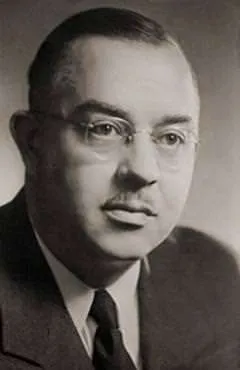
Dr. Harper is a member of the staff of the Foundation for Economic Education.
Those of us who are either fathers or mothers, or sons or daughters, have doubtless pondered the problem of posterior applications of force as a means of dealing with juvenile misconduct.
Suppose a child has done something he shouldn’t. What should be done about it? Some pretty deep philosophical problems are involved. They are the same ones involved in international squabbles even war, where the participants are older and operate in gangs. But let’s reduce the problem to a size we can see, based on our own direct experience, so as to avoid becoming befuddled by the sheer bulk of the battle.
The Deed Is Done
Your child, let us say, has enacted a misdeed.
The first fact to be realized is that nothing can undo a deed already done. That much is sure. It is not within our power to alter past events. We cannot decide that the Stone Age shall not have been. All that can be done in the direction of undoing the deed is to replace the former physical position of things, and the like. If Johnny has pushed Suzie’s doll carriage over the bank, for instance, perhaps he can be made to bring it back. Or if the doll has been broken, perhaps he can be made to either patch it up or buy a new one from his candy money or penny savings.
Such readjustments do not really undo the original deed. One indelible consequence is that Suzie’s feelings have been hurt, with the result that her disappointment in Johnny is imprinted upon her mind forever. And neither the patched doll nor a new one like it quite suffices to replace the object of her fondness before it was marred or ruined.
Or to illustrate this point more clearly, the life of a dog that has been killed or a person who has been murdered is definitely beyond our power to replace.
What else can be done to Johnny for having committed this misdeed? One thing only—you can apply some sort of retribution. You can do that, or just let the matter go.
Retribution
The form of retribution you choose may range all the way from a rebuke, such as a mild scorn of disfavor, to something of the violent sort. In common parlance, you may either go easy on him or beat the tar out of him. The choice will differ among parents, but for any one parent the selection at any one time will probably depend on the adjudged seriousness of the misdeed or the frequency of its recurrence. Perhaps the time of day and how tired you are when the misdeed occurs will have an influence on your choice; the birch rod doubtless is a tool used more in late afternoons and evenings. But let such details go. They are not of primary concern here.
Retribution can have only two purposes:
1. To penalize the misdoer for a misdeed that has already been performed. This is in addition to forcing him to replace the thing stolen or broken, and the like.
2. To discourage similar misdeeds in the future.
Let’s consider these two purposes separately.
Retributive Justice
One who believes in Eventual and Eternal Justice in the Universe must reject the first of these two purposes of retribution. He must refrain from punishment for its own sake, as distinct from trying to prevent repetition.
To refrain from posterior applications for purposes of retributive punishment really stems from one’s religious faith. And it is a severe test of that faith, indeed. For in the heat of parental disapproval, it becomes almost irresistible to get in on the act and try to help God a bit; to try to decide for Him what would be a fair potion of gall in this particular instance; to apply the potion now rather than to wait for Him to settle the matter in that universal accounting of justice in the Hereafter.
If I really have faith in an Eternal Justice, I cannot logically bow to this temptation. My excuse for doing so would be a claim of false authority. Tested in the light of an Eternal Justice, I would then myself be originating a misdeed merely because another has done a misdeed, and that makes no sense. I would be starting a chain reaction leading to an endless market for birch rods as a consequence of the original misdeed.
So anyone who believes in a formalized Heaven and Hell, or any counterpart thereof, must reject as a valid purpose of retribution the penalizing of misdoers beyond the point of repairing damage done. On what authority can I assume that the processes of retribution have not already been fully designed, or that I am empowered to design or redesign them as part of my life mission?
That He May Fear
If one rejects retribution for its own sake alone, then the only valid purpose it can have is to try to discourage repetition of the misdeed.
Usually these retributive ceremonials are quite private affairs between the parent and the child. Neighbors are generally not invited to be observers. Why? Couldn’t neighbor children benefit as observers and also acquire goodness that way? Why restrict the lesson to one who has already performed the misdeed? Why not let its benefits accrue as well to others, where misdeeds may be contemplated but still undone? Perhaps, if the process can attain the goal, something is to be said for public whipping posts, public executions, and the like.
So if misconduct can be discouraged by retribution on the misdoer, can it not also be discouraged in an alert child who merely observes the application of posterior pains on the misdoer? And if that can be made to work, is it not possible to forestall misconduct in an innocent child by applying in advance a sample of the retributive process?
Pre-Punishment
For instance, if George can be prevented from cutting down a second cherry tree by the application of a bit of force after the first misdeed, can’t Tom be discouraged from cutting one down by being allowed to observe George’s punishment, as a sample of what might be in store for him in like circumstances? In fact, couldn’t George have been prevented from cutting down the first tree if he had been whipped in advance, as an innocent boy, as a sample of what the misdeed would hold in store for him? This would be a unique procedure, to be sure, and it opens up quite unlimited opportunities for “retribution in advance,” so to speak. But if one assumes that the process truly prevents misdeeds, what is wrong with such preventive measures applied to the innocent as well as to the guilty?
The deep, philosophical question at issue here is whether or not the process attains its objective. Can people be made moral by force? There is no doubt, I suppose, that the conduct of a child can be altered somewhat by the application of force or the threat of force; that he can be influenced through the process of fear which this engenders. The child can surely be made to act one way, or not act another, due to the push of fear rather than to the pull of understanding. But since moral conduct must be a personal and self-willed choice based on what the individual himself deems to be good, rather than what he fears, then force and the threat of force surely fails to cause moral conduct—whatever else one may say about it. However much the child’s actions may be influenced by restraint and by the generation of fears, it is something other than moral guidance that is being accomplished.
I suspect from my own experience that when as parents we apply a whipping, it is the consequence of having reached a state of intellectual bankruptcy at this point. We don’t know what else to do. So our discouragement or animosity breaks out in this particular form, with the child directly on the receiving end.
Perhaps there is nothing else to be done at that stage of events.
But isn’t it possible, somehow, to avoid their ever reaching that critical stage?
Love and Respect
Now, love—or at least respect—is surely a requisite to the child’s learning a lesson that will reorient his conduct into proper, self-responsible action—moral conduct.
If a whipping has the effect of destroying this love and respect, a most precious and essential starting point of the child’s education will have been lost.
It is not easy at such critical times to remember that the child’s deed seemed to him at that time to be the right thing to do. It seemed to him that it was the thing to do, that is, as a composite opinion that took into account all considerations known to him, together with his intuitive guides to conduct. To say this is no more than to state an axiom, yet as a tool of thinking it tends to escape parents in such times of emergency.
So the child’s deed—which to the parent was a misdeed—simply reflects the child’s tools for decision at that time. In differing from his parent’s decision of the right thing to have done, it simply means that the two had different tools for judgment. To beat the tar out of the child because of this difference of opinion fails to introduce a single new element for rational choice into the child’s kit of decision tools. When again similar circumstances arise, the child will surely still think as he did before as to what is the right thing to do. The whipping does nothing, basically, to correct the concept that caused the child to behave in a way deemed wrong by the parent. All that the whipping can do is to inject the new ingredients of violence and fear into the child’s kit of reactions.
What Was His Reason?
I once observed a teen-ager handle a problem in an interesting way. A younger child had perpetrated a misdeed, as his elders judged it. The elders, in conference assembled, were pondering what to do about it. Finally the teen-ager said: “Let me try to handle this. I want to talk with him first, and find out why he did it. He must have had some reason, and if we can find out what the reason is, we will know where to start to work.”
This approach seemed to me to be astute and sound. Why start to work on a problem until we know precisely what the problem is?
I am reminded in this connection of a proposal for resolving arguments. As a starting point, each side states its case and all the facts that contribute to the position each takes on the issue. The second step is for each side to state the facts and position held by the other side—state them to the satisfaction of the other person. Only after that point has been reached are the parties ready to try to proceed with the final step of resolving the difference. The only point of present interest about this procedure is to recognize that both parties have reasons for their position; that only after all the facts have been laid on the table for both to see, is it possible to proceed toward agreement based on reason rather than on power.
Who Should Be Whipped?
Now there is an interesting question to be posed at this point, about a difference of opinion between the parent and the child. Let us assume that one of them is going to use force on the other as a means of handling this difference of opinion. We have already concluded that the process relies on fear rather than on understanding and sincere conviction; that it probably destroys love and respect on the part of the victim. The problem now arises as to which of the two is to be the victim. Who is to be whipped?
Ruses may be used to decide this question, such as seniority rights. Or the law of guardianship might be invoked, or something of the sort. But behind all these masks to the claim of authority looms the real one—superior might. The one who is bigger as tested by the tools of this battle—force—will be the applier; the smaller will be the recipient. Might rules games of might. And so the parent wins the initiative, ordinarily.
A common parental observation is this: “This is going to hurt me worse than it does you.” That, I take it, is supposed to convince the victim that he is not, after all, to be the principal sufferer. That is a claim surely lacking in convincing power. On the contrary, it probably only induces in the child a further—and unnecessary—loss of respect for the parent who poses such a porous pontification.
Now let’s take a bit of inventory of our analysis. The only valid purpose for a whipping is to induce nonrepetition of misconduct—as judged by the parent, and in contrast to the child’s judgment at the time of the deed. The process substitutes force for reason. It operates through fear, and will be no more lasting than will be the child’s fear of his parent. This approach is the antithesis of love and respect, and is alien to all that love and respect can attain. It denies education and bars new tools for learning moral self-reliance, by which the child will make wise choices.
One may now ask, in the light of all this, why the child should not whip the parent rather than the other way around? If the child truly loves and respects the parent, then his having to do this should induce sincere regrets for having done something that led to this sad ending. It would, furthermore, avoid the risk of losing the child’s love and respect, to whatever extent there was any originally.
The child may not, of course, have any love and respect for the parent. If this is the case, then a fundamental requisite to educational influence is totally lacking anyhow. And a lashing, by itself alone, is surely not the way to establish love and respect. So if the parent has failed up to this time to gain the love and respect of the child, why shouldn’t the parent be lashed for his failure; who better to administer the penalty than the child, the victim of neglect?
The Test of Experience
Before throwing such a strange proposal into the ash can, one might try applying it to his own experience as a child. In my own experience, the one and only lashing I received was one where—to this day—I am convinced that the judge rendered a hasty decision prior to obtaining all the facts in the case. The whipping had absolutely no effect whatever, so far as I can detect, of helping me to acquire better tools of judgment in the future. All it did was to sacrifice some of that sacred ingredient of love and respect, from which alone can come a positive influence for the future.
How about your own experiences? Did you ever learn anything fundamental from the applications of brute force upon your posterior? Did you ever gain from it any love and respect for the inflictor?
It would be difficult, I suspect, to take this step and hand the switch to the child to be used on one of us as a parent. A friend of mine, on whom I tried a trial run of this reasoning, remarked: “I think I’ll have my wife try it first.”
Of course, there is another alternative. And this is to avoid the process of force entirely; to rely totally on gaining enough advance respect in the eyes of the child so that guidance can be accomplished out of respect and understanding, rather than to have to resort to force. Failing in this, perhaps the battle is lost anyhow.
A complete reorientation of processes of the parental handling of children in times of misdoing, along the lines suggested, might also be tried elsewhere. It might be tried where there are differences of opinion in larger categories of humanity—even international and interracial affairs. In the face of continuous failure in international affairs by the use of force, might we not consider a new approach even there? Rule by sheer might is a doubtful device, even from the standpoint of the seeming victor.
***
A Consequence of Compulsion
When the law, by means of its necessary agent, force, imposes upon men a regulation of labor, a method or a subject of education, a religious faith or creed—then the law is no longer negative; it acts positively upon people. It substitutes the will of the legislator for their own wills; the initiative of the legislator for their own initiatives. When this happens, the people no longer need to discuss, to compare, to plan ahead; the law does all this for them. Intelligence becomes a useless prop for the people; they cease to be men; they lose their personality, their liberty, their property.
Frederic Bastiat, The Law, 1850.