
The G7’s critical minerals bloc.
There is a contradiction at the heart of the G7’s new approach to critical minerals. When the Group of Seven closed its summit in Évian-les-Bains on June 17, it issued a statement insisting that these supply chains should be “governed by market principles.” Yet almost every measure the alliance endorsed would put governments in charge instead.
The G7 agreed to draft what it calls a standards-based market and set a target to cap any one country’s share of its rare-earth imports at 60% by 2030. It also weighed an American plan for tariff-enforced price floors, while Japan pushed for a shared stockpile of at least 90 days. Each step puts the government in charge of prices, volumes, and sourcing, and each is aimed at China.
The target, at least, is well chosen, because China’s grip on the sector is not in doubt. The International Energy Agency reports that Beijing is the leading refiner for 19 of the 20 strategic minerals it tracks, with an average share near 70%, and that it handles roughly 90% of rare-earth processing and nearly all the heavy rare earths in defense-grade magnets.
Nor has Beijing hesitated to wield that position. Between 2023 and 2025, it placed export controls on gallium, germanium, graphite, antimony, and seven rare-earth elements, then announced sweeping new controls in October 2025 before suspending most of them for a year after talks with Washington. The pause buys time, but does not fix the underlying problem of access.
The United States, for its part, has already built the template the alliance now wants to scale. In July 2025, the Defense Department set a price floor of $110 per kilogram for the neodymium and praseodymium that MP Materials mines at Mountain Pass, nearly double China’s roughly $60. The deal also made the Pentagon the company’s largest shareholder through a $400 million stake and a ten-year purchase commitment. At a $60 market price, the floor alone could cost taxpayers about $65 million a year.
The plan floated at Évian would stretch that arrangement across an alliance, with a trading zone setting reference prices that act as floors, plus tariffs that rise when prices fall. European officials balked at adopting a pricing model built in Washington, wary of US sway over its prices, and the largest American mining trade group warned that incentives beat fixed prices. At the end of the summit, the statement set no binding floor.
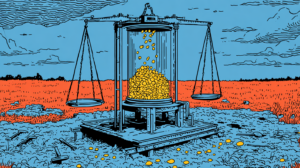
The objection, though, runs deeper than the details. Start with the problem every price floor creates: a price above market produces a surplus the government must absorb and a stock that sells only at a loss, as farm and steel supports have for a century. The bill falls on every maker of electric cars, turbines, and weapons now buying inputs above the world price.
The second problem is yet subtler: a guaranteed floor ends up helping China rather than hurting it. Beijing’s sharpest weapon has been its power to drop prices below the level that justifies a new Western mine, and a high floor quietly removes that threat. With Western prices fixed near $110, China can lift its own toward that level, earning more on the processing it controls while G7 budgets cover the rest.
The third problem is that the 60% import cap simply aims at the wrong stage. China’s leverage lies in refining, not in extraction, so a country can source ore from a dozen places and still ship nearly all of it to China for processing. A cap at the border, then, does nothing about refining, where the real dependence sits, and targets a number the bottleneck can comfortably meet.
The fourth problem, however, is the deepest. The reference price at the heart of the plan is not a market quote but the output of a Pentagon program: an artificial-intelligence system called Open Price Exploration for National Security, or OPEN, built by the Defense Advanced Research Projects Agency (DARPA) to compute what a metal should cost once labor and processing are counted and alleged Chinese manipulation is stripped out. That is an effort to solve by software a problem economists named a century ago. Prices emerge from millions of trades carrying information no office can gather. Friedrich Hayek called the price system a means of communicating dispersed knowledge that no planner can assemble. An algorithm fed political assumptions about obscure commodities will help no one, and governments then spend public money defending its output.
These tactics also invite retaliation. China has already restricted exports to Japan after Prime Minister Sanae Takaichi’s remarks on Taiwan, and a bloc that sets prices and dictates sourcing hands Beijing a template and a pretext to do the same.
There is also a cost the G7 has not counted, one rooted in its own history. For years the West treated resource nationalism as a breach of the trade order. When Indonesia banned raw nickel ore exports in 2020 to force processing at home, the European Union won a 2022 ruling at the World Trade Organization, with the United States joining in. Now the same governments reach for those very tools. Indonesia lifted its nickel export earnings from about $6 billion in 2013 to roughly $30 billion in 2022, and a G7 that copies it cannot challenge the next country to do the same.
History suggests that the plan will not deliver security, either, because the last attempt followed the same path. In 2010, China cut rare-earth exports to Japan, and dysprosium oxide rose more than twentyfold by its 2011 peak. Western money followed, and Molycorp reopened Mountain Pass for roughly $1.6 billion. China then let prices fall, and by 2016, dysprosium had dropped below $200 per kilogram, a year after Molycorp went bankrupt. The boom collapsed the moment China resumed exports.
What has actually worked looks nothing like this. Lynas, an Australian firm, became the first to separate heavy rare earths outside China in 2025, backed by equity from a Japanese state agency, not a price guarantee. Japan, meanwhile, met the shock by diversifying suppliers, cutting reliance on Chinese rare earths from nearly 90% to about 60%. The high prices outside China, several times above Chinese levels, are themselves drawing the investment the G7 says it wants, with no floor required.
The weakness the G7 faces is real. China’s hold on processing is genuine, and it has shown that it will use it. Even so, the remedy the alliance backed misreads the cause. China built its lead over decades, through heavy spending on plants, thin margins it could tolerate, and the skill of working at scale. That lead cannot be eroded with price guarantees that shield favored firms, invite retaliation, and reward the rival the alliance means to check.
This is the recurring pattern of resource nationalism. A government names a strategic resource, declares a public-interest goal, and inserts itself between producers and the world market. The producers, the buyers, and the taxpayers pay, and the state collects. The better path runs the other way: lower the cost of new supply through faster permits, research in recycling and separation, and defense purchases that create real demand without economy-wide price-fixing. A supply chain governed by market principles would serve the G7 far better than adopting the resource nationalism it once condemned.