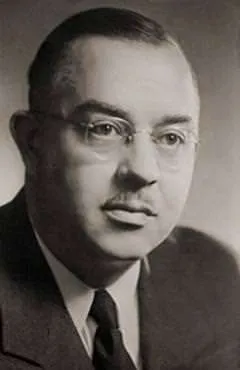
Dr. Harper is a member of the staff of the Foundation for Economic Education.
It is a tragic fact that there are so few real believers in capitalism among the younger generation of Americans. Surveys of opinions and beliefs of high school students reveal this clearly, showing how most of them believe private capitalism to be some sort of social sin, as also is communism in their view. And all sorts of political action continues to indicate a dominant opposition to capitalism.
Perhaps this situation is not surprising when we consider the extent to which teaching in the schools and colleges has become a socialized profession. Equalism is rampant there. The best and the poorest teachers share about alike under the tenure system, in the demand for their services, and in their rates of pay.
In the United States, for instance, the average college and university instructor now gets less pay than the average wageworker; the average full professor gets only 55 per cent more than the wageworker despite his large investment of time and funds in obtaining a license to practice his profession. In Russia, by contrast, the average full professor gets 700 per cent more than the average wageworker, as contrasted with the 55 per cent in the United States.1
One wonders, in view of this and despite all Russia’s other authoritarian impositions, whether the concept of opportunity and reward for extraordinary accomplishment may not become better understood and taught in Russia than in the United States . Those teachers who themselves experience economic reward for excellence are the ones most likely to extol it in their teaching and influence on young minds, and to condemn equalism.
Unfortunately we are not going to change this situation overnight. The educational practices so strongly entrenched in our schooling in the United States are likely to continue for quite a time. A bit may be accomplished here and there, of course, especially in the nongovernment schools and colleges where it is easier to recognize merit and reward superior accomplishment among teachers. To the extent we are still free to make such choices, we can lend our financial support to the schools which do this, so as to help them pay the costs it entails. And we can send our children to such institutions to be taught, paying without stint the tuition and full costs involved, rather than supporting institutions of learning where we all send to each other the bills for the socialized costs of socialist education for our children.
All these things can be done by us as individuals, to be sure, and perhaps we can thereby slowly change the climate of educational practice. But working through the established educational system is not enough and will be slow at best. We must also look for all sorts of other ways of teaching and instilling in our children an understanding of and sympathy for the concepts of capitalism. This means opportunity for exceptional attainment, the right to have the rewards there from, and the right of the earner himself to dispose of these rewards as he deems wise — knowing that without a thing’s being produced in the first place, there can be no problem of its disposal.
Above all, we should search for ways of teaching capitalist ideals in the home as a part of the home life of the child. This is where most of the teaching of fundamentals will be done anyhow, if at all, through precept, practice, and demonstration. For one thing, it is basic to teach the child the processes and rewards of thrift and ownership. For unless he learns this and finds it a satisfying practice, he will never really become a capitalist in the sense of personal opportunity, responsibility, and reward for wisdom and diligence.
Ventures into Business
How can the child be taught thrift and the merits of ownership in the home? There are surely countless ways, far beyond my ingenuity to discover. Having the child pursue his urge to embark on some childhood business venture of his own is good in some respects, but it also has some weaknesses. For instance, a child’s dream of a business venture is usually less likely of success, even, than is the average experience of ventures of more mature and experienced persons where a high percentage never make the grade. Yet we can learn from failures, if it doesn’t kill our spirit.
So a ready kit of first aid in event of failure, or perhaps less success than he probably anticipates, should be ready to soothe the youthful venturer. Even so, I would support and cheer all such childhood ventures, especially those giving promise of success in a noncharitable market. The objectives of Junior Achievement, as well as the Jaycees’ admirable project of Self-Reliance Awards to high school students, are all of good purpose.
Shares in Going Concerns
But the approach intended for special attention here, as having at least a major place in the training of a child to become a worthy capitalist, is one less speculative than the ordinary childhood venture, more certain of moderate success and adapted to being started at a younger age and on a smaller scale. And that is to help the child participate in business ventures that are already in operation and proved to be successful and going concerns. I refer to ownership participation in corporations, through the purchase and ownership of equity shares.
The ownership and participation can be started at a very young age — should be, in fact. I know from experience that a child of four or five years of age can begin to grasp the essentials of ownership participation in this way.
One approach is as follows: Have the child invest his own money in some equity ownership, preferably money earned by him doing some useful tasks. Allowance money, if the parent is convinced of the wisdom of giving a child unearned income in that way, may be used but I feel it to be miseducation to give the young child overt gifts of money to purchase equity shares. If he is given capital funds — different in a way from giving him food to keep alive — it blocks his mind a bit to the correct lesson of earned ownership. This he should learn well at the outset, if he is to be taught to reject the prevalent attitude that the world or some major part thereof owes him luxuries of living merely because he happens to exist.
The Urge to Earn
Before a child can invest his earnings, of course, he must have earned something and have saved the part he is to invest. How can he be induced to do that? This is an important first question. But it is one I am not going to tackle here, beyond a few brief points.
It is clear that before the child will work to earn something, his wants must exceed their fulfillment. His wants must exceed the promise of their immediate fulfillment from the hand of a fond and doting parent who is ever generous to the extreme. Only then will he have any reason to work as a way to get something he wants.
Things the child wants for joy of immediate consumption doubtlessly carry the strongest urge at the outset. This may be a candy bar which he must forego until he has earned its price, or a toy, or something of the sort.
Then the child can slowly be weaned to earn and save for things more enduring and distant in his desires. Soon he will become willing to provide for things only vaguely foreseen as desires, things not yet of precise form but assumed to be needs that will become clear later. He is then ready to be led into investing his earnings in corporate ownership because that is its nature.
Investment Trusts
So the child should be urged and induced to put savings from his own earnings into ownership of going business concerns. Personally, I prefer some sound investment trust for this particular purpose. It gives the safety of wide diversity of ownership as contrasted to the greater risks of any one corporation. It avoids the necessity of switching from one corporation to another as the changing winds of economic climate alter prospects for its continuing success. Investment trust shares can more safely be left quietly to work for the long pull of time because the management of the investment trust takes care of all the trading in individual corporate shares as a service for its owners. This reduces the temptation of the child to venture into some highly risky speculations of individual stocks.
Many a promising capitalist has had his early faith in the capitalist system killed and buried in the crowded cemetery of “rare opportunities to get rich quickly,” where investment neophytes so often meet their doom. The child should be encouraged to begin his education as a capitalist in a way that will minimize this sort of risk.
Forays into those “golden opportunities” of risky, new corporate ventures not his own is a game warranting only mature and experienced minds. That game should be left to persons of means who can afford the high mortality rate such ventures entail.
Beginning Young
It is easy to wait too long to begin such a program, and to underestimate the early age at which the child can begin to learn important lessons from the experience of equity ownership. It is a temptation to delay the beginning because the child will have only bits of money to invest, and because the commissions for buying small quantities become an excessive added cost.
But this problem can easily be handled in another way. Since the child is a minor anyway, and you as parents are his legal guardians, the purchase can be a private arrangement between you and the child until he reaches a more advanced age — perhaps until he reaches maturity. Let us assume that you already own shares of the XYZ Investment Corporation. You can allow the child, as he progressively accumulates enough savings, to buy individual or even fractional shares. I find that one-tenth of a share, for instance, is an easily workable fraction to use, allowing the child to become a capitalist at a young age. If shares are selling at $20.00 a share at a time when the child has $2.00 saved, the child can buy from you one-tenth of a share as a private deal between the two of you. Then he can continue to buy additional fractions just as fast as he can save each one-tenth of the current price.
As dividends are paid, they will come to you as parents, in whose name the shares are registered. You then pay the child his dividend share as you receive it each quarter year. If the quarterly dividend is 30 cents, the child would be given for one-tenth of a share his dividend of 3 cents. The amount may seem trivial to us as adults who deal in much larger figures, but it is significant to a child and important as a device for teaching how the capitalist system works —how one can gain rewards from savings he has put to work for him in many business concerns of the nation. The feel of the income he receives as reward for past thrift and investment will be a matter of great and worthy pride to the child.
Lessons That Can Be Taught
Each time when the child is given the dividend his investment has earned, you will have a rare opportunity for all sorts of lessons about how the capitalist system works. I know from repeated experience that it is a powerful teaching tool with the young mind.
Suppose, for instance, the family is on a trip. As the hours of travel become long and you try to think of ways to reduce the child’s tedium, try teaching him about the capitalism of which he is now a part. Even if he owns only one-tenth of a share in some good investment trust, you can hardly go a mile without being able to point out some business along the road in which he is a part owner. “You own a little of that,” you can tell him, swelling his chest with the just pride of ownership from his own savings and investment. Even though we know that the amount of his ownership is so trivial that a microscope would be needed to find it, its size is not so important as is the fact.
At a very young age the child can also begin to understand the growth pattern of compounded, reinvested earnings. He can understand and appreciate that admirable little story of Arkad whose basic argument for saving was this: “A part of all you earn is yours to keep,” so keep it, along with the earnings on the earnings.2
For purposes of a feeling of participation in the process of ownership, some may argue that it is better to have the shares registered directly in the name of the child whenever full shares are acquired. This may well be true, and worth the cost and trouble. For the child to see his name on the certificate, and to receive quarterly dividend checks made out to him is surely more real and vivid to the child than to have it come through the parent. The extra trouble and expense may be worth it.
However you handle the details of such a program, you can watch the child’s interest in capitalism grow and grow from such teaching. Endless lessons can be wired into his interests. The appeal of his ownership is ideal for learning the lessons of private capitalism vs. collective socialism. If you avail yourself properly of all these opportunities to teach him, you will have little or no reason to worry that the child will succumb to the wiles of socialism as he goes along through school. He may, in fact, be able to help teach the teacher a little, if he has also properly mastered the arts of tact and propriety.
Education Begins at Home
This is only one way that private capitalism — its methods and its merits — can be taught effectively in the home to the coming generation. Do you have others to suggest? We had better learn how pretty soon. If we continue to go socialist, it will be because we have not taught our own children properly in the home, so that the forces of collective resignation engulf them as in a tide. The current educational mode is part of this tide. Primary resistance, therefore, will for a time at least have to come from parents and a few exceptional teachers who can teach the meaning and purpose of private ownership and self-responsibility.
We need not, in my opinion, harbor any shame about teaching our youth that it is both moral and good to acquire honestly some capital as private property. Each of us must reason out its virtue for himself, so that he fully understands it and truly feels it. But in thinking the matter through, I have found helpful some ideas for which I can thank especially David Hume, Professor Elton Trueblood, and Albert Schweitzer.3 I shall paraphrase their ideas and express them in my own way:
Inborn in the nature of man, it seems, is the drive for attainment. It can be commonly observed, as Schweitzer points out, that those who have little personal property that they can call their own frequently express this urge in the form of pure ego. Others, if denied the opportunity of accumulating private property, will struggle instead for personal status in forms such as political power over their fellow men. The right to acquire and keep what one has produced or justly acquired, therefore, is a harmless vent for a terrific human urge, of a sort that forces no other person to sacrifice in order that he shall attain private ownership of things of worth.
That is doubtlessly why private ownership of property was the basis for the modern concept of moral justice. From an early day, this concept found support in rules of conduct such as the admonitions against theft and covetousness expressed in the Decalogue.
Footnotes
1 Source: Department of Economics, McGraw-Hill Publishing Company.
2 Clason, George S. The Richest Man in Babylon. Englewood Cliffs, N.J.: Prentice-Hall, Inc. Special Publications Department.
3Aiken, Henry D. Hume’s Moral and Political Philosophy, Book III. New York: Hafner Publishing Co., 1948.
Trueblood, Elton. Foundations for Reconstruction. New York: Harper & Brothers, 1946. p. 87.
Schweitzer, Albert. Civilization and Ethics. New York: The Macmillan Co., 1929. p. 266.
Ideas On Liberty
Exemplary Education
A sound education takes its source and receives assistance more from good example than from admonition and instruction.
Adamantius Corais (1748-1833)