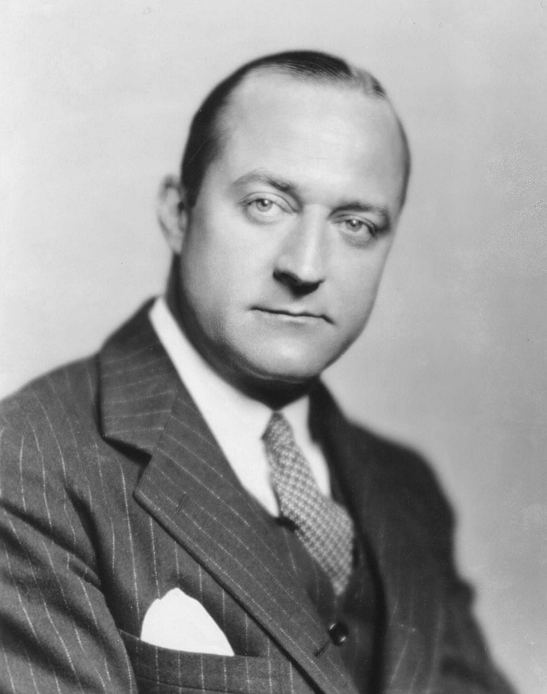
Reprinted through the courtesy of Newsweek Magazine. Copyright 1964 by Newsweek, Inc.
The billion-dollar line of credit just extended to Italy, chiefly by the United States, but with the help of a few European banks, is another dramatic illustration of the inflation epidemic now sweeping most countries in the world today, and of the intergovernmental cooperation that seems much more likely to prolong that inflation than to bring it to a halt.
The credit was extended, as dispatches put it, “to help Italy cope with a huge deficit in her balance of payments.” But what caused this “deficit” was the Italian government’s own inflation. Since 1958, Italy’s official money supply has been increased 90 per cent. In addition, the government has encouraged a huge creation of private promissory notes, popularly known as “butterflies,” that serve as a substitute for money. There is a budget deficit.
The inevitable long-run result of such policies is to raise internal prices in Italy above world levels. This tends to make Italy a poorer place to buy from and a better place to sell to. Hence it discourages exports and encourages imports. Hence it brings a “deficit” in the balance of payments and gives rise to fears concerning the stability of the lira.
It is instructive to notice that such consequences are brought about by the world monetary system set up at Bretton Woods in 1944—the IMF (International Monetary Fund) system. They could not happen under an orthodox gold standard. The loss of gold from any country would force that country to reduce its outstanding currency and deposits to bring prices once more in equilibrium with those in the outside world. It could not happen even in a world of paper currencies with free exchange rates, because at the same time as prices rose in the inflating country its currency would fall correspondingly in the foreign-exchange market, and so restore its “balance of payments.”
Prolonged and chronic deficits in the balance of payments, such as we have been witnessing over the last two decades, can occur only when one country inflates faster than its neighbors but still tries to peg its currency in the foreign-exchange market at a fixed ratio with other currencies. Then the discrepancy of prices in that country with prices elsewhere continues. Exports shrink, imports rise. The currency can be kept at the official parity only by huge currency swaps or borrowing from abroad.
Italian Example
Unless the U.S. government got the strictest guarantees out of the Italian government this billion-dollar credit was unwise. For the lira crisis could probably be halted overnight if the Italian government stopped inflation and sufficiently raised its discount rate. It is ironic that the principal rescuer, the U.S. government, has itself been suffering from a balance-ofpayments crisis for six years and is taking no effective steps to halt the inflation that causes it.
The Italian crisis is merely the most recent. Two years ago it was Canada. A few years before that it was Britain. India is suffering from a huge balance-of-payments problem because it is trying to combine inflation and socialism with an overvalued rupee. Our Latin American neighbors have had payments crises whenever they failed to devalue enough to offset their internal inflations.
Of the original 44 currencies represented in the fund (in 1946) nearly all have been devalued (following the British action in September 1949), some of them several times. Most of the 89 currencies now in the fund have had checkered careers.
This is no accident. The whole purpose of the fund was to save countries from having to redeem their currencies in gold on demand. The whole purpose is to permit them to expand credit and currency continuously, through mutual “drawing rights,” borrowing, and “central bank cooperation.” The inflationary game can be kept going indefinitely (at the expense of the world’s bondholders, savers, consumers) as long as this international expansion is uniform. Danger arises only when one country starts inflating faster than the rest, and then it must be propped up by the rest. World inflation will continue as long as we keep the IMF system.


