

Excerpts from a new book.
FEE’s founder Leonard Read was passionate about spreading the message of individual liberty. In the mid-20th century, the greatest threats came from totalitarianism, and Read was writing to an audience fully aware of the need to preserve liberty against tyrannical governments. In FEE’s 80th anniversary year, it is worth remembering that Read’s message is just as important today as when he was writing.
Wayne Hoffman, past president (2008–2024) of the Idaho Freedom Foundation, has just released a new book, Tao of Liberty, in which he considers how the message of freedom, and echoes of Read’s views, can be seen further back, in the teachings of Chinese philosopher Lao Tzu.
He begins:
Almost everything government does is an attempt to wish a fantasy into existence and then punish reality for refusing to obey.
Whose fantasy? Not yours. Not mine. The politician who wakes up convinced nature itself is wrong and reaches for the only tools he knows: more laws, more taxes, more subsidies, more permits, more prisons, more war. Enough words in enough binders, he believes, and the universe will kneel.
That is why, today, you need a government permission slip to cut hair, sell lemonade, add a bedroom to your own house, or collect rainwater that falls on your own roof.
That is why a farmer can be raided for selling raw milk to his neighbor while a corporation poisons a river and walks away with a tax credit. That is why a bureaucracy in Washington, DC, decides what your child eats for lunch and why a single bureaucrat can forbid a dying patient an experimental drug that might save her life.
All of it is “doing.” All of it is the arrogant conviction that reality must be forced, managed, improved.
The government finds various ways to control citizens’ lives, and different avenues to limit individual freedoms. This desire for control and power is reflected everywhere, and finding a path to liberty was part of Read’s message in his 1964 book Anything That’s Peaceful, in which he wrote of his vision of an ideal society:
The ideal of freedom is to let anyone do anything he pleases, as long as his behavior is peaceful, with government empowered to keep the peace—and nothing more. An ideal objective, true, but one that must be pursued if we would halt the continuing descent of our society from bad to worse.
A limited government, and everyone free to pursue his or her own goals. We are still on the path to liberty, but we can see glimpses of this message through history. In Hoffman’s discussion of the Tao Te Ching, the foundational text of the Chinese religion of Taoism, he writes (first quoting Lao Tzu):
The Way, or Tao, is mysterious and nameless, the secret of secrets.
Once you start defining things, they transform and slip through your fingers.The Way that can be walked is not the eternal Way.
The name that can be named is not the eternal name.
The nameless is the beginning of Heaven and Earth.
The named is the mother of all things.Therefore:
Free from desire you see the mystery.
Full of desire you see the manifestations.
These two have the same origin but differ in name.That is the secret,
The secret of secrets,
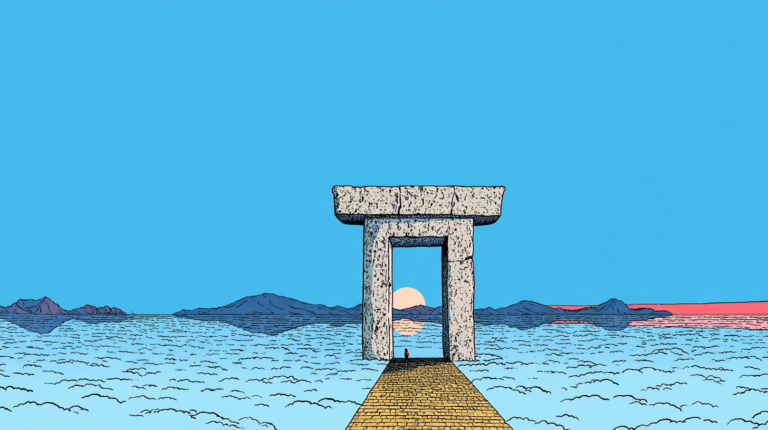
The gate to all mysteries.Every zoning ordinance, every subsidy, every five-year plan is an act of desire: an attempt to turn endless possibilities into just a few manifestations, all to the satisfaction of the political egos armed with pen and purse.
Liberty itself may slip through our fingers, if we are not careful. Read was alive to the threat of governmental overreach, and Wayne Hoffman offers a reminder of the human essence of liberty, which philosophers across cultures have sought.