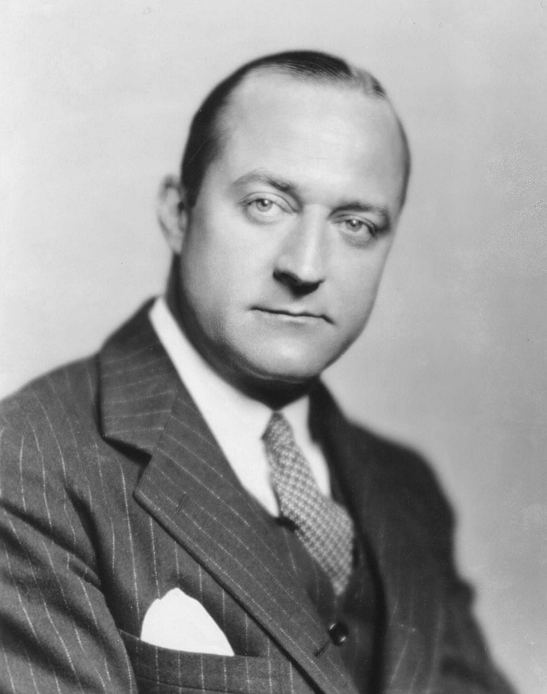
Henry Hazlitt, noted economist, author, editor, reviewer and columnist, is well known to readers of the New York Times, Newsweek, The Freeman, Barron’s, Human Events and many others. Among the more recent of his numerous books are The Inflation Crisis and How to Resolve It and a revised edition of Economics in One Lesson.
In the August issue of The Freeman I pointed out that, in the division of the part of the gross income of the corporations available for the employees and for the stockholders, the employees got the lion’s share. In 1977, for example, the last full year for which the figures were then available, the employees got 89.4 per cent of the division and the owners were credited with net profits after taxes of only 10.7 per cent. They did not actually receive that much, but dividends amounting to only 4.5 per cent of the combined total.
This division, I went on to show, was in no way unusual, but in fact typical of the division over the years. In the whole thirty-year period from 1949, the employees received an average of 88.1 per cent of the two-way division, the stockholders were credited with an average of 11.9 per cent: the actual dividends they received came to only 5.3 per cent. And in the last ten of those thirty years, contrary to what newspaper headlines, union leaders and political speeches during the period would lead one to expect, the average division was even more in favor of the employees. In those ten years employees had been getting an average of 90.2 per cent of the combined total available for division between the two groups, and stockholders an average of only 9.8 per cent.
So much for the previous record. The percentages I have been citing are calculated from the corporation earnings of the nation as compiled by the Bureau of Economic Analysis of the U.S. Department of Commerce and published in its monthly Survey of Current Business. The final figures for calendar 1978 are now available, as they were not when my August article was written. What do they show?
For the last thirty years the employees of this country’s corporations have been receiving an average of eight times as much from them as has been credited to the stockholders.
The reader will recall that a few months ago, when preliminary figures of corporate earnings in 1978 were first appearing, they were being roundly denounced by politicians and by some Administration leaders as not only excessive but as shocking, “obscene,” and even “disastrous.” It is true, as might have been expected in such an inflationary period, that in dollar amount they rose to record levels. The profits after taxes of the nation’s corporations rose in 1978 to $111.3 billion, compared with $94.7 billion in1977, itself a record year for profits in dollar terms.
But these figures have to be seen in their full context. For the compensation of employees of the country’s corporations, in dollar terms, also rose in 1978 to the highest level on record—$884.9 billion compared with $776.9 billion in 1977. So the employees in 1978 received 88.8 per cent of the total available for both, compared with 11.2 per cent credited to the stockholders. The stockholders were actually paid in dividends only $42.1 billion, or 4.2 per cent of the total available for employees plus stockholders.
It will be noticed that this division does not differ very markedly from that in 1977 or the average in the last ten years. The percentage distributed in dividends actually fell below the 4.5 per cent average of the preceding ten years.
Any government action that seriously reduces profits must diminish employment and payrolls as well.
What is most striking about all these facts is their complete contrast not only with leftist propaganda but with prevailing public assumptions. Frequent polling by the Opinion Research Corporation, for example, has found that the consensus of most Americans is that the corporate stockholders get about 75 per cent of the two-way division of gross earnings and the employees only about 25 per cent. Judging by their statements, this must also be close to the assumption of the Washington bureaucrats. And millions of Communists throughout the world still adhere to the Marxist myth that labor under capitalism is paid the merest fraction of what it helps to produce and is forced to accept just enough to stay alive and reproduce its numbers.
The truth is that—when recalculated to allow for the distortions of inflation—corporate profits are still far too low for the health of the American economy.
Though corporate wages in 1978 were eight times corporate profits after taxes, though wages made up 76 per cent of the national income and profits only about 7 per cent (really much lower if accounting procedures were permitted by the IRS to make full allowance for inflation) it was the latter figure that was denounced as “obscene” and “disastrous.”
This demagogic hatred of profits has in fact done immense harm to the American economy, and above all to the workers. For payrolls and profits, as statistics have shown year by year over the last half century, go up and down together. They are interdependent, and causally tied. The amount and outlook for profits determines employment and new investment. The way to encourage employment is to encourage employers. The way to increase real wages is to increase productivity; the way to do that is to encourage investment; and the way to do that is to encourage adequate profits.
The result of our actual policies is that our average annual percentage increase in productivity in the period from 1960 to 1977 was lower than that in Japan, in France, in Germany, in Canada, and in Britain. Our rate of capital investment between 1966 and 1976, as a percentage of GNP, was also lower than in any of these countries.
The lesson ought to be clear.