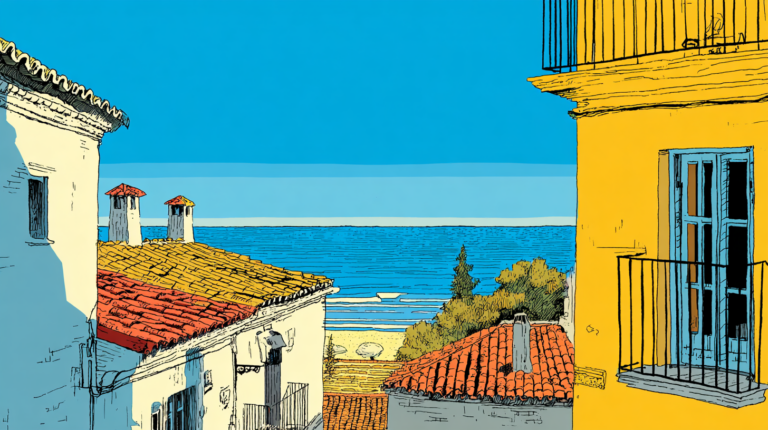

More Americans than ever are buying prime Spanish property.
Although it’s the world’s second most-visited country, Spain hasn’t been sending out a welcoming message recently. Its Socialist-led government has proposed or passed several measures aimed at deterring foreign property investors, such as a 100% tax on non-EU citizens buying houses (so far just an idea) and a ban on Golden Visas, which awarded residency to non-Spanish citizens who purchased real estate worth at least €500,000 (effective from last April). Over the last few years, there have also been protests against what residents see as over-tourism in hotspots such as Valencia, Málaga, Catalonia, and the Balearic Islands.
One might have expected all this negative publicity to have dented Spain’s reputation as one of the best places in the world to take a vacation or buy a second home. But the opposite seems to be true: Spain set a new tourism record in 2025 with 97 million visitors, a 3.2% increase on 2024’s 94 million. Despite one of the wettest winters for years, 5 million people visited the Iberian country in January, a 1.2% increase on the same month in 2025.
Spain launched its modern tourism industry in the 1960s under the Fascist dictator Francisco Franco. Advertising posters featured evocative photos of flower-filled boulevards and whitewashed villages above the slogan “Spain is different”—the creation of Manuel Fraga, Franco’s Minister for Information and Tourism. Part of a broader opening-up of the country’s autarkic economy, this was a rebrand, designed to counter the image many Europeans had of Spain as a gloomy backwater. It was more successful than Fraga could have hoped for. Almost seven decades later, Spain’s tourism industry accounts for 13% of GDP and employment, which is why the country’s local administrations, as well as its central government, have been reluctant to enact measures that might put visitors off.
But a consensus is emerging that Spain has become the victim of its own success, that its tourism industry cannot continue unchecked or uncontrolled. Pedro Sánchez’s government has rolled out a vaguely-worded plan to make tourism more sustainable, but several regional administrations are attempting to control the situation more aggressively.
Barcelona’s draconian plan to eradicate all of its 10,000 tourist flats by 2028 was ratified by the Constitutional Court last March, which rejected an appeal based on the rights of private property owners; last month, the Catalan capital also doubled its tourist tax, meaning that guests will pay up to €12 per night extra for a stay. Other major cities such as Málaga, Madrid, Seville, and Alicante have placed restrictions on short-term rentals or stalled the issuance of new holiday rental licenses. Yet all five destinations still rank amongst the most popular in Spain. Barcelona welcomed a record 16 million visitors last year, up 3% from 2024. Spain, it seems, is too well established as a tourism brand for such measures to affect people’s holiday plans (so far, at least). In the minds of foreign visitors, Spain is still different.
Foreign house buyers are also breaking Spanish records, purchasing over 97,000 homes in 2025, up from 94,000 in 2024 and accounting for 14% of total property sales. The most popular regions are those that have seen the largest demonstrations against over-tourism: Andalusia, Catalonia, Valencia, and the Balearic and Canary Islands. British buyers, despite apparently being the target of Sánchez’s insane 100% tax proposal, remain the largest cohort, at 8.6% (closely followed by German and Dutch).
High-end property continues to boost Spain’s international appeal, despite the ban on Golden Visas. Sánchez claimed that these were contributing to the country’s housing crisis—as if freeing up more half-a-million-euro homes would increase the stock of “affordable” housing for Spaniards. But given that Golden Visa transactions accounted for less than 1% of Spanish property deals, the ban has had a negligible impact. The prospect of automatic residency was never the deal-breaker that Sánchez seemed to think it was for foreign High Net Worth Individuals (HNWIs), most of whom buy to invest or have a holiday home. Consequently, over the last few years, HNWIs have propelled Spain to the top of the European rankings for luxury property sales.
According to the latest report by Lucas Fox, Spain’s leading luxury real estate agency, the Iberian nation has “quietly but decisively [become] Europe’s value play: a place where prime buyers perceive long-term upside rather than short-term speculation.” Driven by limited supply and increased international demand, especially amongst Americans, the firm predicts that investment in prime Spanish property could rise by 20% by the end of this year. International buyers dominate this section of the market: in transactions above €2.5 million, 62% of buyers are foreign, a figure that rises to 90% in sales over €5 million. Americans spend more per square meter than any other nationality and are increasingly active in Spain, especially Andalusia.
When Zohran Mamdani became the Democrat mayor of New York in January, Sánchez said that his victory “was a sign of where the energy resides today—with those who offer hope, not fear.” Not with those who offer the hope of sound property investments, clearly: analysts are already flagging what they call “The Trump/Mamdani Effect,” as American buyers, spooked by a hostile regulatory environment, take their money out of the US. (New York’s financial elite spent millions trying to keep Mamdani out of office, precisely so that this wouldn’t happen.) According to the Lucas Fox report, “A buyer accustomed to paying $30,000 per square meter in Manhattan does not consider it unreasonable to pay €25,000 [$29,000] or €30,000 [$35,000] in Madrid,” the implication being that most other foreign buyers, and certainly most Spaniards, would balk at such prices. Prime property in Manhattan costs an average of $27,500 (€23,500) per square meter, whereas even in the most exclusive areas of Barcelona and Madrid, the average price is less than half that.
HNWIs from the Gulf States are also increasing their activity in Spain, especially along Málaga’s coastline, referred to as the Costa del Sol for having over 300 days of sunshine every year. A stretch of coast near Marbella known as the Golden Mile has seen the most significant sales, including the 2024 acquisition of La Zagaleta—a gated community of 300 condos with its own golf course and heliport—by an Abu Dhabi-based developer. There is also a rumor that Sotogrande, a luxury enclave near Gibraltar, might be bought by a Saudi Arabian investor. Known as the Costa del Golf for having more than 70 courses, perhaps Málaga’s coast will soon earn a third nickname: the Costa del Gulf.
Much to its overall economic benefit, Spain’s international appeal is undiminished. So far, neither regional attempts to control tourism nor the ban on Golden Visas have deterred foreign visitors or investors; whether they’re making life easier for the residents of tourist hotspots remains to be seen.