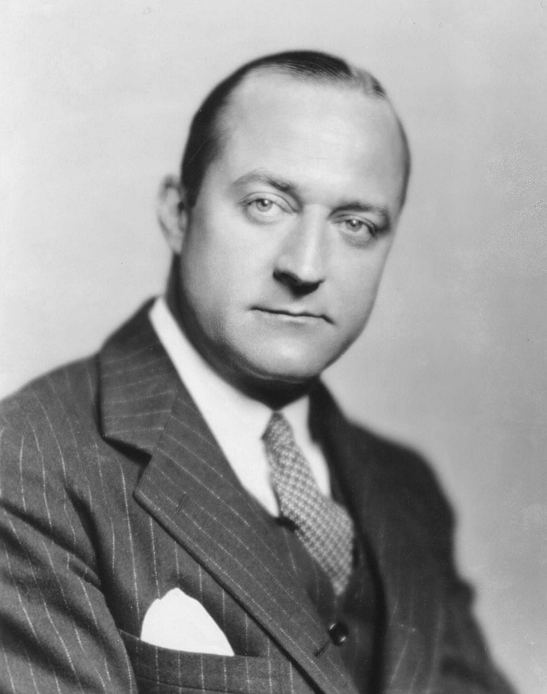
Reprinted through the courtesy of Newsweek Magazine. Copyright ¹964 by Newsweek, Inc.
In government circles in nearly every “underdeveloped” nation today there is a fixed idea that the economic salvation of the country lies in industrialization.
Among outstanding examples are Egypt with its zeal for dams and India with its mania for a government steel mill. But examples can be found everywhere. I met a typical one in a recent visit to the Argentine. Argentina has now imposed a practical prohibition on the import of foreign cars in order to create a home automobile industry that not only assembles cars but makes the parts for them. Some of the chief American and foreign producers have established plants there. But it is estimated that it costs today about two-and-a-half times as much to make a car in the Argentine as it would to import one. Argentine officials are apparently not worried about this. They argue that a local automobile industry “provides jobs,” and also that it sets the Argentine on the road to industrialization.
Is this really in the interest of the Argentine people? It is certainly not in the interest of the Argentine car buyer. He must pay, say, about 150 per cent more for a car than if he were permitted to import one without duty (or by paying a merely nominal revenue-raising duty). Argentina is devoting to car-manufacture capital, labor, and resources that could otherwise be used far more efficiently and economically—by producing more meat, wheat, or wool, say, to buy automobiles rather than to make them.
The effect of all government-forced or subsidized industrialization is to reduce over-all efficiency, to raise costs to consumers, and to make a country poorer than it otherwise would be.
But the authors of the import prohibition might reply with a form of the old “infant industries” argument that played such a large part in our own early tariff history. They may contend that once they can get an automobile industry established, they can develop the domestic know-how, skills, efficiencies, and economies that would enable an Argentine automobile industry to be not only self-supporting but capable of competing with foreign-automobile industries. Even if this claim were valid, it is clear that a protected or subsidized industry must be a loss and not a gain to a country as long as the protection or subsidy has to be retained.
And even if a self-supporting motor-car industry were finally established, it would not prove that the losses in the period of hothouse growth were justified. When the conditions are in fact ripe in any country for a new industry capable of competing with the equivalent foreign industries, private entrepreneurs will be able to start it without government subsidies or prohibitions on foreign competition. This has been proved again and again within the United States—for example, when a new textile industry in the South competed successfully with the long-established textile industry in New England.
There is another fallacy behind the industrialization mania. This is that agriculture is always necessarily less profitable than industry. If this were so, it would be impossible to explain the prosperous agriculture within any of the industrialized countries today.
A popular argument of the industrialization-at-any-cost advocates is that it is impossible to point to a purely agricultural country that is as wealthy as “industrialized” countries. But this argument puts the cart before the horse. Once a dominantly agricultural economy becomes prosperous (as the early United States) it develops the capital to invest in domestic industries and therefore rapidly becomes a country of diversified production—both agricultural and industrial. It is diversified because it is prosperous rather than prosperous because it is diversified.
It is the great superstition of economic planners everywhere that only they know exactly what commodities their country should produce and just how much of each. Their arrogance prevents them from recognizing that a system of free markets and free competition, in which everyone is free to invest his labor or capital in the direction that seems to him most profitable, must solve this problem infinitely better.