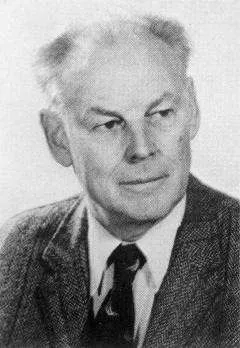
Ben Rogge, who teaches economics at Wabash, has never fancied himself as a writer. The formal books which he has planned from time to time languish in his desk drawers. He says, with the deprecatory whimsicality that is part of his nature, that he functions best through the spoken word. He is a platform man.
The distinguishing mark of a Rogge speech, however, is that it invariably reads beautifully. The collection of addresses which Ben Rogge has linked together under certain loose topic heads to make a book, Can Capitalism Survive? (Liberty Press, 329 pages), proves that the spoken style, when it is enlivened with parenthetical humor, can take on the quality of a good essay.
Rogge’s values and beliefs are as firmly set as anybody’s, but he does not make the tactical mistake of trying to grab people by their lapels and mesmerize them into a goggle-eyed march to the mourners’ bench.
He has a feeling for sinners, and he is not chary of admitting his own foibles. He is not what Mencken would have called a wowser. Thus, in discussing the orthodox conservative’s demand for a strict enforcement of the anti-marijuana laws, he reflects, with characteristic ruefulness, on what the prohibition mentality might do to deprive him of his “noble and useful gin and tonic.”
If Diogenes, in his search for an honest man, had come upon Rogge, he would have called his quest successful. Part of Ben’s whimsical honesty resides in his willingness to admit that he frequently concedes himself a five-foot putt at golf.
As is inevitable in any collection of occasional speeches (or essays) the unity of the book must depend more on tone than on structure. The topics, in Can Capitalism Survive?, are heterogeneous. There is a marvelous historical essay on what happened at Harmony and New Harmony in Indiana, where Rappites from Wurttemberg in Germany and Owenites from England successively tried to found a collectivist Utopia in territory close to Rogge’s own Wabash College. There is Rogge’s personal attempt to answer the question, “Rogge, what kind of nut are you?” There are appreciations of Adam Smith and Joseph Schumpeter.
No theologian, Rogge tries manfully—and successfully, as I am sure Edmund Opitz would agree—to deal with the question, “Can there be a Christian economics?” Ordinarily Rogge declines to speculate on the tergiversations of American politics, but his commentary on the Goldwater campaign of 1964 is considerably more acute than anything supplied by our professional political pundits. No urbanist, Rogge draws definitive conclusions about the ineffectiveness of city planners by giving the civilized observations of Jane Jacobs’s The Death and Life of Great American Cities an economic underpinning.
Back on his own ground, Rogge puts the subject of inflation into Sharp and despairing perspective. He appreciates the skills of the entrepreneur in several essays, but doesn’t expect to get much help from the business community in saving free enterprise. Nor does he think its fellow educators will quickly solve the problem of putting the American college on a sound financial footing.
If the topics are all over the lot, the unifying philosophy is all of a piece. Rogge thinks that noneconomic freedoms depend on economic freedom. The failure of the modern liberal to see the connection distresses him, but it does not surprise him. He knows the frailties of humankind, and to expect any easy triumph of logic is simply unrealistic. He knows that it is difficult for a businessman caught up in a great organization to stand out against tariffs and government subsidies. He knows that the private educator cannot afford to go on a full-cost tuition fee basis as long as the tax-supported state universities offer below-cost rates to every student. He supports the economics of Adam Smith at virtually every turn, and he is warmly appreciative of the work of FEE and Leonard Read in keeping the freedom philosophy alive, but he has his moments of pessimism when he thinks Schumpeter may be right in predicting that capitalism will fail not because of any internal weakness but because it has not managed to enlist the loyalty of the intellectuals.
In brief, Rogge is the very opposite of Pollyanna. But he takes it as his duty to keep plugging. The problem is not to organize politically; it is to keep talking about the eternal relevance of certain ideas. Goldwater couldn’t win in 1964 because the country was still afflicted with statist illusions. Our politics will change when our ideas change, not before. Rogge does not consider that the economics teaching in our colleges is particularly subversive (even our Samuelsons have good words to say about the free market), but it is another matter when it comes to converting the English teachers and the sociologists to the freedom philosophy. The work to be done is endless, but the joy, as Rogge thinks of it, is in the battle. If our civilization fails to save itself, there will be other civilizations to come.
Readers of The Freeman will be particularly interested in Rogge’s final chapter, titled “The Foundation for Economic Education: Success or Failure?” Rogge gives four separate answers to the question. The answers, in order, are yes, probably no, almost certainly no, and unqualifiedly yes.
Since it is the mission of any organization, at first instance, to survive, FEE has passed the preliminary test. Given the intellectual climate of the past twenty-five years, this is something of a miracle. Whether the sanity that FEE represents can turn the tide of battle is still moot, but its presence is, as Rogge says, “a very present help in time of trouble.” He recalls Tolstoy’s description of the role played by Prince Bagration in the Battle of Schon Grabern. The Prince’s calm presence rallied the troops, whowere anxious to “display their courage before him.”
A second way to evalute FEE is to consider its chances for survival in the long run. Rogge says the answer here is “probably no.” But he would not have its form survive its soul, and he is sure it will be around long enough to be an important center of strength in the cause of freedom.
The third possible interpretation of success as its relates to FEE is whether it promises to turn the tide of battle in the near future. Looking about him, Rogge remains pessimistic. We still have economic lunacy in Washington, and the businessman is more often than not a part of the problem, not a part of the solution. The score, says Rogge, is still Lions, 100; Christians, Zero.
But point three must yield to point four in judging the success or failure of FEE. The real measure of a teacher’s success is: Has his teaching induced in others what Aristotle termed “activity of soul”? Rogge answers this question with a thunderous “yes.” His own “activity of soul’ is a tribute to FEE’s teaching.