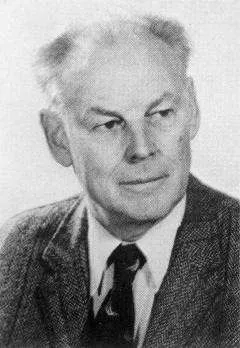
FRANK GOBLE, author of Beyond Failure: How to Cure a Neurotic Society (Caroline House Books, Green Hill Publishers, Inc., Ottawa, Illinois 61350, $10, foreword by Henry Hazlitt), has a great vision. He wants to establish what he calls a People’s Project, a “national mobilization of resources to solve human problems using the same approach that placed astronauts on the moon.” The ideas which he hopes to disseminate are based on the so-called Third Force psychology of Dr. Abraham Maslow, who revolted against both Freudianism and Behaviorism on the ground that they are “cripple philosophies” which ignore whole stretches of human history and endeavor. What Mr. Goble has to say about the “cripple philosophies” is perfectly true, but his theory that one can apply the moon-shot approach to the solution of social problems ignores a host of difficulties. History is always a ragged process, and great changes never come about overnight.
Putting men on the moon was a purely physical process. Once the money had been approved to carry it out, a “task force” approach became feasible. The problem was to provide astronauts with oxygen to breathe and food and water to sustain themselves while riding a ballistic arc to a celestial destination. The technology of rocket-launching was already in place when the task force tackled its mission. The personnel was ready: World War II had produced a resourceful air force whose adventurous pilots were yearning for something challenging to do. The rest was simple, and its accomplishment involved little controversy once it had been accepted as a national objective. Whether people should have been taxed for the job is, of course, another story. It was easy, however, compared to engineering a big change in society.
Some Vital Adjustments as Prelude to Reform
Before a task force could be assembled to rout the devils of Freud and Behaviorist John B. Watson, not to mention B. F. Skinner, and to re-establish the Natural Law ideas of our Founding Fathers in the schools, a political sea-change of massive proportions would have to be brought about. The National Education Association would have to be deprived of its grip on American teachers. The big labor bosses would have to accept a formula for relating wage-increase demands to a well-understood productivity standard. Congress would have to withdraw subsidies from a thousand angry pressure groups. And our Washington bureaucrats would have to abandon the Nanny approach to the institutions they are supposed to regulate. As for regulation itself, it would have to be dispensed with, save in the few clear instances where the public health is involved.
Meanwhile, our educators would have to rehabilitate the American Ethic. They would have to begin teaching history again. Naturally, all of this would involve skirmishes on a thousand fronts, not a single dedication to a moon-shot-type “people’s project.” Mr. Goble is faced with the problem of setting in motion a Fabianism-in-reverse on a wide front before he can hope to see a final victory for what he calls Responsibility Theory.
When he desists from his moon shot and Manhattan Project analogies, Mr. Goble talks eminent and inspiring common sense. His book is first-rate analysis. As he says, Freud erred by confusing neurotics with normal people: not everybody is bedeviled by aggressive instincts or is helpless to control his libido. According to Richard LaPiere, a Stanford sociologist, the Freudian ethic resulted in the idea “that man cannot and should not be expected to be provident, self-reliant, or venturesome, and that he must and should be supported, protected, socially maintained.” The American Ethic, as defined by the Founding Fathers, had entirely opposite presuppositions, and it worked for several generations before Freud was ever heard of in this country.
“Responsibility Theory”
The Maslow-Goble Third Force idea rejects Freud and the anti-free will Behaviorists in favor of Responsibility Theory which assumes that human babies are born with socially constructive instincts that are conducive to the survival of their species unless they are mistaught by permissive theorists to expect to have things handed to them on a platter.
It is permissiveness, according to Goble, that has ruined our educational system. Where there is no truth, anything goes. The idea that science must be value-free or value-neutral has resulted in a preoccupation with averages. The “well-adjusted person” won’t quarrel with the average. The well-developed person, on the other hand, will reject the idea that he must settle for mediocrity. He will insist on having values of his own. What our educational system should do, according to Maslow-Goble Responsibility Theory, is to inculcate the idea not of “adjustment,” but of “self-actualization,” which is described as “the full use and exploitation of talents, capabilities, potentialities.” Instead of studying the worst of humanity, as the Freudians do, Responsibility Theory would concentrate on “the less than one percent of society that had achieved self-actualization.” Dr. Maslow preferred to have his students read about “peak experiences” in the lives of heroes such as Lincoln, Jefferson, William James, Albert Schweitzer, Jane Addams and, oddly, Eleanor Roosevelt.
Character Education
There are the elements for a good Fabianism-in-reverse in the U.S., and Mr. Goble mentions a few. He tells about the Character Education Projects sponsored by the American Institute for Character Education in San Antonio, Texas. One of these projects, at Public School 63 in Indianapolis, Indiana, has been active for six years and has restored both school and individual pride while reducing vandalism to a minimum.
Such projects would have a bigger chance in private schools, where there would be less apathy to overcome, but Mr. Goble presumably doesn’t want to get into the public versus-private school fight. He wants to work through “existing institutions.” He hopes to see a nonprofit People’s Project Corporation formed to push his ideas. The Corporation, by “mass-marketing” educational and motivational programs to existing institutions whether public or private, would, he thinks, act as a catalytic agent to reduce costs of government, inflation, unemployment, crime, drug abuse, illegitimacy, welfare rolls and “other destructive problems.”
It is a grand idea, but since there aren’t enough Gobles to go around, wouldn’t it be more realistic to take a one-community-at-a-time approach? After all, nothing succeeds like one good example.
THREE NEW BOOKS by Ludwig von Mises
Reviewed by Henry Hazlitt
NOTES AND RECOLLECTIONS by Ludwig von Mises
(Libertarian Press, South Holland, Illinois) 181 pages $9.95
WHEN Ludwig von Mises died on October 10, 1973, at the age of 92, even his most devoted readers, and those privileged to know him personally, assumed that everything he had written, in German or English, had already been published. But his widow Margit now reveals that immediately after they emigrated to this country in August 1940, Mises set to work on a manuscript that he turned over to her at the end of the year, with the simple instructions to “take good care of it.” It was not until some time after his death, thirty-three years later, that she remembered it. It turned out to be the present remarkable combination of autobiography and critique of the intellectual milieu in Mises’ native Austria in the years when he was growing up.
He was “devouring” articles on history when he was seven years old. When he graduated from high school he decided to study law. But he was also reading in economics. In the German-speaking world Schmoller was then “adored as the great master on ‘political economy.” But when Mises was still in high school, he tells us, he “noticed a contradiction in the position of the Schmoller circle.”
When he entered the university he, too, he confesses, “was a thorough statist. But in contrast to my fellow students I was consciously anti-Marxian. . . . When I finally engaged in an intensive study of the important works of Marx, Engels, and. Lassalle, I was provoked to contradict them on every page. It seemed incomprehensible to me that this garbled Hegelianism could exert such an enormous influence.”
Yet he continued to be an ardent interventionist and “reformer” until one of his professors induced him to research housing conditions and another suggested he study the legal changes regarding domestic servants. “It then dawned on me that all real improvements in the condition of the working classes were the result of capitalism; and that social laws frequently brought about the very opposite of what the legislation was intended to achieve.”
In 1913 Mises was admitted to the faculty of law at the University of Vienna as an unsalaried lecturer, and in 1918 he received the title of Associate Professor. But that was as far as he was destined to go there. “A university professorship was closed for me,” he writes: “The universities were searching for interventionists and socialists.”
He did receive a position in the Vienna Chamber of Commerce, however, and from there he began to exert his real influence. At his office, every two weeks, he conducted a small seminar consisting of 20 to 25 students. It was from this small group that such famous economists were to emerge as F. A. Hayek, the Nobel laureate, Gottfried Haberler, Fritz Machlup, Oskar Morgenstern, and Eric Voegelin.
The “Austrian School”
The great intellectual influences in Mises’ own development were, of course, the founders of the “Austrian school,” Carl Menger and Eugen von Boehm-Bawerk. Mises arrived too late at the University of Vienna to have Menger as a teacher, but he recalls that around Christmas, 1903, he read Menger’s Principles of Economics for the first time: “It was the reading of this book that made an ‘economist’ of me.” Fortunately, Mises was able to attend the seminars of the great Boehm-Bawerk.
Mises’ own outstanding contributions included his work on money, which finally unified monetary theory with economic theory in general, his demonstration that socialism must fail because it cannot solve the problem of “economic calculation,” and his recognition that economics is merely a part, though by far the greater part, of a wider science of Human Action. He was beyond question the foremost economist of his generation.
Yet this is in the main a sad book. As Mises matured intellectually, he came to recognize that Austrian thought and culture were already in decline. Menger and Boehm-Bawerk were still alive; but they were being succeeded by mediocrities who failed to grasp their revolutionary insights. Menger was “discouraged” and “silenced.” “The evening of Boehm-Bawerk’s life was darkened by his fears for the future of Austria and its culture.” He died a few months after the outbreak of World War I. Mises got the news when he was with his artillery battery at the front.
There was more misfortune to come. Mises lived to see the rise of Hitler. Driven from Vienna by the threat of a Nazi takeover, he spent six comparatively happy years as a professor at the Graduate Institute of International Studies in Geneva. But the outbreak of World War II made it seem to him once more advisable to emigrate, this time to the United States, in August 1940. In the months when he was writing the present book, he had no knowledge of the future he would have in his new country.
That future too, in its early years, was to prove full of anxiety and difficulties. With the help of American friends, he was finally, in 1945, appointed Visiting Professor at the Graduate School of Business Administration of New York University. Even then his salary did not come from the university’s own general funds, but had to be provided by friends and foundations.
Some of us may regret that Mises’ great personal reticence kept him from telling more about his early childhood and his emotional life, but we can still count ourselves fortunate to have this important addition to his legacy.
The book is preceded by the short Foreword by Margit von Mises, and followed by an admirable Postscript of thirty pages, describing Mises’ later years and works, by his friend and student, and translator of this volume, Professor Hans F. Sennholz.
A CRITIQUE OF INTERVENTIONISM
by Ludwig von Mises
(Arlington House, New Rochelle, New York)
164 pages
Essays collected in A Critique of Interventionism were written in the early 1920′s, and published in German in 1929. They are now issued for the first time in an English translation by Professor Sennholz. The English title almost exactly follows the German—Kritik des Interventionism us.
The American reader familiar with Mises’ other work will find no ideological surprises. But what will probably impress him most is precisely this—that as early as the mid-1920′s Mises’ economic philosophy, and his main conclusions, were already formed. He was astonishingly immune from the then almost universal fashion in respectable economic circles, which rejected both laissez-faire capitalism and outright socialism, in favor of a so-called “middle road,” which accepted only qualified property rights, subject to overriding government interventions and controls.
In the 1920′s Mises was not only keeping abreast of all the major output on economics in Europe, but paying tribute to the contributions of such American writers as John Bates Clark, Taussig, Fetter and Davenport. But he had little patience with the work of the self-styled American Institutionalists and he was unsparing, for example, in his dissection of the fallacies of such advocates of “social control” as John Maurice Clark.
The main theme of this book, as its title makes clear, is not only the needlessness, but the immense harm done by government intervention in economic affairs. He defines intervention as “a limited order by a social authority forcing the owners of the means of production and entrepreneurs to employ their means in a different manner than they otherwise would.” More briefly, he defines interventionism as “the hampered market order.” And he goes on to show why, in the long run, it can never achieve the objectives which the authorities aim to achieve.
All interventions consist of a prohibition or compulsion or a combination of both. Among the outstanding examples are price controls and wage controls. What are usually prescribed are price ceilings or minimum wages.
Price Controls, and Where They Lead
In dealing with price ceilings, Mises begins by pointing out that the constellation of prices at anytime is not haphazard or accidental, but has been determined precisely—or at least within narrow limits—by the interrelations of supply, demand, costs, and similar factors. But those who believe that the formation of prices is purely arbitrary easily arrive at the conclusion that they should be fixed by external regulation.
When prices are held down by government edict, however, two results inevitably follow. More of the price-fixed goods are bought, and less are produced. To limit consumption, the government must resort to rationing. To restore profit margins and production, it must fix the price also of raw materials, and eventually wage rates, and force businessmen and workers to produce and labor at these prices.
In short, the government must proceed step by step to comprehensive control over labor and production. But this was not what it started out to do. It wanted the buyers to enjoy the goods at lower prices, not to deprive them of the opportunity to buy the goods at all.
When, on the other hand, government tries to fix minimum wages, it forces an increase in costs of production and also in prices. Either profit margins are wiped out or fewer goods are sold, and as a result workers are laid off. If the laid-off workers are then paid unemployment compensation, the government creates a permanent body of unemployed.
In addition to interventionism properly so called, one or two of the essays in this book discuss such topics as socialism, Marxism, anti-Marxism, and the nationalization of credit. But the reasoning throughout leads to the conclusion that interventionism must disorganize production, and that in the long run there is only one alternative for economic organization: either capitalism or socialism. “There is no third road.”
ON THE MANIPULATION OF MONEY AND CREDIT
by Ludwig von Mises
(Free Market Books, Dobbs Ferry, New York)
296 pages
We come now to the volume On the Manipulation of Money and Credit. In 1912 Mises published in German the first edition of The Theory of Money and Credit. There he first developed what has since become known as the “Austrian” theory of the trade cycle. In 1928, he elaborated and perfected this theory in an essay of more than 100 pages.
This essay is the main single item now for the first time translated into English and presented together with three other newly translated items.
These are an article on “Stabilization of the Monetary Unit” (1923), one on “Causes of the Monetary Crisis” (1931), and one published in 1933 on the then existing state of business cycle research. The translations are by Bettina Bien Greaves, and the book is edited with an Introduction and an Epilogue by Percy L. Greaves, Jr.
Readers sufficiently acquainted with the work of Mises that has hitherto been available in English will already be familiar with the general outline of his business cycle theory. Even under a (fractional reserve) gold standard, governments and central banks permit or encourage an artificial lowering of bank interest rates. This stimulates the demand for bank loans beyond the amount of real savings available for lending. The increasing demand for bank loans is then met by inflationary increases in the quantity of money and credit. The first recipients of the newly-created funds use them to launch or expand business ventures for which the required real factors of production must be withdrawn from the particular pattern of production that would otherwise have been preferred by consumers. In other words, the pattern of production becomes distorted and misdirected, and increasingly so the longer the credit expansion continues, until the boom ends in an inevitable bust and depression.
Mises elaborated his trade cycle theory both in subsequent editions of The Theory of Money and Credit (e.g., 1953) and in Human Action (1949). He also presented elsewhere much of the substance of the other papers translated in this volume. Nevertheless, Mises never repeated himself mechanically or by rote. Whenever he came back to the same problem he addressed it afresh, almost as if he were solving it for the first time. As a result each exposition threw its own special illumination on the problem, or supplied some connecting link that his other expositions may have omitted to make quite so explicit or clear. This the present trade cycle essay notably does. Consequently we owe the present translator and editor our gratitude for making these important contributions at last available in English.
* * *
In spite of his great gifts for exposition, Mises’ contributions were much misunderstood during his lifetime, and are still often misunderstood today. A recent example is an article on Wilhelm Roepke by Patrick M. Boarman in the Autumn 1977 issue of The University Bookman. Roepke, writes Boarman at one point, “remembered von Mises saying that if only the principles of free trade had been followed from the beginning, World War II might never have happened. I don’t remember Roepke’s exact reply to this, but he was, in effect, struck dumb. And he remarked to me that it was incredible that anyone with a fair knowledge of German or of European history could reduce the German question—the darkest and most sombre question of the age, with myriad roots reaching back hundreds of years—to a mere set of economic arrangements.”
Yet Mises was right. If free trade were a sort of isolated accident, Roepke might have been warranted in being “struck dumb.” But free trade is a result of a state of public opinion within the country that has adopted it. It means that the people generally recognize the advantages of international trade (particularly of imports) and recognize equally the advantages of international cooperation. In such an atmosphere the fanatic and belligerent nationalism that leads to war is very unlikely to exist.
To resume the quotation from Boarman: “For Roepke, this kind of economic determinism, though employed in defense of capitalism, is just as fallacious as the Marxian version of economic determinism, directed to the justification of the dialectic.”
Equating Mises with Marx is something new. Mises was merely reasoning from cause to effect. Only in this sense were his remarks “deterministic.” But all science is “deterministic” in this sense. Marx’s economic determinism was of a different sort. It was mystical. It was a one-way determinism in which the “material productive forces” determined everything else—even the ideology of the people—but it was itself not explained by any preceding cause. As Mises himself once pointed out—for he was, among other things, Marx’s most devastating critic—”It never seems to have occurred to Marx that the productive forces are themselves a product of human thought, so that one merely moves in a circle when one tries to derive thought from them.”
IT’S NO SIN TO BE RICH:
A DEFENSE OF CAPITALISM by William Davis
(Thomas Nelson, Inc., 407 Seventh Ave., S., Nashville, Tenn. 37202) 264 pages
Reviewed by David A. Pietrusza
WILLIAM DAVIS is well known in the United Kingdom as an influential financial editor and columnist and as the sprightly editor-in-chief of the famed humor magazine, Punch. He combines economic expertise with an eye for the absurd to provide a self-confident, breezy, often anecdotal look at modern economic thought, focusing on the prejudices which bias the public attitude against achievement, success, and private profit in business.
Ironically enough, he opens his counterattack by quoting Marx himself on the value of the capitalist in history: “The bourgeoisie has been the first to show what man’s activity can bring about. It has accomplished wonders far surpassing Egyptian pyramids, Roman aqueducts and Gothic cathedrals . . . the bourgeoisie . . . draws all nations . . . into . . . civilization . . . it has created enormous cities . . . and thus rescued a considerable part of the population from the idiocy of rural life . . . the bourgeoisie, during its rule of scarce one hundred years, has created more colossal productive forces than have all the preceding generations together.”
Davis rips apart the myth of worsening conditions at the beginnings of the Industrial Revolution, dissects the glaringly inaccurate predictions of Marx and Engels in regard to the inevitable crumbling of capitalism, scores the results of Marxist theorizing in both its Communist and Socialist offshoots, and even ventures so far as to heartily defend the nineteenth-century Captains of Industry that today are popularly derided as “Robber Barons.”
In most countries of the world today business is under attack; it must propitiate the politically powerful in order to survive. Blackmailed by officials, it pays protection money and is accused of bribery. Davis does not excuse or condone bribery, but merely describes the situation in which certain businessmen find themselves. He quotes an oil company executive as saying, “I would like to ask some of the people who are becoming close to sanctimonious humbugs just what they would do if they had two hundred million dollars invested in a country, and a politician, with a death warrant in his pocket, came along and said, ‘give me ten million or else’—and the ‘or else’ can take several forms. Would they pay it or would they refuse to pay it? And if they did pay, would they say it was a bribe or would they not call it by its proper name—extortion?”
Then there is the menace of unionism in Davis’ Britain. England’s labor movement fanatically attempts to wring the last remaining shilling out of that nation’s industrial establishment, while disclaiming any responsibility for the country’s economic health or even its survival. Through compulsory unionism, big labor’s grip on even the highly-individualistic profession of journalism grows more vise-like every day. Strikes have shut down the printing trades and thus endangered press freedoms: but also, incredibly, unions have gained control of access into the reportorial and editorial fields themselves.
“An eighteen-year-old beginner,” says Davis, “however talented, now has little or no chance of joining a national newspaper. The closed-shop system, as applied in the seventies, deliberately prevents many potentially good journalists from getting into the profession—and keeps many bad ones in it. It also presents a quite genuine threat to the freedom of the press. It is intolerable that editors should no longer be permitted to employ the best available talent and equally intolerable that the opinions of journalists—and cartoonists—should be subject to the censorship of trade-union militants.”
Like an efficient and personable tour guide, Davis touches all major points of interest, provides new insights, and yet maintains a leisurely and amiable pace. It’s No Sin To Be Rich provides a sturdy defense of the diversity, prosperity, and freedom that a market economy makes possible.
THE PEOPLE SHAPERS by Vance Packard
(Little, Brown & Company, 200 West St., Waltham, Mass. 02154, 1977)
398 pages $12.50
Reviewed by Thomas L. Johnson
In order to win a battle one must know the enemy and understand his tactics. This is just as true of the battle for freedom as for any other struggle. This book describes “the enemy’s” various techniques of people-control: Skinnerian behavioral conditioning, brainwashing and reprogramming, mood managing, hypnosis, imprinting, personality altering via brain surgery or electric shock, and others. A well-known psychologist is quoted: “We can choose to use our growing knowledge to enslave people in ways never dreamed of before, depersonalizing them, controlling them by means so carefully selected that they will perhaps never be aware of their loss of personhood.” It is a startling and frightening account.
Some of these techniques are already in use, to a far greater extent than generally realized. Packard cites Science Digest as his authority for saying that an estimated 500,000 to 2,000,000 school children have been put on amphetamines or Ritalin in order to drug these children into a more passive state. And “in some cases, there appears to have been a clear element of coercion: threats to hold back a child or put him in some class with a disabled label” if parents refused to allow him to take the recommended drug.
Packard reminds his readers that schools are institutions of government and then asks: “Are schools in general exerting, however subtly, any kind of governmental pressure to get children on behavior-modifying drugs?” Good question, and one which would be answered in the affirmative by certain parents who are currently involved in a lawsuit in which they contend that, for some children, the taking of Ritalin was made a condition of attending public school.
The author goes on to describe forced drugging in other societal institutions such as prisons, mental institutions, homes for the aged, and the like.
Part II of The People Shapers discusses the many and varied techniques, mainly biological, which are being used now or will be used in the near future in order to reshape man. This section reads like science fiction except for the fact that it reveals many possibilities, such as that of cloning man or resetting his biological clocks, that are on the verge of happening.
Packard ends his enlightening, thought provoking, and sometimes shocking book by discussing some new trends that can enhance individual self-direction, and how it may be possible to control the would-be controllers. One may not agree with some of his suggestions for improvement or for safeguarding individual rights, but the reader is certainly prodded into thinking about many difficult and serious matters that every believer in liberty will want to ponder.