
The UK’s online safety agenda keeps expanding.
Children and teens in the United Kingdom are caught in the crosshairs of governmental policies to reduce their access to the Internet. In June 2026, then-Prime Minister Keir Starmer announced that he would introduce an official ban on under-16s accessing social media platforms, including TikTok, Instagram, and Snapchat, hoping to have it passed through Parliament by Christmas and put into effect in early 2027.
This comes after a wave of activist campaigns raising concerns that social media has detrimental effects on children’s mental health. Researchers and advocates argue that the addictive nature of these platforms causes children to spend too much time in front of screens, making them less socialized while exposing them to harmful content. The UK government isn’t the first to institute a social media ban on under-16s. Australia, most infamously, implemented a ban last year, while several nations in Europe and some states in the US have introduced different forms of social media bans for teens.
With most of these bans requiring platforms to implement age-verification technology for users to access social media, free speech supporters fear that requiring citizens to upload their IDs poses serious privacy risks, while restricting teens’ access to social media strips them of their autonomy and right to express themselves freely online.
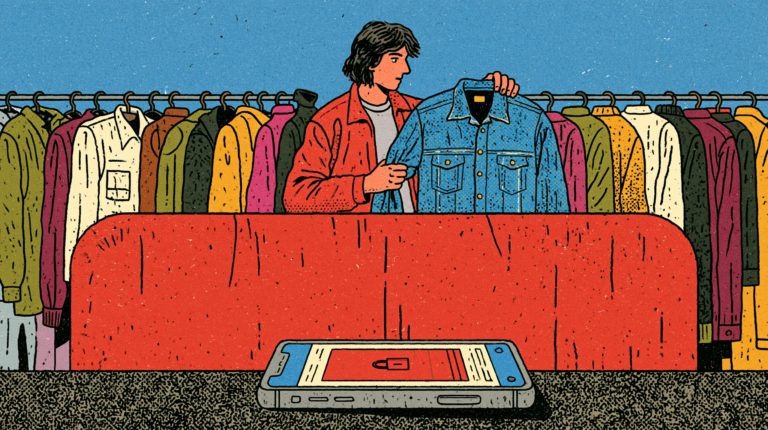
But a bigger concern is that when the government is given the leverage to restrict the rights of a certain demographic, especially in the name of “safety,” it is bound to go further until little freedom is left to take away. So when UK Culture Secretary Lisa Nandy recently said that, in addition to social media platforms, the government is also “looking seriously” at banning under-16s from clothing resale apps such as Depop, eBay, and Vinted, several red flags were raised.
You read that correctly. The UK government is now trying to prevent teens from… thrifting online.
Why, you may ask? It’s not because the apps have addictive algorithms, or that they’re isolating children from the outside world, or even that the content on the apps is harmful (though on several occasions I’ve seen some hideous pieces on Depop that gave me a fright). It’s that message boards between buyers and sellers could expose children to online predators.
Given that the government is looking more broadly at banning any app with a messaging feature, clothing reseller apps aren’t going to be the only targets in this crackdown. Video games like Roblox, music streaming platforms such as Spotify, and even the kid-friendly YouTube Kids allow users to chat with one another. Should they expect a knock on the door from the UK government, too? Just imagine the uproar from households when Roblox is taken away from the kids!
Though for resale apps, using the platform isn’t simply a means for kids to pass time or acquire a rare find; it’s also become a valuable opportunity to sell their belongings while learning how to run a business.
Surveys show that nearly 1 in 5 children ages 8–14 use platforms such as eBay or Vinted to buy or sell used clothing. A separate survey found that, among 15-year-olds in the UK, roughly the same proportion sell items online. With all of the minimum wage hikes in the UK pushing teens out of the job market, starting a small business on Vinted seems to be one of the few viable alternatives for making some extra cash. One 14-year-old reported earning around $150 a month selling his clothes. For teenagers, that kind of money can provide a significant amount of financial independence. Not for long.
Whether you’re for or against the ban on Snapchat, TikTok, or Instagram for under-16s, given the many scientific data points showing social media’s harm to kids, there’s no denying that proponents of a ban have at least somewhat of a leg to stand on. With these newer proposals to ban under-16s from platforms like Vinted, it’s difficult to picture how potential exposure to child predators through these message boards alone is sufficient reason to prohibit an entire population from using the platform. Though eBay is guilty of wasting kids’ hard-earned cash on dropshipped junk, surely there’s some harm in that. Fortunately, they’ll still have access to Temu.
As some of the most vulnerable members of society, children deserve to be safe and free from those who wish to harm them. But at the same time, governments need to recognize when the line has been crossed between protecting and overprotecting children. They should also recognize that when it comes to things that children really want (like Roblox or a pair of vintage jeans from Depop), a ban isn’t going to work. Teens are already finding loopholes to bypass these bans, like downloading a VPN to change their location, while others use a sibling’s or parent’s ID to log on.
So instead of feeling like they’ve done their due diligence by “banning” kids from these platforms, governments should collaborate with corporations and provide incentives to instill safety measures within their platforms. Instead of keeping kids off Vinted, educate them on when and how they should report suspicious online behavior.
If the answer continues to be to regulate away kids’ favorite online hobbies over all the potential boogeymen lurking on the Internet, all that will be left is a generation of resentful kids with nothing but a calculator app on their phones. Though even then, mathematics presents its own safety risks. Should we consider banning that, too?