The pioneering lawyer and diplomat who stood up to the USSR.
In November 1933, the new administration of Franklin Roosevelt extended official diplomatic recognition to Stalin’s Soviet Union. The Soviet dictator’s murderous Holodomor in Ukraine was well underway. The parade of far-left “useful idiots” who journeyed to Moscow to praise the Soviets and cover up Stalin’s crimes (Walter Duranty of the New York Times famously denied the Holodomor and praised the Soviet Union) picked up steam in the wake of the American government’s recognition. One of them was the Black musician, actor, and activist Paul Robeson, who claimed that he finally felt like a free man when he visited the USSR.
Paul Robeson’s support became much more public during World War II, as the United States allied with the USSR to fight against Nazi Germany, when he appeared at a “Salute to Our Russian Ally” rally in Madison Square Garden. But once Nazi Germany was defeated, tensions grew between the United States and the USSR, leading to the Cold War, and his continued support for the Soviets became an even greater national controversy.
As the Kremlin sought to portray American democracy as hypocritical and the Soviet Union as a more promising future for mankind, its propagandists made much of racial injustice in the United States, while exploiting internal tensions throughout the West to stir dissent. In response, the US sought out a level-headed Black American who could challenge Paul Robeson’s claims and speak on the dangers of communism.
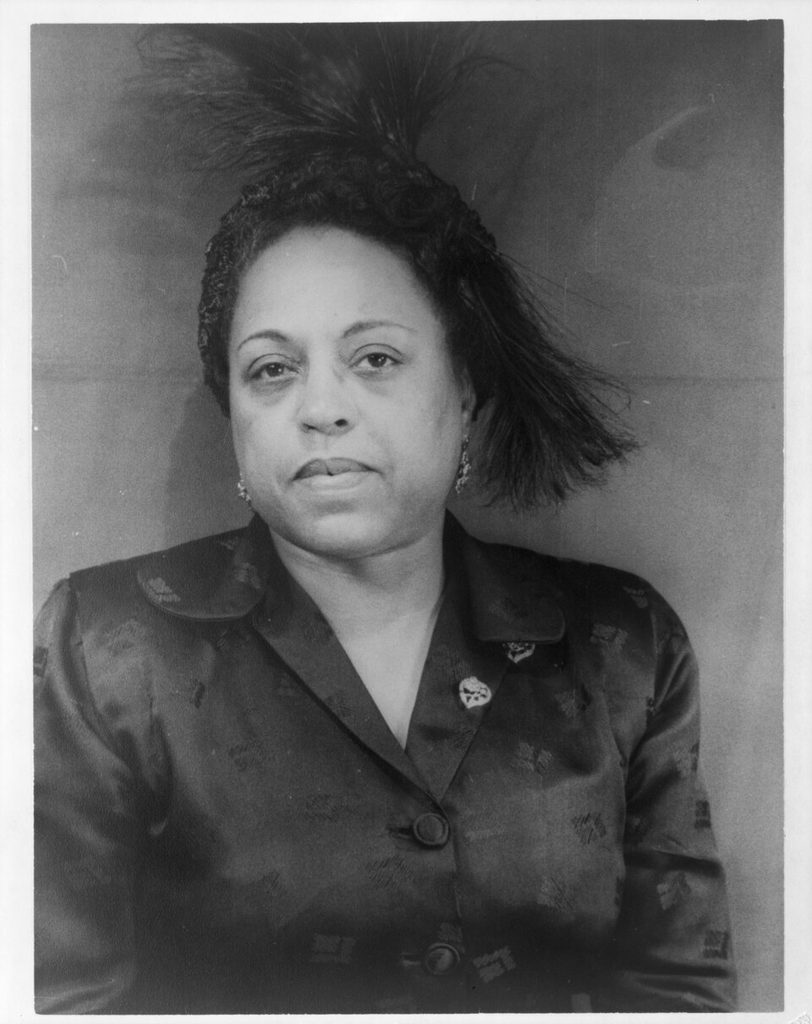
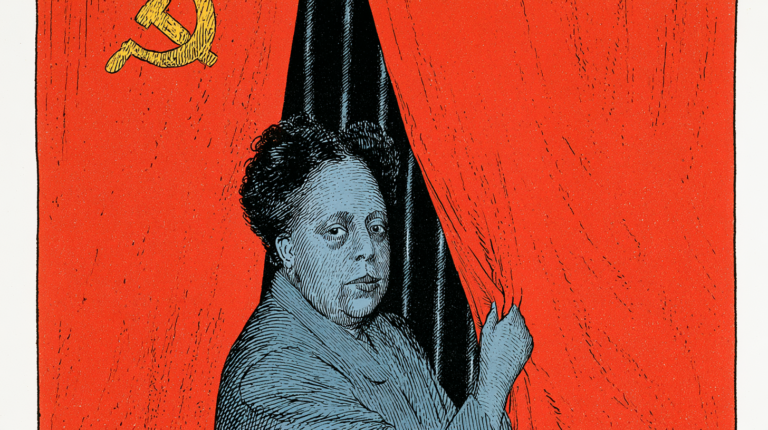
Edith Sampson became that emerging voice during the World Town Hall in 1949, where she earned headlines for publicly denouncing Soviet propaganda about America. Sampson, at the time, was a prominent leader in the National Council of Negro Women while serving as assistant state’s attorney in Cook County, Illinois. When Robeson’s name came up during a Q&A, Sampson said, “Unfortunately, Mr. Robeson had all his training in America, and he has forgotten that he owes a great deal to our democracy. He does not represent any organization—only a lunatic fringe in America.” Sampson knew that the evils of segregation and Jim Crow paled in comparison to the despotism of what Ronald Reagan would later label “the Evil Empire.” Foreshadowing the civil rights movement, she had faith that the wrongs that lingered in America could be remedied in time.
Edith Sampson’s growing prominence and ability to speak on American democracy caught the attention of Roosevelt’s successor, Harry Truman, which led him to appoint her as the alternate delegate of the US to the United Nations, making her the first Black American to represent the US at the UN. In doing so, he was celebrating a great American patriot and sticking it to the Soviets at the same time. Unlike his naïve predecessor, Truman had his head on straight when it came to the Soviets and their heinous nature and intentions.
The Chicago Defender applauded the appointment. “In naming Mrs. Edith Sampson of Chicago to the American delegation at the United Nations,” noted one of its editorials, “President Truman could hardly have chosen a more able foe of the Communists or a more courageous fighter for a just cause.”
A revealing 1996 article on Sampson by Helen Laville and Scott Lucas in the journal Diplomatic History summarized her remarkable rise from obscurity to prominence:
Born in 1901, one of eight children of a launderer in Pittsburgh, she attended the New York School of Social Work but decided in her twenties to change her profession. Married, raising two children left by a deceased sister, and working full-time, she obtained a law degree through evening classes at the John Marshall Law School in Chicago. She failed the bar examinations but earned a master’s degree at Loyola University and passed the bar on her second attempt. Quickly moving from probation officer to assistant referee in juvenile court to assistant state’s attorney in Cook County, she finally established a successful private practice and, in 1934, became one of the first women to argue before the US Supreme Court.
Sampson’s time as a diplomat didn’t prompt her to mellow. She labeled the USSR a prison state that even enslaved prisoners of war in labor camps during World War II. She reportedly told Soviet Ambassador Yakov Malik to his face, “We Negroes aren’t interested in Communism… We were slaves too long for that. Nobody is happy with second-class citizenship, but our best chances are in the framework of American democracy.” A decade later, she became the first Black American representative to NATO, serving on the US Citizens Commission.
Several years later, Sampson became the first Black woman elected as a judge in Illinois, when she became associate judge of the Municipal Court of Chicago in 1962. In a college commencement address, Sampson told students, “We learned that you can work within the establishment, the system, without necessarily knuckling under to it. You can change the system, little by little, without destroying it completely. Democracy really is better than the chaotic anarchy that some New Left fanatics advocate.”
After later serving as associate judge for the Circuit Court of Cook County for 12 years, she retired in 1978, and died in October 1979, five days short of her 78th birthday.
As socialist and communist sympathizers threaten to take over the Democratic Party, it would be a good thing if its leadership could muster some of the common sense and courage of one of their own, Edith Sampson.
Additional Reading
The American Way: Edith Sampson, the NAACP, and African American Identity in the Cold War by Helen Laville and Scott Lucas
Lincoln Steffens, Muckraking Journalist Seduced by Bolsheviks by Lawrence W. Reed
Gareth Jones, Hero of the Holodomor by Lawrence W. Reed