
Politicians keep trying to interfere in the market.
Conservatives often criticize Bernie Sanders, Alexandria Ocasio-Cortez, and Zohran Mamdani for believing that government should direct private economic decisions. Yet when President Donald Trump recently warned gasoline retailers to lower their prices, or face “big problems,” he embraced a remarkably similar premise: that politicians should pressure private businesses to charge prices that the government considers acceptable.
According to a recent Fox News report, President Trump demanded that gasoline retailers immediately lower their prices, renewing his call for $2.50 gasoline. On Truth Social, he urged retailers to “DROP YOUR PRICE FOR OUR GREAT AMERICAN PEOPLE!” and warned that if they failed to do so, “big problems lie ahead.”
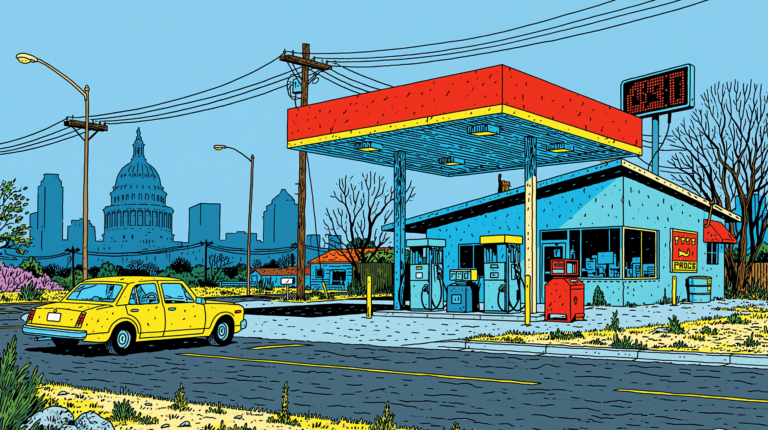
That matters because when politicians discuss gasoline prices, many Americans picture giant oil companies. In reality, roughly 95% of US gas stations are independently owned small businesses. Most do not buy gasoline directly from refiners. Instead, they purchase fuel through wholesale distributors, or “jobbers,” who deliver it to local stations. It’s these independent owners, not major oil companies, who set retail prices, based on local competition, taxes, operating costs, and, perhaps most importantly, the cost of replacing the fuel once their underground tanks are empty. Because gasoline profit margins are razor-thin, many stations rely more on convenience-store sales than on gasoline sales to remain profitable.
None of this means that government policy is irrelevant. President Trump is correct to criticize California’s role in high gasoline prices, for instance. California consistently has some of the highest gasoline prices in the nation, often $1.50 to $2.00 per gallon above the national average. Those higher prices reflect, in part, the state’s nation-leading gasoline excise tax (which climbed to 63.4¢ per gallon), state sales taxes, the Low Carbon Fuel Standard, cap-and-trade programs, and unique fuel formulation requirements. All of these state-mandated policies increase the baseline expense of supplying gasoline.
Many economic conservatives and libertarians, myself included, have criticized Sanders, Ocasio-Cortez, and Mamdani for advocating a larger government role in directing private economic decisions. At the very least, their calls for greater government intervention are consistent with the philosophy they have long espoused. The same standard should apply when a Republican president threatens private businesses over the prices they voluntarily charge. Free-market principles should not depend on which political party holds political power.
The real question is simple: Is it the legitimate role of government to pressure or threaten private businesses over the prices they voluntarily charge for their own property?
Most economists would begin with the basic function of prices. Market prices are not arbitrary numbers; they communicate information about scarcity, demand, costs, and alternatives. When prices are allowed to adjust freely, they coordinate millions of decisions made by consumers, producers, wholesalers, and retailers. That is why virtually every textbook on the principles of economics warns that government-imposed price controls—whether they are ceilings intended to “protect consumers” or floors designed to guarantee sellers a “fair price”—produce unintended consequences.
The energy crisis of the late 1970s illustrates the point. Federal price controls on domestic oil and gasoline limited the market’s ability to respond as conditions changed. Rather than protecting consumers, those controls contributed to long gas lines, station closures, odd–even rationing based on license plate numbers, and panic buying—the defining images of 1979. Oil became scarcer after the Iranian Revolution, but the deeper problem was that government policy prevented prices from adjusting in ways that would allocate scarce fuel efficiently and encourage additional production. The lesson remains the same today: when governments suppress market prices—or pressure businesses to ignore market signals—the result is often shortages, inefficient allocation of resources, and weaker incentives to increase supply.
Those economic arguments are important, but they are not the whole story. Even if price controls created no shortages or inefficiencies, a moral issue would remain: government should not replace the voluntary decisions of buyers and sellers with political judgment.
That is why the word gouging deserves closer examination. Language matters. To gouge someone literally means to injure him or to take in a violent manner something that belongs to him. The word therefore carries connotations of coercion, exploitation, and wrongdoing. But charging a “high” price for one’s own property is fundamentally different from taking someone else’s property by force. A voluntary offer, even an expensive one, is not coercion.
In a voluntary exchange, consumers remain free to buy, negotiate, wait, purchase from another seller, or (importantly) simply walk away. That freedom marks the essential distinction between market exchange and coercion.
Property rights involve more than physical possession. Ownership also includes the right to decide whether to sell, to whom to sell, and at what price. If government may dictate those terms whenever prices become politically unpopular, ownership becomes conditional rather than genuine.
Why is it considered immoral for a gasoline station to charge the highest price customers are willing to pay, yet perfectly acceptable, even admirable, for a prospective employee to negotiate the highest wage possible? Why are landlords criticized for seeking the highest rent the market will bear while tenants are applauded for negotiating the lowest possible rent? The moral principle should be consistent.
The seller is not entitled to a high price, just as the buyer is not entitled to a low price. Both parties are free to pursue the best terms they can obtain. As long as the exchange remains voluntary, neither side has violated the rights of the other.
The concept that rarely receives a satisfactory definition is “fair price.” What exactly is a fair price? Is $2.50 per gallon fair? Who decides? What’s the magic number? Ultimately, in the statist mindset, the answer becomes: whatever price politicians happen to consider appropriate.
But fairness is inherently subjective. The price that one consumer considers outrageous may be entirely reasonable to another who values obtaining gasoline immediately rather than waiting in line or risking shortages. Once government substitutes its own judgment for the voluntary choices of millions of buyers and sellers, it replaces the market process with political discretion.
Ultimately, the issue is whether private property rights will be respected. No one has a right to another person’s labor, products, or services simply because these are considered essential. If government may override voluntary exchange whenever prices become politically inconvenient, then property rights exist only at the pleasure of government.
The real test of one’s commitment to free enterprise is not when prices are low. It is when prices become politically unpopular. Defending economic freedom only when market outcomes are politically convenient is not a principled defense of free enterprise—it is merely support for markets when they produce outcomes we happen to like.
A genuine commitment to free markets or free enterprise means more than praising capitalism in speeches. It also means refraining from threatening private businesses over the prices they voluntarily choose to charge and defending the right of peaceful individuals to engage in voluntary exchange—even when politicians dislike the prices they set. That principle should apply consistently, whether the pressure comes from the left or the right, from your favorite Democrat or your favorite Republican.