
Reflecting on Alan Greenspan’s legacy.
A central bank wields a peculiar kind of power. It holds a monopoly over money, and money runs through nearly every transaction we make. Because of that reach, a monetary mistake travels through credit markets, housing, banks, pension funds, and the budgets of millions of people who never had a say in the policy.
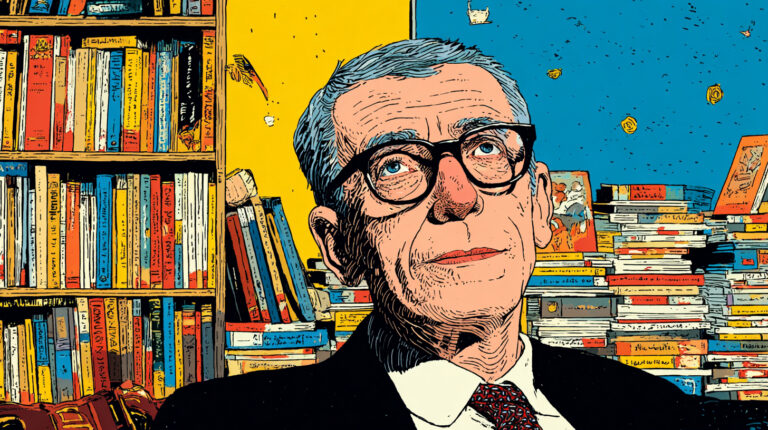
That is the right place to begin a reflection on Alan Greenspan, who died on June 22, 2026, at the age of 100. His was a mixed legacy. Here was a man who understood the power of markets, and who nonetheless turned on those markets when they soured, blaming private excess for a crisis his own institution had helped make possible.
Greenspan chaired the Federal Reserve from 1987 to 2006, through the 1987 crash, the long boom of the 1990s, the dot-com bust, 9/11, and the early housing boom. He earned real praise. Inflation stayed far below 1970s levels. Growth was strong, productivity picked up, recessions stayed shallow.
But the “Maestro” label Greenspan had earned fell into serious doubt after the 2008 global financial crisis. Critics argued that his Fed drenched the economy in liquidity after the 2001 recession and kept rates too low for too long. Cheap credit pulled Americans into mortgages, fed speculation, drove up prices, and let banks pile on leverage. When it came apart, his earlier moves looked less like stabilization than like the source of the distortion. The 2008 financial crisis was an institutional failure rooted in discretionary control over money and credit.
Free-market economists split over exactly this point. Economists David Henderson and Jeffrey Rogers Hummel mounted the strongest defense from inside the libertarian camp, warning against a tempting shortcut: treating low interest rates as proof of loose money. Rates are prices, shaped by saving, investment, and capital flows; a central bank nudges short-term rates but does not dictate every rate in a world credit market. Look at the monetary aggregates, they said, and his record turns out far tighter than the “Easy Al” caricature: slower M2 growth, heavy foreign demand for dollars, reserves that barely budged. In their view, low rates can also reflect heavy saving, weak investment, and a global hunger for safe dollar assets, and the boom appeared in countries with very different policies.
But economist George Selgin turned that defense on its head. He argued that what matters is money relative to the demand for it, and by that yardstick, Greenspan’s Fed was plainly loose. Far from clearing Greenspan, Selgin concluded, the record left his Fed deserving not a small share of blame for the bubble but the lion’s share: the deeper lesson being that even the ablest central banker, armed with full discretion, must eventually pilot the economy into trouble.
The “Greenspan put” makes the dynamic concrete. A put option protects its holder against downside losses; the Greenspan put, never written down, was an expectation learned through repetition. The Fed poured in liquidity after the 1987 crash, cut rates during the Long-Term Capital Management crisis in 1998, and eased again after the dot-com bust. Markets are good students. Gains on the way up stayed private; losses past a certain point, investors came to assume, the Fed would soften.
That is moral hazard, plainly. Firms expecting a cushion hold less cash, borrow shorter, lend longer, and treat liquidity risk as someone else’s worry. Economist Raghuram Rajan traced the mechanism in Fault Lines. The Fed’s readiness to supply liquidity in a downturn told banks, in effect, “Don’t bother storing cash or marketable assets for a rainy day.” The upshot, Rajan wrote, was that “leverage built up throughout the system.”
There is also Greenspan’s fondness for gold. Greenspan spoke warmly of the gold standard as a source of discipline, suggesting that a fiat central bank ought to reproduce what gold would have delivered. But inflation averaged about 3.3% during Greenspan’s chairmanship—as economist Lawrence H. White notes in The Clash of Economic Ideas—well above the 1.75% that Minneapolis Fed economists Arthur Rolnick and Warren Weber found under commodity-standard conditions.
None of this means that Greenspan caused 2008 by himself. But he helped build an environment in which risk-taking paid, rescue expectations spread, and market discipline eroded. He defended private decision-making while running the institution that set the terms of those decisions, and the Fed’s reflex to rescue convinced the largest players that their worst losses would be cushioned.
Greenspan’s reputation fed a dangerous idea: that monetary policy can be safely handed to a gifted individual with enough data, experience, and instinct. Sound money asks for something sturdier: rules that bind officials before the crisis, losses that fall on the firms that earned them, arrangements that do not rise or fall with the temperament of one chairman.