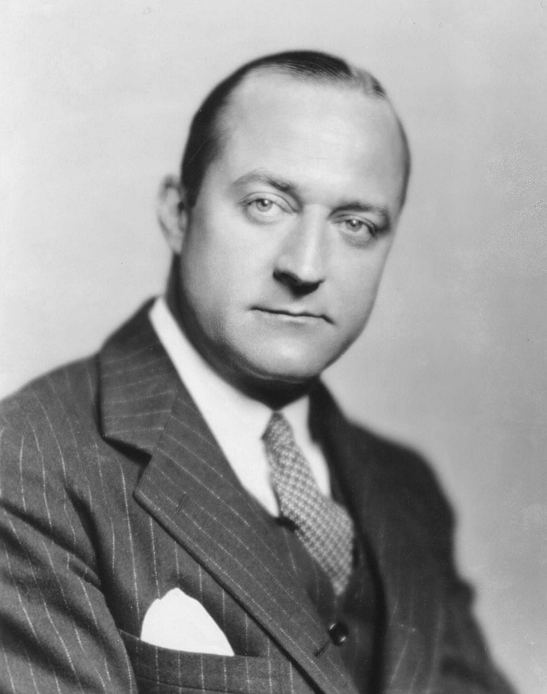
Henry Hazlitt is well known to FREEMAN readers as author, columnist, editor, lecturer, and practitioner of freedom. This article will appear as a chapter in a forthcoming book, The Conquest of Poverty, to be published by
The history of poverty is almost the history of mankind. The ancient writers have left us few specific accounts of it. They took it for granted. Poverty was the normal lot.
The ancient world of Greece and Rome, as modern historians reconstruct it, was a world where houses had no chimneys, and houses heated in cold weather by a fire on a hearth or a fire-pan in the center of the room, were filled with smoke whenever a fire was started, and where consequently the walls, ceiling, and furniture were blackened and more or less covered by soot at all times; where light was supplied by smoky oil lamps which, like the houses in which they were used, had no chimneys, and where eye-trouble as a result of all this smoke was general. Greek dwellings had no heat in winter, no adequate sanitary arrangements, and no washing facilities.1
Above all there was hunger and famine, so chronic that only the worst examples were recorded. We learn from the Bible how Joseph advised the pharaohs on famine relief measures in ancient
Conditions in the Middle Ages were no better:
“The dwellings of medieval laborers were hovels — the walls made of a few boards cemented with mud and leaves. Rushes and reeds or heather made the thatch for the roof. Inside the houses there was a single room, or in some cases two rooms, not plastered and without floor, ceiling, chimney, fireplace, or bed, and here the owner, his family, and his animals lived and died. There was no sewage for the houses, no drainage, except surface drainage for the streets, no water supply beyond that provided by the town pump, and no knowledge of the simplest forms of sanitation. Tye and oats furnished the bread and drink of the great body of the people of
Frequent Famines
And, ever-recurring, there was famine:
“In the eleventh and twelfth centuries famine [in
One writer has compiled a detailed summary of twenty-two famines in the thirteenth century in the British Isles, with such typical entries as: “1235: Famine and plague in England; 20,000 persons die in London; people eat horseflesh, bark of trees, grass, etc.”4
But recurrent starvation runs through the whole of human history. The Encyclopaedia Britannica lists thirty-one major famines from ancient times down to 1960. Let us look first at those from the Middle Ages to the end of the eighteenth century:
1005: famine in
This list is very incomplete — as probably any list would be. In the winter of 1709, for example, in France, more than a million persons, according to the figures of the time, died out of a population of 20 millions.° In the eighteenth century, in fact,
I am sorry to be dwelling in such detail on so much human misery. I do so only because mass starvation is the most obvious and intense form of poverty, and this chronicle is needed to remind us of the appalling dimensions and persistence of the evil.
Thomas R. Malthus
In 1798, a young English country parson, Thomas R. Malthus, delving into this sad history, anonymously published an Essay on the Principles of Population as it affects the Future Improvement of Society. His central doctrine was that there is a constant tendency for population to outgrow food supply and production. Unless checked by self-restraint, population will always expand to the limit of subsistence, and will be held there by disease, war, and ultimately famine. Malthus was an economic pessimist, viewing poverty as man’s inescapable lot. He influenced Ricardo and the other classical economists of his time, and it was the general tone of their writings that led Carlyle to denounce political economy as “the Dismal Science.”
Malthus had in fact uncovered a truth of epoch-making importance. His work first set Charles Darwin on the chain of reasoning which led to the promulgation of the theory of evolution by natural selection. But Malthus greatly overstated his case, and neglected to make essential qualifications. He failed to see that, once men in any place (it happened to be his own England) succeeded in earning and saving a little surplus, made even a moderate capital accumulation, and lived in an era of political freedom and protection for property, their liberated industry, thought, and invention could at last make it possible for them enormously and acceleratively to multiply per capita production beyond anything achieved or dreamed of in the past. Malthus announced his pessimistic conclusions just in the era when they were about to be falsified.
The Industrial Revolution had begun, but nobody had yet recognized or named it. One of the consequences of the increased production it led to was to make possible an unparalleled increase in population. The population of
This accelerating growth in population continued. The enormous forward spurt of the world’s population in the nineteenth century was unprecedented in human experience. “In one century, humanity added much more to its total volume than it had been able to add during the previous million years.”8
Starvation in Recent Times
But we are getting ahead of our story. We are here concerned with the long history of human poverty and starvation, rather than with the short history of how mankind began to emerge from it. Let us come back to the chronicle of famines, this time from the beginning of the nineteenth century:
1838: intense famine in North-Western Provinces (Uttar Pradesh),
1916: famine in
Industrialization Prevents Famine in Western World
We can bring this dismal history down to date by mentioning the famines in recent years in Communist China and the war-created famine of 1968-70 in
The record of famines since the end of the eighteenth century does, however, reveal one striking difference from the record up to that point. Mass starvation did not fall on a single country in the now industrialized Western world. (The sole exception is the potato famine in
It is not that there have ceased to be droughts, pests, plant diseases, and crop failures in the modern Western world, but that when they occur there is no famine, because the stricken countries are quickly able to import foodstuffs from abroad, not only because the modern means of transport exist, but because, out of their industrial production, these countries have the means to pay for such foodstuffs.
In the Western world today, in other words, poverty and hunger — until the mid-eighteenth century the normal condition of mankind — have been reduced to a residual problem affecting only a minority; and that minority is being steadily reduced.
But the poverty and hunger still prevailing in the rest of the world, in most of
And what has happened and is still happening in many countries today serves to warn us how fatally easy it is to destroy all the economic progress that has already been achieved. Foolish governmental interferences led the Argentine, once the world’s principal producer and exporter of beef, to forbid in 1971 even domestic sale of beef on alternate weeks. Soviet
More than thirty years ago, E. Parmalee Prentice was pointing out that mankind has been rescued from a world of want so quickly that the sons do not know how their fathers lived:
“Here, indeed, is an explanation of the dissatisfaction with conditions of life so often expressed, since men who never knew want such as that in which the world lived during many by-gone centuries, are unable to value at its true worth such abundance as now exists, and are unhappy because it is not greater.”¹º
How prophetic of the attitude of rebellious youth in the 1970′s! The great present danger is that impatience and ignorance may combine to destroy in a single generation the progress that it took untold generations of mankind to achieve.
“Those who cannot remember the past are condemned to repeat it.”
***
Creative Energy
At one time or another, every conceivable form of authority has been tried, but each has failed for the simple reasons that:
1. Only an individual human being can generate human energy.
2. Only an individual human being can control the energy he generates.
The lack of understanding of these simple, basic truths has, for over 6,000 years, stagnated human progress and kept the vast majority of people underfed, poorly clothed, embroiled in wars, and dying from famine and pestilence.
HENRY GRADY WEAVER, The Mainspring of Human Progress
FOOT NOTES
1 E. Parmalee Prentice, Hunger and History (Harper & Bros., 1939), pp. 39-40.
2 Ibid., pp. 15-16.
3 William Farr, “The Influence of Scarcities and of the High Prices of Wheat on the Mortality of the People of
4 Cornelius Walford, “The Famines of the World,” Journal of the Royal Statistical Society,
5 Article “Famine,” 1965 edition.
6 Gaston Bouthoul, La population dans la monde, pp. 142-43.
7 T. S. Ashton. The Industrial Revolution (1760-1830) (
8 Henry Pratt Fairchild, “When Population Levels Off,” Harper’s Magazine, May, 1938, Vol. 176, p. 596.
9 From articles “Famine” and “
10 Hunger and History (Harper & Bros., 1939), p. 236.


