“I want my son or daughter to be exposed to free market economics after high school. What colleges or universities do you recommend?”
If I’ve been asked that question once, I’ll bet I’ve been asked it a thousand times. Parents who cherish the values of freedom, limited government and private enterprise have good reason to be concerned about where they send their offspring for higher “education.” Academia is full of statist bias, and statists usually aren’t comfortable when the first non-statist is accidentally hired for a teaching position (they think it’s a takeover). So when you find an economics program in which free market ideas are treated with respect and given a prominent forum, it’s news to celebrate.
Keep in mind that I am talking here about economics, period. If a college or university has a good econ program, that doesn’t mean it also has a good offering or even a decent balance in its other social science programs.
Certain superb schools I am familiar with roll off the tongue quickly and easily: Very good economics programs and faculty are in place at Grove City College (my alma mater) in Pennsylvania, Hillsdale College and Northwood University in Michigan, George Mason University in Virginia, Houston Baptist and the University of Dallas in Texas, The Kings College in New York, San Jose State University in California, Auburn University in Alabama, Clemson University in South Carolina, Beloit College in Wisconsin, Florida State University and Webber International University in Florida, and the University of Arizona.
There are others as well, and I’ll write about them too in future weeks and months. The one I want to acquaint readers with on this occasion is one I’ve become familiar with in the last couple of years, Florida Gulf Coast University in Ft. Myers, Florida. It’s a place where students can get a good education in free market economics despite the distractions of a warm, sunny climate near the beach and great restaurants.
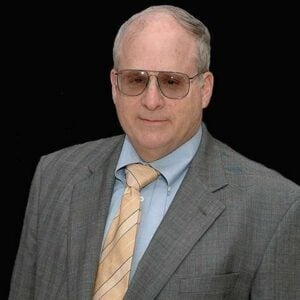
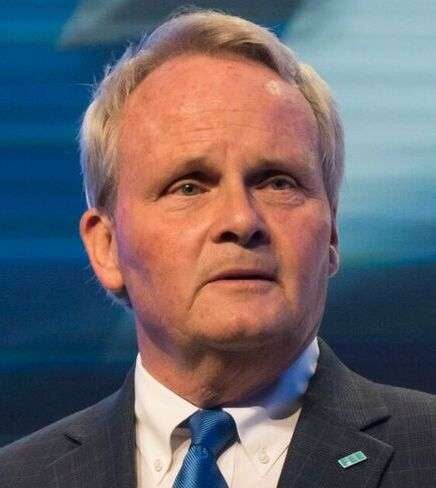
FGCU, as the locals call it, is one of the newest universities in the country, having opened its doors in 1997. Some of its dorms are better described as waterfront luxury apartments. They share a lake with a golf-course community with multi-million dollar homes. Students have easy access to all sorts of watersports activities. More importantly, I know and have met four of the six members of the economics faculty and can vouch that they have strong free-market views. A brief biography of each is provided below.
BRADLEY K. HOBBS, BB&T Distinguished Professor of Free Enterprise, earned his undergraduate degree in history and his Ph.D. in economics from Florida State University in 1991. His research interests are wide in range, encompassing economic history, the moral and philosophical foundations of free markets, property rights, economic freedom, and teaching methodologies. He has published in Entrepreneurship Theory and Practice, the Journal of Accounting and Finance Research, Journal of Real Estate Research, Laissez-Faire, Journal of Executive Education, Financial Practice and Education, and Research in Finance, among others. He has also written for the Foundation for Economic Education, the Institute for Humane Studies, and the Florida Council on Economic Education.
Professor Hobbs has been active in leading undergraduate research and was recently recruited as the founding Faculty Advisor for a new undergraduate research journal, the Journal of Liberty and Society. He has been a member of the National Teaching Faculty for the Foundation for Teaching Economics since 2001, taught for the Institute for Humane Studies, The Koch Associate’s Program and is active in The Liberty Fund having participated in programs as a participant, Discussion Leader, and Director. He serves on the Executive Board of the Association for Private Enterprise Education. Professor Hobbs has received the FGCU Senior Faculty Teaching Award and was a recipient of a 2008 Excellence in Teaching award from the Acton Foundation for Entrepreneurial Excellence. He has taught a wide variety of courses, though he currently teaches primarily intermediate microeconomics and the moral foundations of capitalism.
CARRIE KEREKES is an Assistant Professor of Economics. She earned her Ph.D. in economics from West Virginia University in 2008. She teaches Principles of Microeconomics, Principles of Macroeconomics, and Economic Development. Her research interests are in the areas of public choice and economic development, with an emphasis on institutions and property rights. Professor Kerekes regularly attends the meetings of the Association of Private Enterprise Education and has also participated in seminars sponsored by the Foundation for Economic Education and the Institute for Humane Studies.
DEAN STANSEL, Associate Professor of Economics, earned his Ph.D. from George Mason University in 2002. Prior to entering academia, Professor Stansel earned an undergraduate degree in economics and political science from Wake Forest University in 1991. He then worked at the Cato Institute through 1999, where he produced over 60 publications on fiscal policy issues. Stansel attended several Institute for Humane Studies (IHS) seminars (as both student and lecturer) and received fellowships from IHS, as well as the Bradley Foundation and the Center for the Study of Market Processes. His current research interests involve the impact of competition between local governments on fiscal and economic outcomes, the relationship between the size of government and economic growth, state fiscal crises, and a variety of other issues in the areas of public economics and urban economics. His research has been published in a variety of journals including the Journal of Urban Economics, Public Finance Review, and the Cato Journal. He teaches mostly microeconomics, public sector economics, and urban economics. Professor Stansel regularly attends the meetings of the Association of Private Enterprise Education and the Southern Economic Association. He and his wife (Robin Hulsey, who also worked at Cato in the late 1990s) have two young children.
CAROL SWEENEY earned her Master of Science in Development Studies from the University College Dublin, Ireland in the fall of 1993. Ms. Sweeney earned her undergraduate degree in economics from George Mason University, where she studied under Professors Peter Boettke and the late Don Lavoie. While at George Mason, she was president of the economics club, which hosted a lecture by Nobel Laureate James Buchanan, and attended an Institute for Humane Studies seminar. Prior to working in academia Ms. Sweeney worked in the communications and education industry. She teaches both principles of microeconomics and macroeconomics. Her research interests are in sports economics, development economics, and public choice economics. Ms. Sweeney recently attended her first Association of Private Enterprise Education meeting in Guatemala.
Give the economics program at FGCU a look. I think you will be hearing more good news from their offices and classrooms in the years to come.