
The economics of scarcity.
We have all heard many times that hoarding is usually attributed to greed and is highly condemned. For example, in his book The Grapes of Wrath, John Steinbeck attributes hoarding to greed and immoral profiteering, presenting it as a societal failure. In Canto VII of Dante’s Divine Comedy, he groups the hoarders together with the wasters, and states that they are forced to push heavy weights using their chests as their punishment.
But is the pursuit of profit during a crisis merely an expression of greed, or does it serve a broader social purpose? Hayek would argue that it serves a crucial one.
To see why, we first need to understand what happens to an economy when a crisis occurs. Whether the crisis is a pandemic or a war, it suddenly disrupts society. It throws everyone into an unfamiliar environment. People who had a routine budget and a sense of certainty about the future now have to grapple with a new, sudden event.
Individuals no longer assume that their plans for the future will go as they expect. For example, during COVID-19, workplace disruptions and supply chain issues led to the closure of factories, which sent a signal to the markets through price increases. Another example is the recent closure of the Strait of Hormuz, which impacted prices due to a reduction in fertilizer supply. Rising prices mean that supply is less than demand, which could trigger fears of even greater scarcity in the future.
This issue has another very important psychological effect: the risk of losing a sense of control over one’s life. When a person feels that he is losing control over his life, he takes steps to regain control as quickly as possible. Humans generally cannot tolerate living in such a destabilizing environment.
Now consider this: What is the rational response when all signals suggest that the resources needed to survive will become scarce or very expensive?
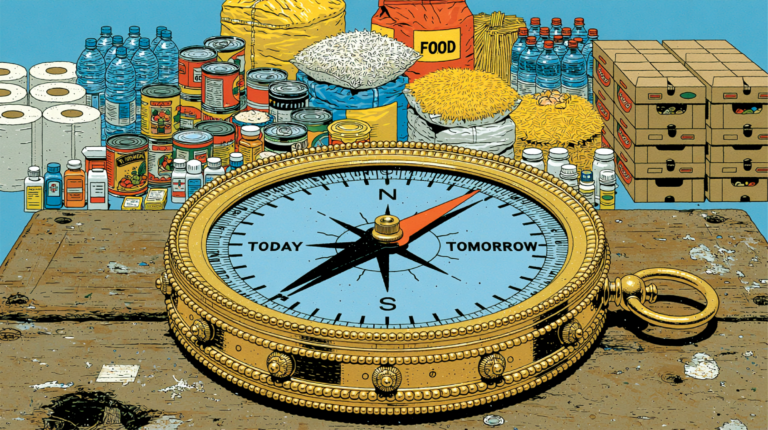
It makes sense that in such a situation, we would stockpile as many goods as possible, such as food or toilet paper, to maintain our usual standard of living. This is one consequence that price-gouging laws, like New York State Senate Bill S9372, do not consider. If this law is passed, it could sanction businesses from properly responding to market disruptions, inadvertently preventing consumers from doing the same.
In the case of businesses, they are faced with two issues simultaneously. The first issue is their production inputs, to which the same logic applies as for consumers: they face the disruption of business plans and the risk of resource scarcity.
But on the other hand, it is also about the supply of the market, which is where moral criticism is directed toward businesses. Do businesses hold on to their goods to sell at a higher price in the future? Yes, they do. But is it just greed? This is where many people misunderstand the role of the market. A business’s behavior is driven by an insight into the future of the market. What they expect to change in the future due to such a crisis is demand. Increasing production takes time, and consequently, businesses choose to reduce current sales because they expect future scarcity. By then, new production will have been made and more goods will be supplied.
However, because demand is still high and the crisis persists, businesses may be incentivized to withhold supply of another portion of production for the coming days, and they will sell the products later at a higher price—earning more profit than they do today. In fact, what happens is the result of the calculation that businesses make under uncertainty. They store part of today’s production, accepting the risk of being stolen and damaged, so that they can respond to potential future market demand with a more valuable supply. The potential reward for this risk is higher profits.
Here we return to Hayek’s argument. Prices and profits are signals that reflect market conditions and shape the behavior of entrepreneurs. They use this information to discover and respond to opportunities in the market. Hoarding goods is not merely a selfish act; it is a response to uncertain market conditions.