
Far from being the source of the problem, private actors are spearheading efforts to address Bolivia’s wildfires.
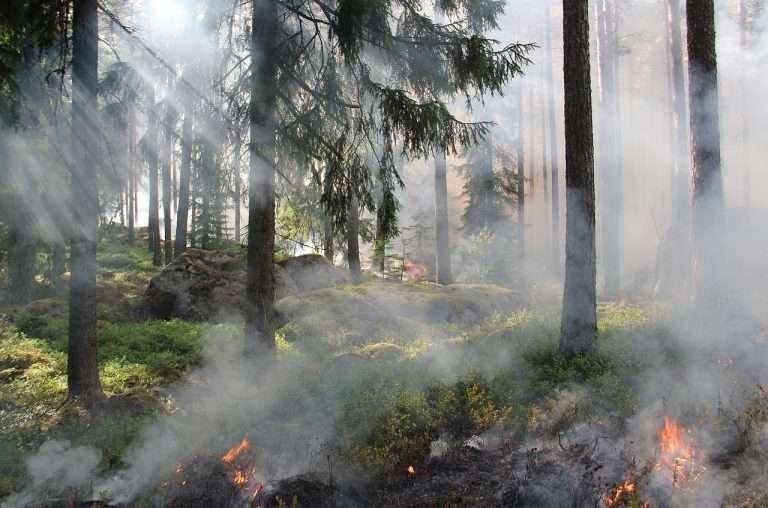
Fires in South America have become increasingly common in the past decade, a disastrous and (no pun intended) hot topic. Millions of acres have been burned away, and countless wildlife lost, not to mention the lives of brave volunteers and civilians caught in the fires. In Bolivia alone, fires have devastated 46 percent of state-owned lands (tierras fiscales), and an additional 21 percent of other community and public lands. What causes these fires? Several media sources have jumped to hurried conclusions, accusing corporate greed of being the villain behind the scenes; like the allegation that ranchers provoked the fire in order to expand legal livestocking land. This narrative overlooks the role of private actors in mitigating these disasters, raising the question: Is the government truly the answer, or part of the problem?
The “corporate greed” perspective is not only simplistic but also lazy, especially when you consider the significant role the private sector plays in controlling the fires in Bolivia. It makes sense—after all, it’s in the private sector’s best interest to stop the fires, not only because their businesses rely on the upkeep of the land, but also because many of them live on these lands and forests. Ironically, this private heroism is happening in one of the most economically and business-repressed countries in South America.
That’s right, the country that scores 175 out of 190 on the ease of starting a business (Doing Business) has a civic and private sector that have been crucial in combating the fires, whereas the government, an overburdened bureaucratic apparatus, remains largely ineffective in addressing the issue.
The Real Reason Behind the Fires
Many Bolivian communities, individuals, and businesses who own land for crop production practice chaqueo, where they burn leftover crops to plant new ones. While this ancestral technique has been practiced for centuries and is relatively effective for crop rotation, it has become hazardous in the dry season when fires are much more likely to spiral out of control. But why would people take this risk, knowing the potential loss of land and life?
Here lies the core of the problem: most of these fires originate from the tierras fiscales, which make up 46 percent of all fire hotspots. These lands are supposed to be protected by the state, but several factors make this difficult:
- State Land Is Really No One’s Land: State-owned, or “communal,” land brings ambiguity and uncertainty. The government often emphasizes that everything public belongs to “all Bolivians,” mostly for ideological purposes. However, when the land isn’t clearly owned by anyone, there’s little incentive to take care of it. And with no individual consequences for neglect or destruction, the land is often poorly maintained.
- Hidden Interests: When publicly protected forests are burned, there’s little left to protect. Several cases have emerged in which these burned forests are later allocated to certain groups for agricultural production. Since the government has no interest in funding restoration programs, allowing burnt land to be repurposed seems like an easy way out. This creates a perverse incentive for people to let fires run wild on state lands, hoping to claim them later for private use.
- Fire Laws That Encourage the Problem: The Bolivian government has enacted laws such as Ley 741, which authorizes chaqueo even in the dry season. Such laws allow individuals and groups to take advantage of weak regulations, leading to hazardous fire seasons that the government has been unable to control.
Private Efforts to the Rescue
While the government stumbles under its own bureaucratic inefficiencies, Bolivia’s private sector has been pivotal in reducing fire hotspots, saving villages, attending to harmed wildlife and individuals, and even directly extinguishing fires. Citizens, especially from the Santa Cruz region, have pooled money for campaigns, equipment, and medicine for firefighters—most of whom are volunteers not funded by the state.
But private initiative doesn’t stop in Bolivia. For example, firefighting drone technology developed by Carrick Detweiler at the University of Nebraska-Lincoln has proven successful in the United States. The company Drone Amplified uses them to detect, monitor, and even attack fires from the air. Such innovations hold great promise for Bolivia if similar technologies could be deployed there.
There’s also Pachama, a carbon footprint startup from Argentina. Through satellite imagery and machine learning, Pachama monitors reforestation projects and tracks carbon capture in forests. Their platform ensures that efforts to restore ecosystems are verifiable and impactful, connecting landowners with businesses that are committed to offsetting their carbon emissions. They have a goal to restore 100 million hectares of degraded land to a global scale.
Moreover, private citizens have also engaged in reforestation efforts. One inspiring case comes from Brazil, where the artist Sebastião Salgado and his wife Leila transformed their barren land by planting over 2 million trees. Such actions are clear examples of how even private individuals are more efficient with restoration and wildlife conservation than the state.
Private Actors Are the Heroes of This Story, Not the State
Whenever someone claims that the fires in Bolivia or elsewhere in South America are caused by capitalism, remember that the truth is far more complex. The incentives behind these fires are deeply rooted in government policies, hidden interests, and failures in communal ownership. Even though the fires continue to this day, the private sector and individual citizens have stepped up where the state has faltered. Businesses and citizens alike play a crucial role in mitigating devastation, preventing future fires, and taking care of the environment in Bolivia and around the world.