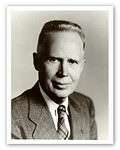
Dr. Paton is Professor Emeritus of Accounting and of Economics, University of Michigan, and is known throughout the world for his outstanding work in these fields. His current comments on American attitudes and behavior are worthy of everyone’s attention.
Individual man shows a persistent tendency to organize his thinking and activity. Watch the small child eagerly observing his surroundings and you will soon note evidences of the desire to systematize the results of his observations. He starts sizing up, pondering, as well as accumulating information. And if he is not thwarted by the misdirected efforts of parents and teachers he will build up his store of savvy at an amazing rate.
This tendency to array, to classify, is something for which to be thankful. Without the taxonomic inclination, indeed, it is hard to see how one could cope constructively with the complexities of life on this planet, especially if he is a member of a “civilized” community. If the individual is disorganized, lacking in understanding, the flow of phenomena encountered these days is likely to take on the appearance of a callithumpian parade—with resulting bewilderment and inability to chart an orderly course.
At the best the life road traveled will have rough spots. Buffets from an unfriendly nature can be expected as well as difficulties and obstacles arising from association with the other humans who are making the trip.
General Standards Needed
It is a great help, in contending with both routine affairs and special problems, to have established guidelines, primary rules or standards, to which reference can readily be made. We need stances, positions. These should be developed early in life, and become so embedded in attitudes and behavior, so firmly a part of the warp and woof of the personality, as to provide automatically for right answers and actions in dealing with the great mass of circumstances and events met with in ordinary living. It would be a great nuisance, for example, if intensive study and research were required—every day—to settle questions of sleeping and waking hours, attire, mealtimes and menus, how and when to go to work, and so on. Those who spend a lot of time and energy on such matters rob themselves of the possibility of giving serious attention to the more crucial—and interesting—concerns with which they are faced. (Of course, if the lady really enjoys taking a half-day or more to select a pair of shoes, and has no more pressing or attractive alternatives, a defense can be made for dillydallying at the store.)
A degree of flexibility, it need hardly be said, is required as the individual steers his way through varying, changing conditions, and deals with the complications and cruxes that are bound to arise. The chap who becomes rigidly “set in his ways” will often vex his associates, and stand in his own light as well.
An endowment of basic standards, it should be understood, will not automatically solve complex problems. Such standards provide nothing more than a broad background on which to keep an eye during the process of doing the research and pondering required in coming to reasonable conclusions, forming sound judgments.
The Twin E’s as Possible Guidelines
There are numerous underlying concepts and points of view that may serve as building blocks for character and conduct. Some are rooted in ethics, some stress technology, some show special concern for man’s physical well-being, some are heavily loaded with political considerations—and the reader can readily lengthen the list. The twin E’s, efficiency and equity, have been roughly useful to me, particularly in dealing with issues in business operation and economics generally. I’m a longtime admirer of high-level performance, top-flight workmanship, in all lines of endeavor, including the most lowly pursuits. And in company with practically everybody I am also devoted to the ideal of being fair, acting justly, in all transactions and relationships. These benchmarks of behavior are not unduly obscure, and are widely acceptable in general terms. They are nevertheless in need of a bit of examination, in part because there is considerable misunderstanding associated with their meanings and applications.
Efficiency—E One
Regarded from an economic point of view efficiency is peculiarly an aspect of the process of production; it represents productivity raised to a higher power. In relation to the individual, efficiency refers to both quality and quantity of personal accomplishment. In a broader sense efficiency means overall utilization of manpower and other resources in a superior manner, with the goal of maximizing the flow of goods from the economic pipeline.
The level of efficiency, performance, is accordingly a crucial factor in connection with all efforts to maintain or increase the volume of output. Thus those who are genuinely devoted to bettering standards of living, abolishing poverty, and making more generous handouts abroad should be earnest—if not ardent—advocates of efficient industrial operation. They cannot reasonably condone carelessness and indifference in economic activity, anywhere along the line, to say nothing of outright loafing and soldiering. They must support good organization and administration. They must be on the alert to oppose interferences by either governmental or private agencies with new methods and techniques designed to reduce waste, promote better operating performance, and spur product improvement and development of new products.
In the area of commonplace manual activities, such as laying shingles or trimming hedges, it is usually fairly easy to select the star operatives, and measure margins of superiority. Even here, however, there are questions to settle in making comparisons and forming judgments. When the boys go out to the swamp to pick wild raspberries no one expects 8-year-old Tom to equal the accomplishment of his 12-year-old brother Dick, and 16-year-old Harry may well do still better. Likewise in appraising mature workers, in any field, muscular strength, eyesight, native intelligence, and other inherent qualities must be taken into account in rating performances (which doesn’t mean that the handicapped person, even if his effort is 100 per cent, should be rated above or be paid more than a superior workman whose effort falls short of the best of which he is capable).
In the area of those providing professional and quasiprofessional services, including inventors, researchers, explorers, and other highly specialized workers in the economic vineyard, it is more difficult to array individuals in terms of level of performance. In the field of business management, for example, who constitute the outstanding performers, who make up the second flight, the third-placers, and so on? In appraising executives, breakdowns are of course necessary in terms of years of experience, levels of responsibility, and other factors. The familiar tests of the rung of the financial ladder attained by the manager personally, or by the organization he heads, are not free from objection as measures of essential talent and accomplishment.
Among rank-and-file staff, and laymen generally, as we all know, the supervisors and bosses, including the top brass, often don’t rank very high on any scale. Opinions and judgments from such quarters, as we also know, are likely to be uninformed and arbitrary. The widespread bias against business, which will probably always be with us, stands in the way of good measurement of either people or enterprises by popular polls. Even among students of economics the key functions of the entrepreneur, and the savers and investors who provide the necessary funds, are often not clearly seen, and convincing anyone that speculators may be rendering an important service in the market economy is next to impossible. The confirmed socialist, of course, insists on classifying all capitalists as parasitic, if not as full-fledged jaegers.
One other phase of the problem of defining and measuring level of performance should be mentioned. In an economy dominated by machine methods, and with production largely in the hands of business enterprises commanding a complex of tools and employing a substantial number of people, furnishing a wide range of services, the individual participant is a part of a package of productive factors and his particular contribution may not be readily determinable. Moreover, the performance of the particular human agent is bound to vary with the nature of the package of which he is a part. The individual’s productivity, in other words, will vary with his technological endowment, and the overall setting in which he is working. To use a very simple example from farm operation, the man plowing with an old-model tractor, not in first-class condition, cannot be expected to match the showing of the man operating a fast, modern machine.
Increasing attention is being given nowadays, quite properly, to ways and means of motivating the members of the enterprise staff, and of judging capability and achievement. But there are no easy solutions, no convincing and infallible measurement techniques, conveniently at hand. Where two or more factors contribute to a common end there is literally no valid physical method of assigning the value of the result to the contributing factors. The only significant solution available is the imputation furnished automatically by the mechanism of the market.
Efficiency—Conditions Conducive and Contrary
In the above comments on E One are some suggestions and implications as to conditions encouraging or discouraging to high-level effort and achievement in the economic realm, but this important subject needs further attention—at least to the extent of outlining major factors. In extending the discussion, briefly, no attempt will be made to distinguish sharply between efficiency in the sense of personal, individual accomplishment and the level of performance—productivity—for the economy as a whole. The two aspects are of course closely related.
The basic requirement is the institution of the market, referred to above. In the absence of a market economy there is no substantial foundation for top-flight workmanship and high productivity. Without a market there can be no exchange (beyond clumsy barter), without exchange there is no opportunity to specialize, and without specialization there is little or no incentive to become an expert, a master, in any line. Even the potential jack-of-all-trades has small chance in a non-market environment, lacking an array of trades at which he can bestir himself.
The term “miracle” has often been used to characterize the amazing accomplishment of the free competitive market as the director of economic activity—both production and distribution—and this characterization scarcely goes too far. Reflecting the continuing interplay of the attitudes and desires of the host of participants, the market gives the signals that channel resources into an intricate array of enterprises, turning out a still more elaborate pattern of products, and at the same time determines the shares in the output—makes the awards to all contributors and claimants. The market, in other words, provides an impersonal and automatic thermostat for the entire economic process.
The institution of the market has proved to be tough, but it is not indestructible. If laden with a maze of governmental restrictions and interferences the market’s ability to translate promptly into prices the ever-changing flow of impulses from buyers and sellers, can be impaired to the point of malfunction, and if the process of piling on regulations is continued the end result will be some form of central planning or socialist dictatorship. It is beyond the scope of this small piece to present an indictment of collectivism, of any variety, but both the historical and current scenes present an abundance of evidence of the inefficiencies and tyrannies that flow from governmental operation of the economy. If the reader has any doubts on this point let him take a careful look at the experience of the U.S. post office—or any other business run by a political apparatus of any kind. Or let him read the devastating account of “The Rise and Fall of the National Plan”, in Great Britain, by the Honorable J. Enoch Powell,¹ and follow this with Dr. G. Warren Nutter’s The Strange World of Ivan Ivanov.²
Other Wasteful Interventions
Government action is not the only source of interference with the free market which threatens the survival of that institution. The restraints and arbitrary rules imposed by labor unions constitute a substantial roadblock to the functioning of the market, especially in certain sections of the mechanism, and undoubtedly result in inefficient use of available resources and serious limitation of output. I still wince when I read about the 20-25-hour work week. What in the world will a guy do with the remaining 140 or more hours? And I can’t overlook the soldiering tendencies, lack of discipline, seniority rules, required featherbedding, and other features of present-day labor practice standing in the way of greater productivity.
Inefficient use of human resources wouldn’t be so bad if we could keep the machines going without the men. Driving past a construction job on the highway, and seeing the equipment standing idle, in broad daylight and good weather as well as when working conditions are unfavorable, continues to be a painful experience for us worrywarts. The spectacle is then made infuriating by a big sign with the legend “Your Tax Dollars at Work”.
But we can’t blame all our economic troubles and losses on government and the unions—or on the weather. There is a widespread infection amongst us of bad habits and practices. Vandalism is rampant, and we are becoming so callous that the smashing of a score of plate-glass windows, coupled with a bit of looting, or the wrecking of a schoolroom, are hardly worth noticing in the news. Major criminal action, organized and disorganized, and increasing at a frightening pace, is surely man-made, and can only be curbed by concerted human effort. Fire does a fantastic amount of damage across the country, and few communities of substantial size escape serious conflagrations for long periods. There are undoubtedly many cases of arson and sabotage, and lightning does strike occasionally, but sheer carelessness by smokers and others remains the number-one cause. The carnage on the highways, resulting in 55,000 deaths and about 80 times that number of reported injuries annually, should perhaps be put at the top of the list. As every police officer and car repairman knows (and anyone willing to observe and think does too), traffic accidents are accounted for by the bad driving habits of a substantial fraction of the licensed operators, and the effort to shift the responsibility to the cars—remarkably well-built and efficient vehicles—is one of the silliest nonsense campaigns to which we have been subjected. The universal method adopted by the newspapers in reporting accidents, describing the car capers that bring disaster to the driver, is truly exasperation reading.
If anyone were to stand on the street corner and poll passers-by with the simple question: “Do you favor waste, inefficiency, and low productivity?” it is safe to say that he would receive negative answers from almost all of those whose attention he could attract to his question. But if he could follow this up by studies of the habits and conduct of a sample of the people polled he would find condoning of bad present-day practices and conditions, and active participation therein, in many cases. Again, unfortunately, we don’t practice what we preach.
We Have Still Fared Well
With all our frailties and troubles the performance of the American economy to date has been almost incredibly good, by all comparative tests. Favored by the stimulus of a substantial degree of laissez faire, in our political and economic environment, the economic output of the United States, in both volume and variety of products, has been the world’s wonder—and envy. The basic statistics of our affluence, and margin of superiority, have been widely publicized, and will not be quoted here. Instead I’ll tell a short story of personal experience. About fifteen years back I was pinned down by bad weather at the “Soo”, in Michigan, and was trying to do a bit of writing while waiting at the hotel. My ball-point suddenly gave out—as they still do. Down town I went to get a couple of new cartridges. In the department store I wandered into I caught sight of a small barrel filled with plastic, retractable ball-point pens, attractive in appearance and priced—you won’t believe it—at 50 each! I tried one or two and ended up buying a dozen, the total cost being less than the price of a refill cartridge for my old pen. As I recall there was only one lemon in the bunch. This episode impressed me then and has continued to impress me as token evidence of the tremendous surge of American technology and the marvels afforded by our operating methods and the mechanism of the free market. I would wager, and give odds, if there were any way of deciding, that if a government bureau or board had been established when the Pilgrim Fathers came ashore from the Mayflower, about 350 years ago, with instructions to produce a workable ballpoint pen to retail for a nickel, the result to date would be the complete failure of the undertaking. They would probably still not have a pen of any kind.
The problem now, in a nutshell, is how to retain the essential features and blessings of the system.
Equity—E Two
The other side of the coin is equity, fairness, and this is a more elusive concept, and hence more widely misinterpreted, than the standard of efficiency, superior performance. About all that can be attempted here is to throw some light on major misunderstandings, and indicate the linkage of E-Two with E-One.
The fatal weakness in the popular view of the meaning of equity results from loading the concept heavily with sentimentality—turning it into an emotional lodestar. According to this slant on the subject, fairness in human conduct means giving primary attention to the needs and desires of the “disadvantaged”, the “underprivileged”, coupled at times with actual restraint and discouragement of the more talented and productive amongst us. This view is grounded in part on the familiar tendency in family life to devote especial care to the sick or ailing member, or the crippled child. No one in today’s society objects to this, even where there is no possibility of cure or improvement. But is it reasonable to extend this policy generally, throughout the economy? I believe that a negative answer is justified. If the individual, on a strictly voluntary basis, devotes a part of his energy and resources to helping his fellowmen, nearby or far away, who have unsatisfied wants or are in distress, such action should be acceptable in a free society. But this is a far cry from using the powers of government, plus private pressures from fund drives and other organized appeals, to take by force—or other form of coercion—the fruits of the labor of the more capable and successful, and ladle out the resources so seized, through the agency of costly boards and bureaus, in welfare programs often clearly unwise and wasteful. I see no good reason for considering such action as falling within the zone of fair or equitable policy.
Here, today, is our number-one problem. We are suffering from a sustained surge of catering to the underdog, including proposals that approach complete irrationality. Especially hard to take, by those who still respect common sense and objective thinking, are the suggestions and demands pouring out from the current swarm of psychologists, sociologists, welfare workers, and other “social science” groups infesting college campuses. These “experts” don’t hesitate to push programs that are bound to intensify and perpetuate the problems they are ostensibly trying to solve—which is folly compounded.
Equity is not softness. Good management often requires hard-boiled decisions and actions and these need not be at odds with justice. Trying to fit square pegs into round holes, it is universally agreed, is not practical procedure. There is also wide acceptance of the view that it is bad policy to substitute inferior materials for those called for in the job specifications, or to employ unsafe or substandard methods and equipment. Why can’t it also be recognized that displacing the more efficient and productive employees to make room for inferior personnel is no way to run the shop, in any field? It should be plain, too, that heavy concentration of available funds on training the backward, the unpromising, to the neglect of selecting and developing the talented, the individuals with high potential, will eventually saw off the limb of advancing technology and high output we are sitting on. We can’t afford, in short, to misuse the pegs.
But those objecting to proposals they regard as stupid and dangerous should not be too eager to suppress the agitators and nuts, in professorial ranks and elsewhere, who are leading the parade. A free society must provide elbowroom for diverse points of view and varying procedures. Miss Folly is riding hard today and effective resistance is badly needed, but let’s not call on government to unhorse her if this can possibly be avoided. On the other hand, it would be quite proper if the governing boards of our colleges and universities, and the taxpayers who are putting up the money, were to insist on revision of current employment and tenure practices.
A Place for Kindness
Before commenting further on the economic side of the picture it should be noted that there is no intention here of attacking or disparaging the exercise of kindness in human relations. Patting little Tommy on the head, or even giving him a Roosevelt dime on occasion, is a personal right against which there is no need to tilt. Befriending a neighbor, even when his difficulty or condition is of his own making, and similar acts, likewise may pass muster as unobjectionable conduct. Two warning notes should be sounded. First, don’t indulge your friendly spirit to the point of being a nuisance, a busybody, or a person who leaves the sink at home full of dirty dishes while out helping others to tidy up. Second, look at the secondary as well as the immediate effects of your generous impulses, and if the object of your solicitude will be damaged, for the long pull, rather than benefited, try substituting good advice for other interferences; or, even better, try tending faithfully to your affairs and letting the other fellow have a go at solving his own problems.
There is likewise no intention of suggesting that courtesy, friendliness, humane treatment, are not compatible with efficient operation in business enterprise. For ten years Mrs. Paton and I, with our granddaughter Victoria on occasion, have been regular patrons of a restaurant (a small chain) which we have decided is the best that can be found for our needs. And the major factor which attracts us, in addition to the superb soups, is the quality of the service. The “girls” are carefully selected and rigorously trained and they are conspicuously considerate as well as capable. We have traveled about quite a bit and have never found their equal elsewhere—regarding the staff as a whole.
I suspect that careful investigation would show that usually one will find efficiency where he encounters courtesy.
Fair Prices and Fair Profits
This is the area in which efficiency and equity must be confronted. What is a “fair” price?
What is a “fair” profit? These terms have been bandied on the economic scene for a long time, and they have finally become so entrenched and commonplace that everyone assumes they have settled, significant meanings. The fact is, however, that it would be difficult to find anything else in the everyday economic lexicon with less substance—or with more potential for mischief—than these popular expressions. Here is a spot where there is a real need for dissipation of the fog.
With regard to price adjustments and profit levels, “fairness” is widely considered to be identical with “reasonableness”, and this view has been encouraged by several prominent business tycoons. “We only want a fair profit”. “We are only entitled to reasonable prices and earnings”. This is the kind of talk that has become very familiar and is widely applauded. Actually such remarks are twaddle, and it is painful to see them taken seriously. A proper price is the resultant of the array of attitudes and impulses from buyers and sellers in a free, competitive market. In such a market the producer is entitled—to put it bluntly—to get all he can, to sell at the highest price obtainable under the prevailing conditions of demand and supply. It is sheer nonsense to prate about any other standard than that furnished by the market, the director and arbiter of our economic affairs and a stern disciplinarian to boot.
And substantially the same test must be applied in passing judgment on the level of the net earnings, Profits. The contractual, hired, layer of funds is of course entitled to the price agreed upon, as long as it is financially feasible to make the payments as agreed. Those who provide the layer of exposed, high-risk capital, as stockholders or proprietors, on the other hand, have no contract with the business entity or with customers assuring them of a particular rate of return, or any return. Their investments are cast upon the waters of the conditions of the particular business, with the state of the economy as a whole as background, and they face the possibility of loss as well as gain. Nevertheless the layer of risk or venture money is essential, crucial, in private business operation; and a continuing accumulation and flow of such funds into the economy cannot be expected unless the overall economic climate provides at least the prospect of an income sufficient to justify the responsibilities and hazards undertaken. It’s a bit like fishing; not many would indulge in this activity if there were no hope of catching anything. The greater the hazard, moreover, the more necessary the possibility of hitting the jackpot, making an unusually high rate of income. In other words, there must be a lure appropriate to the risks assumed. Those who are forever advocating the restriction of profits to some nominal “fair” rate are in effect proposing a barrier to capital accumulation and investment and—for the long pull—a barrier to the continuation of a system of private enterprise. One of the sure ways to destroy capitalism, without firing a shot, is to take away the incentive of the stockholder class. Risk is inherent in economic activity, and the only alternative to the shouldering of this risk by private capital is use of the tax power of the state—which means some form of socialism.
“Profiteering” should be mentioned. This is a term that ought to be banished from our vocabulary. I doubt if there can be found, either in popular discussion or in the technical literature, a clear-cut, understandable definition of “profiteering”. But everybody uses the expression freely, to describe those nasty people who charge “too much” for their products and make “excessive” profits. One of my professor friends—whom I won’t name—recently wrote about how the ancient Greeks “discouraged profiteering in the construction of public buildings”. The building contractors, so the story goes, were required to carve the amounts of their receipts and expenses “on stone tablets which were set in the walls”.
Once more: prices and profits are not excessive or improper if the levels are set by the forces of the free, competitive market.
Significance of Competition
In the above comments there have been several references to the market, as the basic economic institution, and in these references the qualifying adjective “competitive” has been attached. Here is another spot where misunderstanding is rampant and an attempt to make a brief clarifying statement is in order.
Popular concepts of economic competition are generally hazy and unrealistic, and most of the treatments in the textbooks are far removed from the actual processes of price-making. The courts and regulatory commissions, too, have often been off the track in their theories and determinations. The common opinion seems to be that competition is a harsh and chaotic process. Fairness is often regarded as unattainable in a competitive climate. There is misunderstanding as to long-run versus short-run impacts; there is inadequate appreciation of the varying forms and modes which market competition may take. Above all, both casual and close observers have trouble appraising the evidence that price levels and movements yield as to the existence and potency of a state of competition. Thus we see legal determinations that find lack of competition in a continuing similarity of product prices, and others that scent monopoly in varying prices in a particular market area.
Competition, it must be insisted, is not a cruel or baneful influence; it is rigorous, but neither unfair nor destructive. Competition should not be equated with misrepresentation, fraud, or any form of predatory conduct. The essence of competition is pressure on the producer to reduce costs and improve products to attract and keep customers. This pressure, stemming from other producers, may take a number of forms. It may result from improvement in product quality, better packaging, more prompt delivery, superior repair service, and so on—as well as from a lower price. Strictly speaking, the product is the entire set of physical elements and related conditions furnished to the customer. In practice there is a tendency to look only at the price factor in judging the presence and degree of competition, which is clearly a mistake. We should be thankful for producers who are efficient, aggressive, innovative. These hustlers force the rest of us to grab at their fast-moving coattails and try to keep up with the technological and administrative advance. Here is the feature of the market which provides protection for the interests of the customers. Competition represents the pressure needed to keep all producers disciplined and on their toes.
Imperfect and Effective
An important aspect of the competitive process, usually overlooked, lies in the fact that competition must be imperfect in order to be effective. The hustlers and innovators just referred to are of course trying to gain an advantage by getting the jump on competitors with the new package or other improvement. If the impact of every new development were instantaneous and complete throughout the market, so that no advantage whatever could be realized by the producer whose resourcefulness is responsible for the change, there would be a serious dampening of the urge to make improvements in methods and products.
Competitive pressure is the primary roadblock to the growth of monopolistic situations. Potential competition—the possible entry of new producers into the field—is also an important antimonopoly factor. In addition there are well-known obstacles to monopolistic overpricing in the form of elasticity of demand and possible use of substitute products.
Producers undoubtedly worry a great deal about competitors, and don’t particularly enjoy seeing new heads appearing on the horizon. There is nevertheless a bright side to meeting competition, aside from the great benefit to customers. Pressures that require us to get busy are a good antidote for the inevitable dull periods. Falling into a rut is easy, but a long stay there is neither enjoyable nor conducive to effort to climb out. For a dozen years or so I was on the board of directors of a company that had begun to go slack, fall behind the procession, especially in product quality. Old customers were complaining and the situation was becoming critical. At this point a new president came on the scene and started cracking the whip. Junior executives, jarred out of a state of complacency, did a lot of growling at first. But shortly—and here’s the point—they began to take part vigorously, with obvious improvement in spirits, in the campaign to catch up with competitors. Without much doubt, for most of us, an atmosphere of hustle is preferable to a continuing state of humdrum.
It’s time to wind up these observations about the E twins. Two points, pertaining to individual conduct, may be stressed in conclusion. First, the most satisfying feature of a lifetime on Mother Earth is a sense of accomplishment. This becomes very plain as we grow older. And although most of us never achieve pinnacle performance in anything it’s fun to keep trying. Second, looking back on the journey provides an especially good feeling if one can recall few if any times when he behaved unfairly. The best way to run the race, for sure, is to rely on one’s own power and speed, and not get in another runner’s way, in the drive to hit the tape first.
The E’s, like the “ayes”, still have it.
—FOOTNOTES—
1 Chapter 3 of Freedom and Reality, a brilliant book by Powell. B. T. Bats-ford, LTD., London, 1969.
² World Publishing Co., Cleveland, 1969. Professor Nutter, currently an important official of the U.S. Department of Defense, is an outstanding authority on Russian economics.