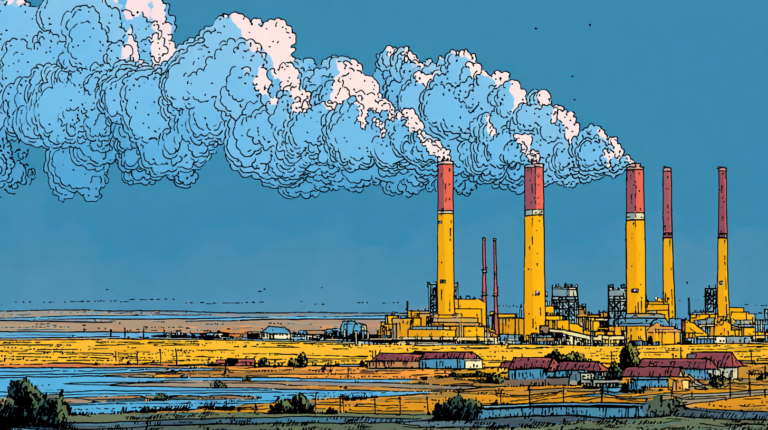

High power costs are driving up the cost of living.
Half of Americans now struggle to pay basic bills on time. Nearly four in ten people have been displaced from their homes by rising costs, as housing costs jumped sharply in just two years, medical care costs rose again, and groceries continue to rise. From 2010 to 2023, residential electricity prices rose by nearly 40%, in line with inflation, with no signs of slowing down. In fact, electric utilities in 2025, alone, requested rate increases from state Public Utilities Commissions and Public Service Commissions totaling $71.2 billion through 2028. The price per electricity unit strongly depends on the customer category.
Electricity Demand
Part of the reason for increased prices has been a surge in demand. Total US electricity consumption reached a historical peak at 4.10 trillion kWh in 2024.
The national five-year forecast in 2024 for electricity load was five times higher than 2022 estimates. Demand growth’s largest drivers are data centers, manufacturing, and Electric Vehicle (EV) adoption, and building electrification. Other cost drivers include repairing and building on an aging transmission and distribution grid, reliability problems, and replacing pollutive electricity sources with renewables.
Strict federal and state laws limit most renewables’ power to the grid, wasting current infrastructure and further development potential. The Department of Energy under the second Trump administration, for example, has recently issued at least 74 emergency orders stopping old coal plants from shutting down as planned.
One December order stopped the Craig Unit 1 coal plant in Colorado from shutting down, citing a sudden increase in demand for electricity or a shortage of generation capacity. The state of Colorado and the unit’s utility owners petitioned the order, mainly because it incurs an estimated $85 million per year to utilities, which utilities say will likely be passed on to ratepayers. The widespread orders are even more concerning considering 28% of coal plants operating today plan to retire by 2035.
In light of rising energy and electricity demand, many companies are investing in solar and storage to back up intermittency, as well as nuclear and geothermal.
Electricity Supply
In 2023, the US produced about 4,178 billion kWh at utility-scale electricity facilities. This generation was about 60% fossil fuels (coal, natural gas, petroleum, and other gases), about 19% nuclear, and 21% renewables. Also, an estimated 73.62 million kWh came from small-scale solar.
The US’s latest and largest nuclear plant is Georgia’s Vogtle plant, the newest nuclear reactor since a 2016 Tennessee plant. The plant’s first two reactors began operations in 1987 and 1989. The two new reactors came online in April 2024, making it the world’s largest commercial nuclear generating fleet.
At the onset of building the two new reactors in 2009, costs were predicted to be $14 billion with operation starting in 2016 and 2017. Redesigns, bankruptcies, and construction mistakes led to costs of over $30 billion before operation started. The plant cost eight to ten times more than any other generation type.
Vogtle Units 3 and 4 use a First of A Kind design, the Westinghouse AP1000 III+ reactor. This reactor has a smaller footprint and simpler design than previous models, featuring passive safety systems meant to shut down without any operator action or external power source. The Vogtle plant can power 1 million households and businesses 24/7 for decades.
The plant’s majority owner is Georgia Power, a private, investor-owned utility. The utility added $11.1 billion to its rate base, the assets on which it profits, for its 45.7% share of the project. Plant Vogtle raised Georgia rates by a record 25%, yet only earned 7.5% more state power capacity.
Nuclear is a reliable baseload electricity source that emits very little greenhouse gases in building and operation. Nuclear plants also last for 80–100 years, while other power sources last shorter periods: gas power plants, 30 years; solar plants, 30; and batteries, 15.
Nuclear is the second-largest US electricity source after natural gas, so its vitality in powering tens of millions of homes and businesses each year will hopefully be supported by the Vogtle plant.
Electric Vehicle Adoption
EV production and purchases continue to rise quickly, although measuring the full economic and environmental costs can be difficult. The ownership of EVs has increased grid demand for vehicle charging. Whether they save money for their owners is a different question. One study found varying consumer cost savings from EVs, with some experiencing net benefits from choosing gas cars, even after accounting for EV subsidies. The authors emphasize that EV subsidies can’t be justified based on environmental benefits in regions where fossil fuels, like coal, are predominantly distributed. They also say that artificially stimulating EV demand where private benefits are low distorts their cost savings compared to alternatives. Contrarily, those EV owners would be better off if they received the cash equivalent of the EV subsidy over the subsidy itself.
Geographically, in areas that use relatively clean electricity sources, all-electric vehicles (or Battery Electric Vehicles/ BEVs) and Plug-in Hybrid Electric Vehicles (PHEVs) usually produce far less in terms of life cycle emissions than do similar conventional vehicles using gasoline or diesel. In areas with more pollutive electricity sources, BEVs and PHEVs may not have as strong a life cycle emissions benefit. The national average source of electricity in descending order is: natural gas (41.72%), nuclear (18.44%), coal (15.27%), wind (10.65%), solar (7.14%), hydro (5.56%), biomass (0.36%), oil (0.34%), and other fossils (0.05%).
Users should consider charging their EVs at night, since this can relieve strain on electric grids. To incentivize EV charging outside peak demand, some electricity markets offer Time of Use (TOU) rates with cheaper rates during low demand (late nights or early mornings), although most are seasonally based. Another way to relieve grid pressure is to develop solar cells and batteries so that more charging occurs off the grid.
Managing demand for power and keeping it affordable requires multiple options for power generation. A diversified supply network provides more choices and flexibility. From the consumer perspective, rates have increased the least in states that have diversified to include high rates of wind and solar, like New Mexico, Iowa, and Oklahoma.
Policymakers must aim to provide electricity in ways that maximize net benefits, while not creating conflicting incentives. As renewables are the cheapest energy, capitalizing on their existing infrastructure and potential is key to addressing the cost-of-living crisis in the US. Nuclear provides reliable, clean baseload power with low operating costs compared to renewables; however, nuclear’s high initial investment, cost overruns, and delays indicate that it may take at least a few decades for its relative average cost to compete with wind and solar.