How one homeschool graduate’s journey to FEE offers lessons for educators.
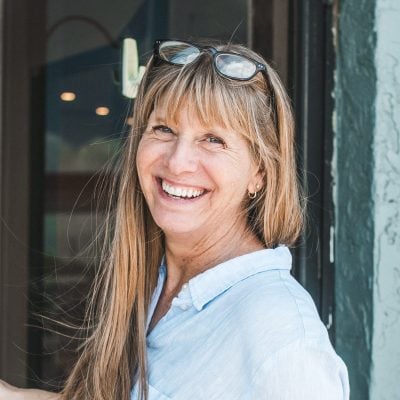
For Hannah Langdon, education was a practice of intention. Homeschooled from kindergarten through high school, she describes her experience as flexible, adaptive, and intentionally focused on developing the whole person.
Her learning included online courses, private tutoring, and mastery-based expectations that emphasized excellence rather than simply completing assignments. Just as importantly, her parents made room for interests, experiences, and opportunities beyond traditional academic work.
During her last two years of high school, Hannah worked in her father’s law firm alongside the bookkeeper, gaining firsthand experience into how a business operates. She volunteered in her community, participated in speech and debate, and gained exposure to ideas of government and economics. Hannah’s homeschool experience offered opportunities to connect academic ideas to the decisions, responsibilities, and relationships that shape everyday life.
When Hannah began college, she leaned on Foundation for Economic Education (FEE) resources to help her feel prepared. What she read encouraged her to take ownership of her college years to focus on learning about the world and creating value rather than collecting typical résumé-builders. She had a natural connection with the principles that FEE champions, including individual liberty, free markets, and private property, and pursued an internship during college. She experienced the same kind of freedom as a FEE intern, and her supervisor encouraged her to be entrepreneurial within her role.
Today, she is a force-multiplier. Her current work helps to develop curricula that reflect many of the same ideas that shaped her upbringing: intellectual curiosity, personal responsibility, strong character, and a desire to help others understand how the world works.
I recently interviewed Hannah on the LiberatED Podcast, where we touched on some of these ideas. Her story raises an interesting question: What does it look like to cultivate both the freedom to learn and the responsibility to think?
Some educators describe their goal as teaching students how to think, not what to think. This is a compelling distinction, particularly for families seeking alternatives to conventional systems. But Langdon isn’t entirely satisfied with that increasingly familiar rhetoric.
Reflecting on her studies in the history of education, she recalls the longstanding tension in ancient Greek thought. Socrates, as portrayed in Plato’s dialogues, emphasized the pursuit of knowledge and virtue. The Sophists were in favor of teaching rhetoric and the techniques of persuasive argument and skills useful in civic life. Both approaches involved developing intellectual abilities, but they assumed different ideals about what those abilities were ultimately for: defending a position or discerning whether a position is worth defending.
Langdon wonders whether educators can genuinely avoid teaching what to think. We all inevitably bring values, convictions, experiences, and desired outcomes to our work. FEE is no exception. In 1946, Leonard Reed established FEE as “the original free market education organization.” Its educational philosophy embraces individual liberty, equality before the law, property rights, freedom of thought and speech, free markets, individual flourishing, and strong character.
The important distinction, Hannah suggests, is between examining the foundation of those principles and demanding that learners accept particular conclusions. Educators can embrace what they value without requiring learners to agree with every application of those values.
For Langdon, the bridge between what and how is the why. Why do we value liberty? Why do property rights matter? What incentives influence human decisions? What are the consequences of a particular policy or action? What assumptions underlie an argument?
Rather than treating principles as conclusions, these questions invite learners to investigate the reasoning behind them. And that investigation requires educators to remain willing to examine their own reasoning as well.
One of the most useful connections between FEE’s educational philosophy and “indie education,” or education outside of a conventional classroom, is its practice of economic thinking. Economics is frequently presented as a technical discipline dominated by mathematics, statistics, graphs, and financial systems. Those tools are useful, but economics is primarily a study of how people make choices. Human decisions revolve around incentives, trade-offs, opportunity costs, and consequences. Economic thinking applies to decisions learners make about their education just as they do to markets or policy.
A learner deciding whether to spend an afternoon improving a skill or pursuing a new project faces a trade-off. A budding entrepreneur determining what to offer the marketplace must weigh costs, incentives, and the preferences of others. A group planning a collaborative project must consider competing ideas and desired outcomes. These experiences create opportunities to practice economic thinking in authentic situations.
Freedom of thought becomes especially meaningful when people disagree. Langdon, who also coaches debate, sees disagreement as an opportunity to develop intellectual skills and character. Students are often eager to challenge assumptions and question authority. Hannah encourages educators to recognize the genuine desire to understand that may exist beneath the challenges.
This does not eliminate the need for courtesy, self-control, or respect. Langdon emphasizes that liberty and character must develop together.
Learners need opportunities to practice disagreeing without attacking, expressing strong convictions without letting emotions become overwhelming, and listening carefully to others’ perspectives. One expression I encourage learners to practice is: I have reasons for what I believe, but I’m still genuinely interested in understanding why you believe something different. While not every argument is equally sound or all conclusions equally thoughtful, others deserve to have their reasoning taken seriously, even when we disagree with their conclusions. These ideals apply equally to the educator as well as the learner.
Langdon’s homeschool experience also illustrates an important relationship between educational freedom and responsibility. She had time to pursue her interests and experience value creation while working in her father’s office. This connection remains relevant to FEE’s emphasis on personal finance and economic understanding.
Financial literacy is about more than balancing a budget or calculating interest. Financial literacy helps people understand how choices about resources, work, and value creation affect their ability to live independently. The ability to stand on one’s own feet expands the possibilities for exercising freedom.
FEE Teachers, a selective fellowship, coupled with the online dashboard of professional development and classroom resources, approaches this work with a multiplier mindset. By helping educators understand and apply principles of liberty, economics, and personal responsibility, its influences can extend to the many learners those educators serve.
I’ve been exploring that potential through the development of an “Indie Educators Guide to FEE Resources,” a practical resource designed to help independent educators navigate FEE’s educational offerings and discover ways to incorporate economic thinking into their existing learning environments. It will be available soon.
Hannah’s story is a lovely example that education for liberty is not simply about offering learners more choices. It is about helping them develop the knowledge, character, and judgment to make those choices well.
Perhaps that is the challenge for those of us building independent learning environments: not merely to give young people the freedom to think for themselves, but to prepare them to use that freedom wisely.