Why specialized knowledge doesn’t relieve us of the responsibility to think for ourselves.
I would be lying if I didn’t admit to being somewhat intimidated once selected for the FEE Teacher Fellowship. I felt under-credentialed in what I expected the topics and discussions of the Fellowship to demand of me intellectually. Others showed up confident, and I perceived them as possessing the needed knowledge and skills to participate at a higher level than I might be able to. Then Joy, another member of our cohort, admitted after a lecture and discussion on economics in the historical context that she lacked some of the historical background we were exploring. Her intellectual honesty was refreshing and helped reset my expectations for the event. We were there to share our own knowledge, expertise, and experiences. The in-person retreat at the University of Maryland was part of FEE’s 2026 Teacher Fellowship, a months-long program that began weeks earlier with independent study of economics, history, and philosophy. Our small cohort came from very different corners of education, including economics and personal finance classrooms, traditional teaching backgrounds, career-changers, and education entrepreneurship.
The fellowship experience in some ways mirrored Leonard Read’s famous “I, Pencil,” one of our pre-retreat readings. It soon became obvious that, whether purposeful or fortuitous, our cohort would embody the characteristics Read understood about distributed specialized knowledge and cooperation. We embodied the idea that specialization deepens our knowledge in some areas while necessarily leaving others to other people.
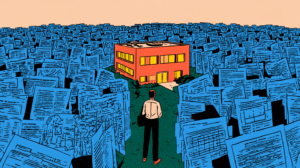
Specialization doesn’t create or require the acceptance of importance or hierarchy. Different people simply know more about different things. Our personal experience informs not only our perspective but where and how we spend our resources. We may consult a subject matter expert for precise knowledge, but intelligent and relevant application of that knowledge requires deeper understanding of the specific circumstances—knowledge that the remote expert may not possess. The Nobel Prize-winning economist Friedrich Hayek argued that knowledge is dispersed among individuals and that an individual’s knowledge of the particular circumstances of time and place is key. It can be tempting to defer to an expert, but complete or uncritical deference risks excluding relevant knowledge. The challenge, then, is how to give expertise the weight it deserves without surrendering our own responsibility for judgment.
At the VIP reception before the awards dinner, Vincent Geloso, an economist at George Mason University and FEE’s 2026 Economist of the Year, asked to share the table where I was seated. The Fellowship ran alongside FEE’s Summer Campus, giving Fellows access to shared lectures and events throughout the week. I was excited to have the opportunity to reengage with a concept that Vincent shared during one of those lectures on public goods. I had been wrestling with questions about the government’s role in certain public goods, particularly where scale and shared natural resources complicated my thinking. I embraced the chance to discuss these ideas further. Vincent’s command of economics and the opportunity to engage with a true subject matter expert was rewarding. Our discussion, coupled with his earlier lecture, helped me challenge some of my earlier assumptions and re-examine my position. Our second conversation flipped the script! Vincent politely inquired as to what I did. When he learned that I am an education entrepreneur, he grew excited. His questions revolved around what problems exist that I might solve for parents, who participates in school choice, what barriers founders and parents are encountering, and where the sector is heading. Suddenly my knowledge was desirable, and Vincent was eager to examine it.
This exchange illustrates the tension at the heart of Thomas Grundmann’s recent book, Expert Authority and the Limits of Critical Thinking. Grundmann argues that “due to massive division of epistemic labor and increasing specialization, we are almost universally dependent on expert guidance—and this applies to everyone.” This creates what he calls a fundamental problem: “on the one hand, laypeople ought to defer to experts; on the other, they should not do so uncritically.” Vincent’s depth of knowledge was evident in both his lecture and our conversation. While no one will be offering me a department chair in economics, my ideas became sharper and more defined as his intellect and expertise challenged them. An interaction with an expert, when thoughtfully applied, can be an accelerant to personal intellectual growth. What one cannot expect from an expert, however learned or credentialed, is for him to carry our intellectual burden of deciding what we believe or our implementation burden of applying knowledge to our particular circumstances.
Deferring all of the intellectual heavy lifting to an expert would be a lost opportunity to practice intellectual maturity and an abdication of personal responsibility. Intellectual growth may require approaching challenging ideas with curiosity, the confidence to contribute what knowledge you possess, the ability to examine your current beliefs, the willingness to reform, reframe, or reject those beliefs, and sometimes to remain uncertain.
The FEE Teacher Fellowship provided an immersive experience in intellectual depth, honesty, and freedom of thought, while we were asked to engage fairly with competing perspectives. The cohort was diverse in experience, culture, language, and expertise, yet able to find common ground in education and a desire to advance the principles of a free society. We were given brilliant lectures in philosophy and economics, sessions in pedagogy, and lessons in navigating a campus under renovation. What I experienced in my week with FEE scholars was not the expectation that I become an economist, philosopher, or historian, or that I simply accept the conclusions of those who were. The Fellowship provided access to expertise and opportunities to engage with it while contributing knowledge and experience of our own. A free and prosperous society depends upon specialized knowledge, but it also depends upon individuals willing to wrestle with that knowledge, contribute what they know, and retain responsibility for what they ultimately believe and do. Even in the shadow of experts, we retain responsibility for judging how specialized knowledge applies to our own lives and communities.