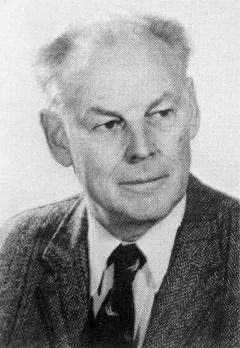
Of all the silly movements that have afflicted western society in recent years, the anti-growth crusade is by all odds the strangest. It enjoys a great press, it passes for idealism, and it boasts a concern for the “quality of life.” It certainly commands the TV cameras. But when it is subjected to the harsh light of analysis in Wilfred Beckerman’s witty Two Cheers for the Affluent Society ( St. Martin ‘s Press, $7.95), it must be seen for what it really is.
Dr. Beckerman, a British economist, says it straight out: the “no-growth” lobby is guilty of making a profoundly undemocratic assault on the poor who, if they are to be denied access to slices from a bigger pie, must continue to be second-class citizens in the richer nations and starveling outcasts in those countries that are still struggling to catch up with the technologically proficient “West.”
Dr. Beckerman’s main weapon is logic. He does not deny that we have pollution problems, but if they are to be solved there must be funds — and technological means — to do it. The worst pollution is to be found in poorer nations that have not yet achieved a surplus that can be turned into such things as water purification, sewers and the eradication of disease-bearing insects and rats. It is only when incomes are rising that people feel they can spare the money needed to improve the “environment,” which, as a priority, must come after the pangs of hunger have been assuaged.
Dr. Beckerman uses a somewhat stiff economic lingo to make his most critical point. The “pollution problem” is a “resource allocation” problem. If there were unlimited supplies of clean water and clean air, pollution would be too small an item to have a significant effect on the environment. But clean water and clean air can become “scarce resources” at certain population levels.
Paying the Price
If producers are not compelled to pay for their use of clean air and water as scarce resources, they will not do it. But if “society,” as the “owner” of the air and water, is going to “collect” on their “sale” to the producer in order to finance anti-pollution campaigns, it must be expected to see the charge passed along into price. It is Dr. Beckerman’s thesis that only the more affluent economies can afford the price. So we come back to the need for continuing growth to finance the “extra” charges for keeping the environment clean and in ecological balance.
Dr. Beckerman does not deify the concept of GNP, or Gross National Product. There are lots of riches, such as leisure time, that do not get measured in any proper sense in GNP. There are various types of welfare that are of an “unmeasured kind” such as swimming in a clean stream or walking in the mountains. But if the measurable GNP is not increasing, the poor must be deprived of the income that supports upward mobility. Lacking cars, they won’t be able to seek out clean beaches or pretty woodland walks.
Computing “Known Reserves”
But what if the world’s resources can’t support a continued growth of GNP for all the nations? Dr. Beckerman admits that we would then be in a pickle, particularly if populations continue to grow. The “eco-doomsters,” however, have confused “nonrenewable” resources with “nonreplaceable” ones. They have also failed to reckon with the “marginal utility” aspects of computing “known reserves.” After all, one does not go looking for new “known reserves” until the older reserves begin to command a higher price. Invariably new reserves of iron ore, copper, oil or whatnot are discovered whenever it becomes profitable to discover them. Conceivably the day will come when copper and oil will be exhausted. But not in this century or the next.
Even if limits for certain raw materials are reached, the innovative human being is quite capable of “replacing” the “nonrenewables” with synthetics or substitutes. Bauxite was once a useless form of earth. But when the innovative human animal learned how to extract aluminum from bauxite, the “reserves” behind our store of cooking pots and airframe covers became practically inexhaustible. There threatens to be a short supply of tungsten, which is needed for conventional light bulbs. But fluorescent strip lighting, which is coming more and more into use, does not require tungsten. If we had less copper, it would hurt the production of standard telephone lines. But Dr. Beckerman looks forward to the day when telephone messages will speed along glass fiber conductors acting as wave-guides for laser beams.
What is a “Resource”?
The Club of Rome, feeding material about disappearing resources into a computer, has despaired of the chances for continuing growth on a world scale. But new things are constantly becoming “resources” over time. Sea water contains a billion year’s supply of sodium chloride and magnesium and a hundred million year’s storehouse of sulfur and borax. Nitrogen can be “fixed” by separating it from liquefied air. Manganese nodules are scattered all over the sea beds.
As Dr. Beckerman says, what is a “resource” depends on economic conditions determining usefulness. In a kidding way Dr. Beckerman wonders how “economic growth has managed to keep going without any supplies at all of Beckermonium, a product named after my grandfather who failed to discover it in the nineteenth century. In fact, we manage very well without an infinite number of products that have never been discovered.” So what if we hadn’t discovered nickel? Would that mean that civilization would be impossible?
Efficient Agriculture
Food, of course, is a troublesome item in times of expanding populations and changing patterns of rainfall and drought. But Dr. Beckerman quotes a Cambridge Professor of Organic Chemistry who insists that if all the land that is now cultivated were to be farmed as efficiently as it is in the Netherlands, the world could support 60 billion people — or ten times as many as are expected to be around at the end of the century. And this makes no allowance for land not yet brought under cultivation in Latin America, Australia and parts of Asia.
Reading Dr. Beckerman, one becomes a little less inclined to make a fetish of the so-called ecosystem. After all, the ecosystem of the moment happens to be the sum of past changes, including the disruption of former ecosystems. The history of the world is a record of ecological catastrophes, in most of which man played no role at all. Giant lizards have disappeared, continents have drifted apart, ice ages have come and gone, volcanoes have thrown tons of contaminating material into the air. So what is “ecological balance”? It consists of a status quo that will, even without the prodding of man, give way to other status quos. Must we worship the ecosystem of the moment? If we do, it will be merely another way of writing on water.