The more orthodox way of attempting to refute a socialist, or any kind of collectivist, is to appeal to his latent sense of rationality. Since every individual is different, equality—as distinct from legal equity—cannot be legislated. The attempt to do so suppresses the innovative spirit in a society, and everyone is the poorer for it. If you can get a socialist to admit this, you have him where you want him. He will be compelled to support some adaptation of the competitive principle in order to square his thinking with a sense of reality.
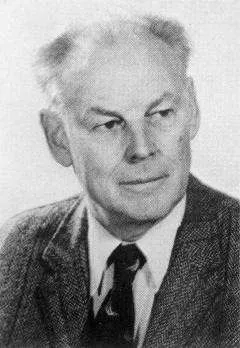
Unfortunately, the world is full of people who are not in the least concerned with creating a socialist order for idealistic reasons, however misguided the reasons may be. These people aren’t looking for a progressive society of any type. What they want to do is to pull front-runners down, to penalize excellence, to make everybody the same, for reasons that are grounded in emotion. They are the envious ones who cannot stand to see anybody move out of the ruck. They are impervious to the logic that must ultimately tell any sensible person that it is the division of labor that supports our huge modern populations, the envious and the unenvious alike. This is the mentality dissected by Helmut Schoeck (Envy, Harcourt Brace Jovanovitch, $7.50).
Curiously enough, the term “envy” is hardly mentioned by any of our big-name contemporary sociologists or political philosophers. There are plenty of economists who are prepared to refute socialism by recourse to the rational appeal. One even finds them behind the Iron Curtain—or one did before the Czechoslovak crisis resulted in the suppression of the Ota Siks who were trying to revalidate market principles in the sluggish Eastern societies. But there seems to have been a conspiracy of silence about the subject of envy.
In combing over the literature on social change, Professor Helmut Schoeck, who taught at Emory University in Atlanta before returning to Europe to take a chair of sociology at the University of Mainz, discovered that only one modern writer, a Frenchman named Eugene Raiga, had ever devoted a single book to the role of envy in stirring social and political disturbances. Against this meager showing there have been hundreds of writers from R. H. Tawney to Michael Harrington who have rung the changes on the alleged sin of acquisitiveness. Indeed, it has been considered far more wicked to provoke envy than it has been to break the commandment that says, “Thou shalt not covet.” Justice Oliver Wendell Holmes used to twit his friend, Harold Laski, about the “passion for equality,” which seemed to him a dissembling way of “idealizing envy.” Significantly, Laski, though he was the most rhetorically gifted of the British Labor Party’s publicists, avoided answering Holmes’s pointed remarks. If he had tried to do so he would have inevitably called attention to the ugliest side of the socialist movement.
Aside from Eugene Raiga and a few novels such as L. P. Hartley’s Facial Justice one has to go back to the nineteenth century to find any extensive commentary on envy as perhaps the chief destructive element in society. The philosophers, Kant, Schopenhauer, Kierkegaard, Nietzsche, all had something to say on what they considered one of the more important, if reprehensible, human drives. Adam Smith spoke of the need for laws to keep property from being invaded and destroyed by the envious. Herman Melville, in Billy Budd, dramatized the envious man as the embodiment of evil, and Eugene Sue’s Frederick Bastien: Envy dealt with the subject almost clinically in fiction that foreshadowed modern psychoanalysis. And the ancients and the relatively ancient, from Aristotle to Chaucer and Francis Bacon, were not afraid to speak against the envious man.
Professor Schoeck thinks that modern social and political theorists have repressed the concept of envy out of sheer embarrassment. The whole surge of our modern society has been toward “socializing” the economy, and if one were to admit that the movement has been in response to resentful and evil men, it would create a most unpleasant and painful state of affairs. The iniquitous secret of socialism is that it leads, in its more extreme manifestations, to a world without sociability or sociableness. With Leftist theoreticians taking over so many of the media and so many of our university chairs, it is hardly likely that we will get much dispassionate treatment of the subject of envy. What we do get is a literature of circumlocutions. The writers speak of “conflict,” which is a matter of overt behavior. Envy is a silent, secretive process that can be hidden behind protestations of idealistic concern for equality. Since it is silent (nobody likes to admit it), our writers don’t have to pull it out of the closet. But Professor Schoeck surmises that the failure to identify envy for what it is has had much to do with the masochism of our younger generation, many of whom feel guilty because their parents have money, or because the nations of the West are more prosperous than those of the “third world.” The positive and energizing values of capitalist society are lost sight of simply because we no longer tolerate any discussion of envy and covetousness as being among the more sterile human attributes.
Professor Schoeck is willing to concede the high-mindedness of some socialist theorists. But he has recourse to anthropology to prove that envy remains a constant in society, no matter what the principle of organization. In primitive collectivisms the envious man concentrates on little things. The Siriono Indians of Bolivia denounce the hoarding of food. But although they conform outwardly to collectivist norms, the individual Siriono hunter will hide his catch outside the camp. After nightfall he will return, possibly with his wife, to the hiding place for a lonely feast. It is part of the myth of a “golden age” to suppose that prehistoric communities were joyful utopias where everyone shared and nobody envied anybody else.
The possibility of creating a collectivist society without envy founders on the necessity of giving somebody the power to maintain order. Naturally, power of any kind provokes envy among those who do not have it. It is no accident that the Russians haven’t been able to create an equal society; if they had, it would have resulted in a situation in which nobody would do the less congenial work. To get production out of the poor slobs in the “classless” society, the Soviet managers have had to establish a 40:1 differential between maximum and minimum incomes. In Western countries, where the urge to utopianism hasn’t yet killed the market economy, the ratio is more like 10:1.
Even the Israeli kibbutz has proved disappointing to those who hoped that communal life could be a life without envies and resentments. To exist at all, the kibbutzim have had to make use of the products, the technology, and the achievements of individualistic societies. They have succeeded to some extent, but at the cost of producing a younger generation that is obsessed with the fear of showing signs of individual superiority. The individual who exercises a poetic gift feels guilty, and it is judged an offense to do intellectual work when physical labor is demanded.
Professor Schoeck, recognizing human nature for what it is, doesn’t expect to do away with envy anywhere. But the time has come, he says, for a “hardening towards exaggerated sensitivity to envy.” It makes no sense for us to behave “as though the envious man was the main criterion for economic and social policy.” We should treat the envious man for what he is, a person who wants to pull others down without bothering to expand his own capacity for excellence.
Youth, University and Democracy, by Gottfried Dietze (Baltimore: Johns Hopkins Press, 1970), 117 pp., $6.50.
Reviewed by George C. Roche III
It has become commonplace to criticize the modern university, its faculty, and students. The significance of Professor Dietze’s latest work is that he goes far beyond such criticism.
Not that he approves of the present academic community:
Laziness, vanity, and arrogance, the seeking of and corruption through power, the elimination of excellence, the negation of the search for the truth, devious pursuits of material things, intellectual sacrifices, and the absence of freedom—all can be found in modern universities.
Sympathetic to youth and its problems, Dietze feels that the young people living in what he calls “the liberal-democratic era” have sufficient uncertainty and insecurity to face without the further uncertainty and insecurity likely to result from contacts with the modern university. From that point on, however, he parts company with protesting students, emphasizing that today’s protesters tend to favor those courses of action most detrimental to genuine education.
In Professor Dietze’s analysis, both university failures and student failures are traceable to a single cause—the politicalization of the university, a direct result of mass democracy and the acceptance of the welfare state:
The present breakdown of law and order, usually reflected in crimes against property rights, is in a large measure the natural consequence of so-called social legislation. Individual citizens cannot be expected to respect property rights if the government has consistently disregarded these rights and destroyed public trust and all sense of obligation.
Today’s students have grown up in this atmosphere. Rioters are the children the welfare state has released.
When rioting students protest against the “Establishment,” they apparently do not realize that they themselves are a product of that Establishment:
… the student diagnosis of present societies is a quack diagnosis, for establishments are not sick because they are insufficiently democratic, socialist, egalitarian, etc., but for the very opposite reason—namely, because they have gone too far to the left. Student aims, therefore, are likely to increase the illness of society rather than to heal it, just as a doctor who makes a wrong diagnosis and applies the wrong therapy is likely to worsen his patient’s condition. Rioting students are outcasts of the establishment only on the surface. On closer inspection, they are its products. Student rioters are outcasts of the establishment only insofar as the establishment has remained healthy. Insofar as it has become sick, they are representative of it. They are the poison produced by the infections of the body politic, out to destroy that body.
The author reminds us that this has all happened before, describing the vulnerability of Weimar democracy:
Political factions fought it out in the Reichstag, in the streets, and in universities, which increasingly had become places for political debate and controversy. In the end, Hitler arose and… streamlined the universities into his system.
Professor Dietze’s erudition in philosophy, history, law, and letters comes to bear on the subject of the university’s proper place in society. The ideal for the student, the scholar, and the university itself comes alive as the reader begins to understand the meaning of a “community of scholars.”
Youth, University, and Democracy is filled with insights for student, teacher, and administrator. The book also makes clear to the rest of us that, for all the shortcomings of today’s universities, we must be careful to distinguish between today’s politicalized campus and the historic role of the university. Seen in that historic role, the university should be and can be a bulwark against the mob mentality:
… universities, developing along with constitutionalism, have protected the freedom of the individual against authoritarian popes, kings, and popular demagogues, and [can] continue their libertarian mission in modern democracies. That mission implies maximal benefits for the community—including youth. For only free universities can serve truth, and only advancement toward the truth can satisfy the perennial quest of a traditionally confused, sad, and brave youth for clarity and bring about the kind of public good youthful idealism has always longed for.