The Case for the Free Market
Every fourth year we get involved in the frenzied madness of a presidential election. A candidate says a sensible thing—such as that it would be in keeping with a general profession of a belief in free enterprise if the TVA were to sell whatever facilities it possesses that have nothing to do with flood control—and all hell breaks loose. The head of a great Detroit union, with a gesture of horror, says the candidate will soon be advocating the sale of the U.S. government to General Motors. At another point the candidate remarks that social security would be better if it were voluntary. Practically everybody jumps on him, and he tries to make a sidewise retreat by saying that he only wants social security to be “strengthened.”
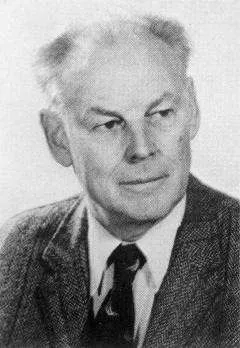
Watching the quadrennial show, Leonard E. Read correctly estimates that politicians are powerless of themselves to change things.
The politico, when he is running for office, is a mere resultant of forces. The way to move society on its axis is not to play politics. It is to persuade teachable people to think as you do. And the best way to do this is to be a good personal living example of the philosophy you hope to spread.
Leonard Read is not running for office, so he can freely say what some people would describe as the damnedest things. His book, Anything That’s Peaceful: the Case for the Free Market (FEE, $3.50 cloth, $2.50 paper) wouldn’t get him through the New Hampshire primary. He believes that government should be limited to such things as keeping the peace, preventing fraud, dispensing justice, and fending off attacks by foreign powers. He says it is violent coercion to force social security on anybody. He thinks that Robin Hood, who advocated taking money from one set of people to give it to another, should properly be called Robin Hoodlum. He argues that any type of government economic intervention forces human energy into shapes that are marketable only at the end of the police club. He doesn’t consider that people think well in committee. He refuses to vote when the choice is between two trimmers. He challenges the idea that the government is peculiarly fitted to run the post office, or to maintain schools, or to plan the coming of either a good or great society. In short, his opinions are such that he couldn’t be elected to the office of dog catcher, let alone win a state primary.
Nevertheless, Mr. Read, by insisting that the state should not intervene to keep people from doing anything at all that’s peaceful, is beginning to shake up American society as no political figure has ever managed to do. I know this because I have witnessed the come-back of the freedom philosophy over the past twenty years. Mr. Read began in the nineteen forties as a still, small voice. He had a few accomplices then. There were a couple of emigrant economists of the Vienna neo-liberal school taking issue with the dominant Keynesian hosts. Three women—Ayn Rand, Isabel Paterson, and Rose Wilder Lane—were wondering what had gotten into men to make them think that the way to release energy was to deliver everybody to the dictates of a public planning authority. The columnists, radio commentators, and magazine writers who believed in economic freedom could be counted on a couple of hands. When the writer of this review teamed up with Henry Hazlitt and Suzanne La Follette to start THE FREEMAN, he was told by an old friend, his first night city editor, that he had better consult a psychiatrist, for surely he was sick, sick, sick.
Doubtful Uses of Coercion
All of this was scarcely a generation ago. Mr. Read still sounds extreme to the conventional way of thinking when he says that education would be improved if there were no tax-supported public schools. But private schools throughout America have started to come back in recent years with a rush. Not so long ago an ex-President of Harvard University, James Conant, was advocating the abolition of private secondary schools as “undemocratic” institutions. Dr. Conant isn’t talking this way today. The “freedom philosophy” has been creeping up around him, changing the climate in which he speaks as an authority on secondary education.
Mr. Read doesn’t think you necessarily have to forbid socialistic enterprise by law to restore freedom. Take this matter of the Federal monopoly of mail delivery, for instance. Mr. Read is satisfied that if the law were changed to permit private corporations to undertake the delivery of mail, and if an unsubsidized Post Office were to be put on an accounting basis comparable to that forced on private industry, some ingenious free enterprisers would soon compete the government out of the mail business. For what, so Mr. Read asks, is difficult about delivering mail? The telephone company, in transporting the human voice three thousand miles from New York to San Francisco, does something that takes much more ingenuity. And. so Mr. Read adds, the American Telephone and Telegraph Company showed a profit of $22 billion when the Post Office was losing $10 billion.
That the climate has changed since Mr. Read, with a handful of confederates, started to preach the freedom philosophy is proved by the lip service that is now being paid to libertarian generalities. A candidate for vice president resigns as co-chairman of the socialistic Americans for Democratic Action and makes a sudden appearance before a number of important businessmen to assure them that he isn’t anti-business. An occupant of the White House invites a prominent publisher to Washington to assure him he is all for self-made men. The TVA may still be regarded as sacrosanct, even when it burns coal to add to the electricity that is made by use of water power, but it is getting tougher to sell huge river development schemes to the public. The objection to saddling the existing social security system with new compulsory payments for new services becomes respectable among the poor, for they are at last beginning to see that the value of the social security they already have depends on keeping inflation from getting out of bounds.
The Non-Politician
During the twenty years I’ve known him, Mr. Read has not, to the extent of my knowledge, ever argued for or against any specific Congressional bill as such. He has not attacked or supported specific men for specific public office. This is not because he values tax exemption for his foundation, for it is part of his fundamental creed. He can’t have voted very often in his lifetime, for he believes that it is just as wrong to vote for a small-scale trimmer as it is to vote for a big one. As this country reckons things, he is the completely nonpolitical man. He even argues that we might do better if we were to choose our Congressmen for non‑recurring terms by lot, for by such a method we would get representatives who would have no stake in buying voters with their own money. Such obliviousness to the emotions that are unleashed in most breasts in a campaign year is a marvel to behold.
Yet I do not doubt that Mr. Read will one day be a chief architect of a change in this country that will have a profound effect on our philosophy of government. He is a positive force, and, being such, he shapes the adaptation of other people without buttonholing them, or demanding that they vote for this or that bill or this or that man.
I say this with profound admiration, even though I have often, in my lifetime, voted for the man whom I have regarded as the “lesser evil.” I have always been hopeful that a “lesser evil” might, in office, be more likely than a “greater evil” to see the light on the Road to Damascus. Almost invariably I have been disappointed, yet I persist in coming back for more. But contact with Mr. Read has done much to make me serene in the face of continual disappointment in the electoral process. Even “greater evils” can be forced, by changes in the intellectual climate, to slow the pace toward socialist goals. And when the natural listeners and followers in the middle begin to listen to the intellectuals of the right instead of the intellectuals of the left, even the greatest of “evils” will begin a new career of trimming in the right direction.
THE AGE OF INFLATION by Jacques Rueff; translated by A. H. Meeus and F. G. Clarke (Chicago: Henry Regnery Company, 1964). 175 pp., paper, $.95.
Reviewed by Percy L. Greaves, Jr.
Monsieur Rueff is an eminent French statesman and economist. He played a major role in re-establishing the French franc after the inflations of both World Wars. This book, a collection of six essays and the author’s 1958 recommendations—which were largely accepted by General de Gaulle—appeared last year in the French. Rueff writes from a European or world viewpoint and makes an impassioned plea for an immediate end to present-day monetary policies while there is still a chance to do it without producing a worldwide catastrophe.
As he phrases it, “Mankind is seeking—and waiting for—a leader who will display the courage and intelligence required to rescue us. If such a leader does not exist, or if political circumstances prevent him from emerging, man’s destruction is as inevitable as that of a man falling from the roof of a skyscraper.”
Disclaimers by the dozen cannot alter the fact that we live dangerously in an age of inflation. For half a century, governments the world over have been meeting their extra expenses by inflating the number of their monetary units by the billions. The United States is no exception. In the last year, our officials have sanctioned an increase in the nation’s money supply of almost 20 billion dollars.
Each added dollar buys something and thus reduces the purchasing power of previously owned dollars. The few who spend these new dollars first are the gainers, while the majority, whose dollars buy less, are the losers. What is worse, the whole economy is deranged as producers try to satisfy the first spenders of the newly created money. When the inflation ends, as it must some day, let us hope that the necessary readjustments will not be too painful.
Jacques Rueff’s collection of essays lays stress on one little-understood international aspect of our government’s policy of dispensing “foreign aid” while increasing the money supply at home. For years, M. Rueff has been chiefly concerned about the effects of an increasing number of European-owned dollars left on deposit in the United States. Our government has encouraged this policy since it cuts down on the current outflow of gold.
The facts which rightly disturb him so much are:
1. More and more American dollars are spent, lent, or presented to foreigners without ever leaving the United States or reducing the number of dollars which can be spent in the United States.
2. American banks lend out these foreign-owned dollars domestically while paying interest to the foreign depositors.
3. Foreign central banks, which can legally demand gold for these dollars, treat them as if they were gold reserves and thus use them as a base for expanding their own domestic money supply.
So, the continuing American inflation becomes the basis for the further inflation of many European currencies. As M. Rueff states it, this policy “has saddled a considerable portion of the United States gold stock with an exceedingly high double mortgage. If a substantial part of the foreign holdings of claims on dollars were cashed in gold, the credit structure of the United States would be seriously threatened.”
He would like to see the situation corrected, and promptly. If this is not done, he fears this house of cards may come tumbling down. Unfortunately, however, the author weakens his case by endorsing expansion of the money supply for the “needs of business” and against domestic government securities. But for anyone interested in the top economic problem of our age, this little book is a frightening reminder of what could be just around the corner for our civilization.
IDEAS AND INTEGRITIES: A Spontaneous Autobiographical Disclosure, by Buckminster Fuller (Englewood Cliffs, N. J.: Prentice Hall, Inc., 1963) 318 pp., $6.95.
Reviewed by Arthur P. Moor
As engineer-designer-builder, Buckminster Fuller has become famous for his “geodesic domes” and other structures which span large areas with light, strong space-enclosures, built on a principle about 2,000 times as efficient, per pound of material, as ordinary building methods. His domes, like all technological advances, are based on discovered ways of doing more with less—less weight, less bulk, less time, less cost. And technology, according to Fuller, is simply the art and science of “doing more with less.” Increasing service with diminishing cost is good economics in any field. But since technology is now so diversified in so many different fields, are there any general principles or laws by which technology advances, and with increasing acceleration? Fuller believes there are, that the principles are simple, but infinitely extensible in application. The chief shock and invigoration of his autobiography is the tracing of his own reasoning and quest for the “inclusive equation” of the industrial complex.
Among Fuller’s observations along the way are these:
1. The major source of increasing wealth is the organization of energy. The physical universe does not wear out or run down by use; the intellectual factor of organization and design improves with use, and is self-augmenting. Since increasing production and world-around service flows from the progressive integration of technologies, the primary initiative can be taken by the individual designer. If one sees a gap-closing task in the world equation for which his experience and competence prepares him to make a contribution, and finds no patron or sponsor for the task, he may assume he is being directly challenged by the Universe and will be supported by it, often in indirect and unpredictable ways. “One of the rules of Nature is that she permits us each day the integrity of that day’s thinking.”
2. The integrity of the Universe is extensible to man, but “only through the congruent integrity of the individual.”
3. Increasing wealth and freedom will be achieved through comprehensive design and planning in a world service context. This, however, is not to be confused with state planning, or political planning, any kind of authoritarianism or compulsion. We cannot expect politicians to solve the problems of technology, industry, and economics any more than we can expect them to solve problems of chemistry. The problem and the solution is in progressive design and production for a world society, and can only be hampered or obstructed by attempts to subordinate it to the limited interests of any political or economic pressure groups.
The book is amply illustrated with pictures of his structures, and is crowded with fresh observations on economic history, the development of technologies in shipbuilding and aircraft design, the application of these in forward planning to “livingry” instead of to “weaponry,” and his experiences with labor unions. It is not a book for browsing or drowsing—but if you like rugged climbing with some breathtaking views, don’t miss it!
THE CONSERVATIVE PAPERS, introduction by Representative Melvin R. Laird (Garden City: Doubleday & Company, Inc.).$1.45.
WHAT IS CONSERVATISM?, edited by Frank S. Meyer (New York: Holt, Rinehart and Wilson). $4.95 cloth, $2.75 paper.
SUICIDE OF THE WEST by James Burnham. (New York: John Day Company). $5.95.
THE CONSERVATIVE AMERICAN by Clarence Manion (New York: The Devin-Adair Company) $4.75.
THE CHALLENGE OF CONSERVATISM by Paul A. Sexson and Stephen B. Miles, Jr. (New York: Exposition Press) $4.00.
DIALOGUES IN AMERICANISM (Henry Regnery Co. (Chicago, Illinois) $3.95.
Reviewed by Edmund A. Opitz
In the Battle of the Books, the conservatives have it by a mile. Compare the first volume listed above with its counterpart of two years ago, The Liberal Papers. That was a tired, party-line plea to quit rocking the boat; the book under review, on the other hand, has vigor and variety. Its scholarly authors are not members of the club, but each in his own way, in the sector assigned to him, registers his dissent from the prevailing “liberal” prescriptions. Topics run the gamut from inflation, union power, NATO, and federalism to the free market, civil liberty, and foreign aid.
This work is in the nature of a handbook for policy makers, whereas What Is Conservatism? smacks more of the study. But again, there is no party line; the terms of the discussion are broad enough to permit inclusion of an old-fashioned Whig’s not very convincing account of why he is not a conservative!
There are major differences of emphasis within the conservative camp, even as concerns the name itself. Some stress the liberty of the individual, his right to a domain of his own exempt from the encroachments of the state; others stress the importance of continuity and tradition in human affairs. Editor Meyer has, as a matter of fact, made “consensus and divergence” a theme of his book. Libertarians and traditionalists share much common ground and are linked naturally in a common cause; that, at least, is made clear by each of the dozen contributors. This and the preceding volume supplement each other beautifully; the academic community, if it takes its pretensions seriously, cannot shrug them off.
Liberaldom already feels itself stung by Burnham’s book. His point of departure is the thesis that civilizations are not murdered; they commit suicide. Macaulay predicted more than a century ago that we would breed our own Huns and Vandals; Ortega, in 1930, foresaw a “vertical invasion of the barbarians.” More prosaically, the central values of Western civilization no longer generate spontaneous loyalty and affection in the hearts and minds of many of our contemporaries. Diagnosing this situation. Burnham necessarily zeroes in on that body of doctrine currently labeled “liberalism.” He seeks to understand the program promoted by present-day “liberals” by laying bare the premises on which their thought and actions are based, and by systematizing the implications of their creed. In effect, the “liberal” is stretched out on the analyst’s couch with his psyche exposed. This amounts to radical soul-surgery and the “liberal” won’t like it. He’s not supposed to like it! Nor will all conservatives be pleased. But all men of good will, whatever the device engraved on their banners, will benefit from the kind of jolts and jabs that a profound and unorthodox mind like Burnham’s can administer. And they will be stirred by Dean Manion’s diagnosis of our recent past and his prescriptions for a better future. We of the present are stuck with the untoward—and unforeseen—consequences of the liberal program of a generation ago. That program promised to make America over; and its very success has proved its undoing! Liberalism is less sure of itself today, and conservatism is resurgent.
A new consensus is being hammered out in our time which, in the normal course of events, will replace the current orthodoxy. That orthodoxy is challenged by Messrs. Sexson and Miles in an excellent little book, as informal and enlightening as a conversation over the back fence. It is challenged again, more formally, in the final book, comprising three debates between Steve Allen and Bill Buckley, Robert Hutchins and Brent Bozell, and James MacGregor Burns and Willmoore Kendall. Speaking for liberaldom, Professor Burns believes that the party which can mobilize a majority behind it should be given a free hand to run the country. He would not deprive conservatives of this opportunity when their time comes, that is, when a majority of the citizens are conservatives. And it is for this reason, he concludes, “that I want the liberals of the nation to have a right to rule in what I think is their day today.” When a political philosophy has to resort to the numbers game, its days, as a philosophy, are numbered.