Government intervention can create the monopolies it aims to prevent.
Diabetes is one of the most commonly diagnosed and increasingly prevalent chronic diseases around the world today. A person is diagnosed with diabetes when tests show that his or her body—due to a destruction or resistance—cannot produce enough or any insulin. Diabetics, especially those with type 1 diabetes, require insulin shots in order to survive. On the other hand, a healthy, functional body naturally produces insulin all on its own. What happens if a person without diabetes receives daily insulin shots? Brain injury, seizures, weight gain, abnormal heart rhythms—and even a single dose can be fatal under certain conditions.
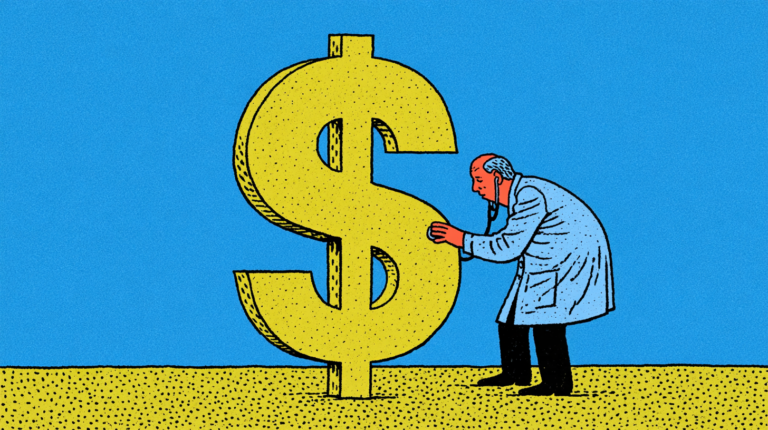
The health of a body can be compared to the health of an economy. Depending on your view of human nature, what an economy should naturally produce on its own varies widely. There are many who view greed as a sign of decay—as if economies should produce morally upstanding people who are well provided for—all on its own. And because the economy doesn’t produce charity, beauty, nourishment, and compassion, it requires outside intervention, or an insulin shot, if you will.
In a similar way, many people believe that dominant incumbents today, like Amazon, BlackRock, UnitedHealthcare, Walmart, and Apple, are further signs of economic decay. The law, like the many antitrust laws of the late 1800s, should interfere in the natural order of the free market to restore the competitive economy to its healthy state.
But metaphorically pumping a healthy economy with insulin can cause serious issues. As Milton and Rose Friedman wrote in Free to Choose, “A monopoly can seldom be established within a country without overt and covert government assistance in the form of a tariff or some other device.”
For free-market thinkers, economies do not naturally produce good morals, but nevertheless still work as well as a healthy body does. This puts most laissez-faire-minded people in the camp that views human nature negatively, whereas most “interventionalists” view human nature positively. As Thomas Sowell in A Conflict of Visions outlines, those from the first camp see greed and selfishness as entirely natural and normal, even healthy. Those in the second camp see moral flaws as a sign of something deeply wrong with the world that must be modified through some type of intervention (like government or education).
Frédéric Bastiat is decidedly in the first camp. In his work The Law, he argues that it is the nature of men to steal instead of produce. For a thriving and healthy economy, then, Bastiat says plunder must be more difficult than production.
“Now, labor being in itself a pain,” Bastiat writes, “and man being naturally inclined to avoid pain, it follows, and history proves it, that wherever plunder is less burdensome than labor, it prevails; and neither religion nor morality can, in this case, prevent it from prevailing.”
Instead of connecting decay to internal passions and tendencies, Bastiat connects the health of an economy to the right to property. If people are properly punished for theft, making production easier, greed and ease are not only tempered by the law, but also used for the benefit of society.
The question then is: Do monopolies need to be tempered by the law? Are they a sign of an unhealthy economy needing outside intervention, or are they a sign that the economy is functioning exactly as it ought to?
For those who believe that self-interest is entirely natural, creating a fantastic product that outshines every similar product on the market is exactly how the free market should work, even if it results in a monopoly. For Bastiat, it’s only when companies engage in theft or deprive individuals of rights that the economy becomes unhealthy.
When a company or government “steals,” but it is not against the law, Bastiat calls it “legal plunder,” what many know today as crony capitalism. Indeed, many if not all monopolistic organizations that are blamed on the greed of capitalism can more likely be attributed to the dangers of government, as Walmart, Amazon, and Apple have all been propped up by the government in some way, and much more than their smaller competitors. The monopolies that many blame on the decay of capitalistic economies are more likely due to the intervention, or insulin shots, that messed up the natural order of a perfectly healthy society.
This is not only true of today, but of the “robber baron” era of the late 1800s. The Friedmans, again in Free to Choose, wrote that the trope of “robber barons” as “heartless monopoly capitalists” who “allegedly exploited the poor” is a myth. These evil businessmen supposedly encouraged immigration, and then conned the immigrants out of their money. “The reality was very different,” the Friedmans write:
The early ones might have been fooled, but it is inconceivable that millions kept coming to the United States decade after decade to be exploited. They came because the hopes of those who had preceded them were largely realized. The streets of New York were not paved with gold, but hard work, thrift, and enterprise brought rewards that were not even imaginable in the Old World.
Momentary monopolies are not evidence of a sick society. They are evidence of a natural and free economy. Enduring monopolies, ones that shoot down competition and block out the little guys, are likely only possible through government intervention.
As the Friedmans later concluded:
What about the danger of monopoly that led to the antitrust laws? That is a real danger. The most effective way to counter it is not through a bigger antitrust division at the Department of Justice or a larger budget for the Federal Trade Commission, but through removing existing barriers to international trade.