
New technology can bring benefits to everyone.
A former employee of the AI firm Anthropic, Jacob Coxon, recently went viral for being a whistleblower about the future of artificial intelligence. “I believe that if we don’t slow down at the current rate of progress, there is a strong chance that we could all die in the immediate future,” he said. Coxon worries that AI developers are racing through self-improving superintelligence, resulting in technology that can hack anything, revolutionize any field overnight, and acquire real power and resources.
Both Sam Altman, CEO of OpenAI, and Elon Musk, CEO of xAI, have agreed with Coxon’s concerns, and called for both independent monitoring of AI development and government regulation. There has been some suspicion as to the devious motivations of these businessmen. Why would these AI developers call for something that would, supposedly, cut into their profits and progress? More laissez-faire commentators argue that these regulations would actually do the opposite for big businesses by blocking out small startup competitors who can’t compete with rising red tape.
In connection with these assertions, the AI debate is often incorrectly accepted under the premise that it only benefits the rich. Supposedly, data centers cut into everyday Americans’ housing and water costs, Flock cameras gather personal information valuable to those rich enough to obtain it, and social media is full of anti-AI posts and comments with most bemoaning that their jobs will soon be taken by robots. And it’s all because of evil Trump-loving billionaires… or is it?
“The rich in Ancient Greece would have benefited hardly at all from modern plumbing: running servants replaced running water,” Milton and Rose Friedman wrote in Free to Choose. “Television and radio—the patricians of Rome could enjoy the leading musicians and actors in their home, could have the leading artists as domestic retainers.” This point from the Friedmans isn’t unique to plumbing and radio, but applies to many types of tech, including AI.
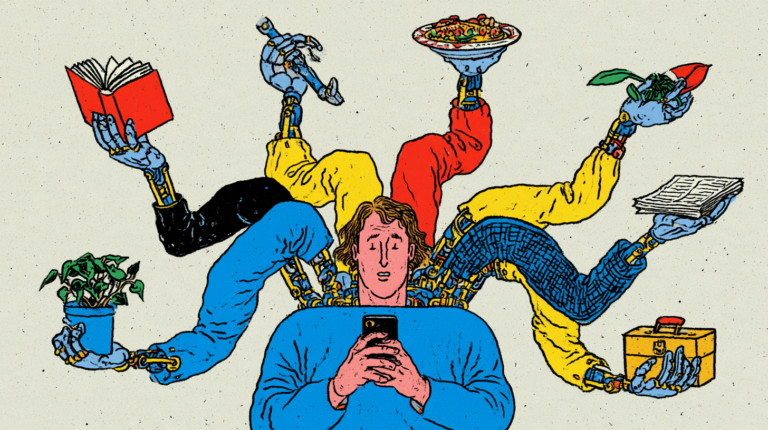
I use ChatGPT for things like meal- and garden-planning, research, and interpreting the writings of crazy philosophers like Jacques Derrida. Similar to the rich in Ancient Greece, the wealthy today have chefs, gardeners, and researchers. The rich don’t benefit from AI in the same way ordinary people do. For every common person who hates AI, there is a common person using AI. On college campuses, 86% of students use AI in their studies. One in four use it daily. These same students boo commencement speakers who talk about AI positively. In the workplace, 38% of adults report using chatbots for everyday tasks, and outside of the office, about half of US adults report using chatbots in general. If we’re so worried about AI stealing our jobs, why do 38% of employees use it at work?
There are certainly legitimate questions as to whether or not this use of AI actually benefits people. As the argument goes, the more we outsource human activities to robots, the less human we become. But it does beg the question: If there are so many problems and dangers with AI, why do so many use it? Virtually every invention has outsourced a human activity to a machine. There are massive cons to running water, guns, television, radio, cell phones, and social media. But again: Why would so many people use these devices if they didn’t believe they benefited their life in some way?
“The real result of the machine is to increase production, to raise the standard of living, to increase economic welfare,” Henry Hazlitt wrote in Economics in One Lesson. “Full employment—very full employment; long, weary, back-breaking employment—is characteristic of precisely the nations that are most retarded industrially.”
In Milton Friedman’s vision of the world, as Thomas Sowell wrote in his book A Conflict of Visions, “exploitative situations have been seen as more effectively eliminated by the systemic characteristics of a competitive economy than by the deliberate intervention of political leaders in complex economic processes that they cannot comprehend.”
In other words, if the rich are prone to exploit others, this is better resolved by a free-market competitive economy than by government regulation. “Intervention” in “complex economic processes that they cannot comprehend” is particularly true of artificial intelligence. How can you regulate something that is always changing, and most politicians likely do not comprehend?
The rich always have more resources at their disposal than do the poor, albeit with much more risk. But, AI, like many other inventions, gives the ordinary person the resources that previously may have been only available to the rich.
“Human nature will not change,” journalist Matt Ridley wrote in his book The Rational Optimist. “The same old dramas of aggression and addiction, of infatuation and indoctrination, of charm and harm, will play out, but in an ever more prosperous world.”
