Creating more ways to say no leads to fewer ways to say yes.
A public company in the UK was building a high-speed railway when it suddenly faced a regulation that few could have predicted: a £100 million ($132 million) bat tunnel. The railway passed through Sheephouse Wood, an area inhabited by rare Bechstein’s bats. To comply with environmental regulations that protect the bats from colliding with high-speed trains, the company had to build a roughly one-kilometer covered structure alongside the railway. This structure has since become widely known in the UK as the “bat tunnel.”
If you think this is just one case, let me tell you about the fish disco. EDF Energy was developing a new nuclear power station in Somerset, which draws cooling water from the Severn Estuary. The project faced regulatory requirements to reduce the number of fish being drawn into and killed by its cooling-water intake pipes. EDF agreed to three measures: specially designed low-velocity intake heads, a fish recovery-and-return system, and an acoustic fish deterrent—underwater speakers that make noise to steer fish away, nicknamed the “fish disco.” The acoustic deterrent alone reportedly costs about $66 million, while EDF says the full fish-protection package costs more than $926 million.
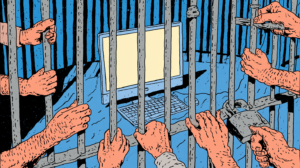
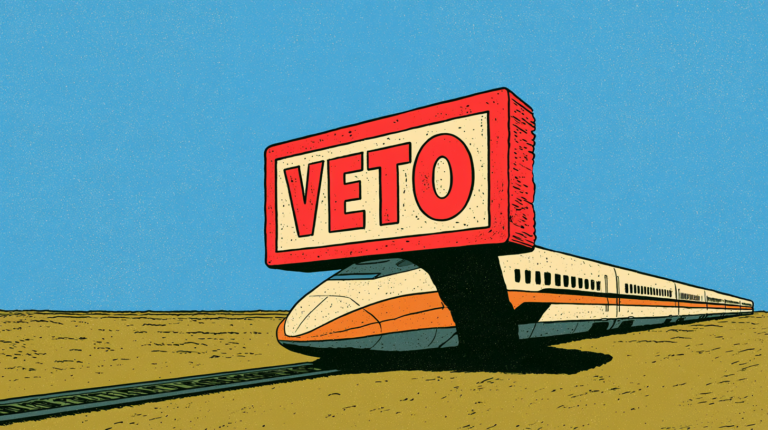
The problem with the UK is that it has become a vetocracy. Francis Fukuyama, the famous author of The End of History, explored this problem in his often-overlooked book Political Order and Political Decay. The concept helps explain part of the productivity puzzle in the Western world. Vetocracy means “rule by veto”: a political system with so many points at which organized minorities, courts, agencies, legislators, or interest groups can block action that the majority struggles to govern.
At first glance, this might seem necessary to protect democracy from majority rule and dictatorship. The separation of powers, independent courts, and an independent judiciary are essential safeguards. As Montesquieu famously wrote, “When the legislative and executive powers are united in the same person, or in the same body of magistrates, there can be no liberty.” But vetocracy is not simply about separating powers and protecting minority rights from the majority; it is about paralyzing democratic institutions and preventing the government from functioning.
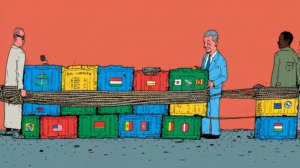
Take the British example. Businesses want a new high-speed railway, the company wants to invest in it, and even the government supports it. Yet an independent regulatory body, Natural England, can act as a veto player, imposing additional requirements and costs. And that is the key distinction Fukuyama discusses: the difference between constraints and capacity. Constraints are necessary because they protect our liberties from government overreach. But we also need government capacity: the ability to build things without being buried under thousands of regulations and a maze of supposed “independent actors” empowered by the state to obstruct or reverse policies.
This has contributed to the problem of quangocracy. In the UK, there are more than 400 quangos, independent organizations set up by the government to carry out certain initiatives, which the TaxPayers’ Alliance has estimated cost the government around £400 billion ($528 billion). The problem with quangos is that they can be protected from both market forces, such as profit and loss, and the electoral accountability of democratic government. As Fukuyama’s argument helps explain, this can create the conditions for a populist backlash. Voters do not get the policies they want, and when institutions become paralyzed, they may turn to a populist strongman promising to “get things done.”
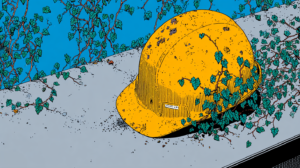
This has created a regulatory burden that has paralyzed building in the UK. Britain has not built a major new conventional reservoir in three decades. Housing is another example. Research by the Centre for Policy Studies shows that Britain has just 446 homes per 1,000 people, the second worst rate in Europe. Why? Because everyone can become a veto player when you want to build something in Britain. Residents of Chelsea, one of London’s most affluent areas, have even opposed the expansion of a cancer hospital because it could “harm property prices.”
These are the visible costs of regulation: the cancer hospital that cannot be expanded, the house that could help a young person get on the housing ladder, or the nuclear power station that could help bring down energy costs.
But the more serious costs are the ones unseen: the products that fail to come to fruition as a result of regulation. As the Austrian school economist Per Bylund has argued in his book The Seen, the Unseen, and the Unrealized: How Regulations Affect Our Everyday Lives, the problem with regulation is that it limits the possibilities of what could happen. It is not just about the direct financial cost of compliance. It is about the choices that disappear, the investments that never happen, and the economic freedom that is gradually eroded. The real cost of regulation is not only what we can see, but also what we never get to see because it was never built in the first place.
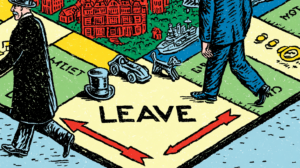
Vetocracy is a product of an overextended state: one that wants to be the dominant actor in the economy and micromanage every aspect of economic life. Sooner or later, it discovers that governing is not as easy as it looks. The barriers originally created by the state in the name of better governance can make effective governance almost impossible. A vetocracy is a democracy that has accumulated so many opportunities to say no that it has lost the practical ability to say yes.