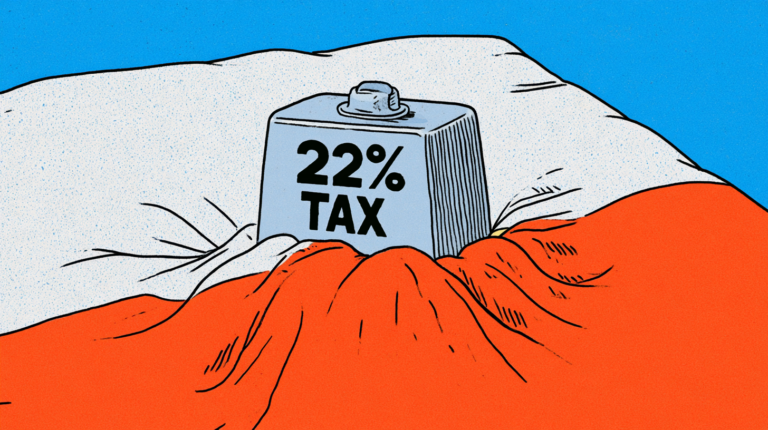

Poland sticks businesses with the benefits bill.
Since the start of the 21st century, Poland has seemed like a textbook example of sustainable development. The break from a centrally planned economy in the late 1980s, the opening of the market, and relatively low labor costs attracted substantial foreign capital. GDP began to grow rapidly, and for the first time, money appeared in Poles’ pockets.
While Western Europe focused on developing the welfare state, Poland consistently reinvested its earnings, and government spending concentrated on infrastructure, energy, and similar sectors, with the overarching goal of facilitating business operations. The success of this policy was undeniable. While in 1990, Poland’s GDP per capita did not exceed $2,000, 20 years later it had risen to over $12,000. However, not everyone was pleased with this.
Poorer residents, bombarded with reports of an improving economic situation, began to voice their belief more and more boldly that they were entitled to a slice of the state’s pie. The oppositional Law and Justice Party at the time capitalized on this public sentiment, promising during the 2015 election campaign to increase spending on social benefits. After taking power, they launched what was undoubtedly the most ambitious social assistance program to date, under which monthly cash payments were made for every child. Thus, the first domino fell.
The attempt to expand a welfare state in Poland was not limited to a single program. Year after year, the number of benefits increased, and starting in 2015, subsequent election campaigns took the form of bidding wars, with candidates offering ever-newer and more extensive aid packages. A strong economy, cheap loans, and stable growth made it possible to increase spending without straining the state budget, but this could only last so long.
The economic boom came to an end with the onset of the COVID-19 pandemic. In response to the economic slowdown, the government opted to flood the market with money by introducing temporary aid packages. The outbreak of war in Ukraine meant that these support programs very quickly ceased to be temporary, and maintaining them forced the authorities to increase the effective tax burden.
Fiscal expansion led to rising inflation, which peaked at around 20% year over year. In response to rising commodity prices, the government, in a desperate move, decided to freeze the prices of selected goods and services, but this did little to help. In 2023, most political parties in the country repeated promises of even more new social programs. The Law and Justice Party’s government, despite expanding social spending, lost power, but the model of buying voters’ support with promises of higher transfers did not disappear with it. New authorities from the Civic Coalition continued spending in subsequent years, and while public debt stood at 42.8% of GDP in 2019, it had risen to 60% of GDP by the end of 2025.
Financing public spending through debt, at least in theory, cannot continue indefinitely. The Polish Constitution clearly states that the debt-to-GDP ratio cannot exceed 60%. To circumvent this limit, the government began employing a series of accounting tricks. Through state-owned banks, new loans are taken out and channeled into dedicated funds that finance, among other things, the purchase of military equipment, which the government is eager to tout.
On the other hand, these auxiliary funds are not included in debt calculations, as the government claims that this is an independent initiative by the banks, which, let us recall, remain state-owned. The State Treasury guarantees repayment of the obligations.
Efforts to circumvent Polish law do not go unnoticed abroad. Poland has been placed under the excessive deficit procedure by the European Union, which has set a several-year deadline to balance the budget. If Poland fails to meet this deadline, it will face severe penalties.
As if that weren’t enough, in September 2026, Moody’s downgraded Poland’s long-term foreign currency rating from A2 to A3. This is a significant shift, as the last such change took place in 2002. Poland is losing credibility, and further borrowing will now be more difficult and more costly.
And so we arrive at the present moment. Poland’s GDP per capita already exceeds $28,000 and continues to grow, with immigrants from Ukraine playing a significant role, but the myth of an economic miracle is beginning to crack. With another election coming up next year, seeking savings in social transfers would be a very unpopular decision. As loans become more expensive and debt servicing costs rise, the government is focusing on increasing revenue.
In the face of an election campaign, raising taxes on citizens would be poorly received, so instead, larger companies are being targeted. There are plans to raise the corporate income tax (CIT) rate from 19% to 22% for companies with annual revenue exceeding €50 million. The scale of this measure is unprecedented, as it affects over 4,000 entities.
At this point, it’s worth going back to the beginning of our story. The key to Poland’s success was its attractiveness to investors and its responsible fiscal policy. The inflow of capital translated into continuous growth. The increase in social transfers and rising debt began to slow capital accumulation, but a tax hike could lead to capital outflows.
In the short term, the budget deficit will be patched up, but the decision may prove to be short-sighted. The country’s reduced investment appeal will lead large companies to relocate some of their assets abroad, resulting in a shrinking tax base. According to the Laffer curve, beyond a certain level, an increase in the nominal tax rate weakens economic activity to the point that, despite higher taxes, budget revenues decline rather than rise.
Moreover, the tax will affect all major market players, so in an oligopoly, they may raise their margins proportionally, passing the costs on to consumers. The essence of any tax system is taxpayers’ drive to minimize their tax burden. It is difficult to assess the effects of the planned decisions unequivocally, but one thing is certain. Everyone wants to live in a welfare state, but no one wants to pay for it.
In 2015, the Law and Justice government opened Pandora’s box. The social programs it launched, despite their high costs and questionable results, have become a permanent fixture in the platforms of every major political party in the country. The current Civic Coalition government, once considered a liberal group, is copying the tactics of its predecessors. Even the right-wing Confederation, known for its free-market policies, is reluctant to talk about cuts to social spending.
Politicians have fallen into their own trap. Promises of generous social transfers have enabled them to win elections consistently since 2015, but abandoning them would be political suicide. The proposed corporate tax hike is just the first of many unpopular measures needed to balance the budget.