
The mayoral race spotlights how hard it is to rebuild.
Pending the results of this week’s Los Angeles mayoral primary, incumbent Mayor Karen Bass will face off against former reality TV star Spencer Pratt or City Councilwoman Nithya Raman in the general election this November.
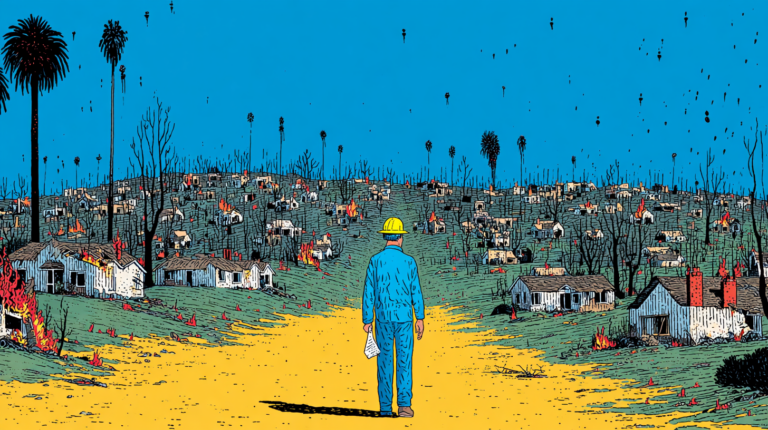
Except for New York City, very few cities receive national attention for their local politics. But this election is unique. Pratt has been using evocative campaign ads to spotlight issues such as crime, drug use, and, most notably, city mismanagement during emergencies. He decided to run for mayor after his house burned down in last year’s Palisades Fire, which, together with the Eaton Fire, destroyed over 13,000 homes and residential properties. As of April, only 34 homes have been rebuilt in the hard-hit Pacific Palisades and Altadena.
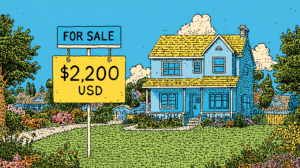
Because of Pratt’s personal stake, the mayoral race has shifted its focus to housing: unaffordability, regulatory red tape, and the city’s inability to rebuild. These problems have burdened California cities for years, and they have now become impossible to ignore in Los Angeles.
Los Angeles has long been a prosperous city attracting aspiring entertainers, business professionals, and immigrants. Over the past decade, however, the city has become increasingly expensive and struggled to maintain public safety. Last year, over 50,000 residents left LA County—the highest population loss in the country. The fires have exacerbated the exodus out of the region, in part because residents cannot rebuild.
Slow recovery from the Palisades and Eaton Fires highlights the steep cost of excessive regulation. Burdened by what the Los Angeles Times called “heaps of paperwork,” fire victims found themselves “navigating confusing web portals, frustrating phone-tree systems and other soul-crushing bureaucracy.” While most residents lacked the financial capacity to rebuild immediately, those who did were unable to obtain the necessary permits to begin construction. For example, Malibu issued its first rebuilding permit in August 2025, seven months after the fires. One year later, fewer than a dozen homes had been rebuilt in LA County.
This sluggish rebuilding process prompted the federal government to intervene. In January, President Trump signed an executive order aimed at addressing the “unnecessary, duplicative, or obstructive permitting requirements that prevent families and businesses from rebuilding.” Trump directed his officials to preempt state and local permitting processes that have obstructed the timely use of federal emergency-relief funds and created a builder self-certification process. Constitutional questions aside, opponents have primarily argued that local and state officials have increased the pace of permit issuance and helped residents move forward after the fires.
However, according to a January 2026 study by NORC at the University of Chicago and the Pacific Palisades Community Council, 64% of Palisades residents plan to rebuild their residences, yet only 13% of heavily impacted single-family homeowners have begun construction. Empty lots are still very visible in Los Angeles, which is why Pratt’s ad juxtaposing his opponents’ properties with the site of his burned-down home is so expressive.
This regulatory red tape impeding building is pervasive throughout California. In March 2025, the California Assembly Select Committee on Permitting Reform published a report highlighting how the permitting process “plays an outsized role” in the overall housing crisis across the state: “For individual projects, it factors heavily into the timeframe and risks associated with building housing—both of which are correlated to increased costs.” This lag is especially common for multifamily development projects.
The poor recovery in the Palisades reveals the breadth of California’s housing issues. While the focus has largely been on the lack of housing—especially affordable and high-density units—the Palisades shows that even building more “socially desirable” homes is still difficult. These are primarily single-family, large houses occupying the same lots they once stood on, rather than projects in new areas where neighboring residents might object. Yet, the regulatory hurdles are ever-present and continue to impede construction.
As the LA mayoral race demonstrates, housing is a major challenge in California, made even more complicated by regulatory hurdles. The stakes are even higher when fires displace residents, yet the government remains unwilling to act effectively. These issues are likely to remain at the forefront of LA and California politics through the November general election.