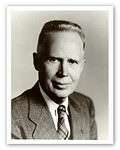
Dr. Paton is Professor Emeritus of Accounting and of Economics, University of Michigan, and is known throughout the world for his outstanding work in these fields. His current comments on American attitudes and behavior are worthy of everyone’s attention.
The view that a state of inequality in mankind is bad, almost wicked, has been booming. Among welfare “workers”, school teachers (including the college professors), ministers, politicians, and in the ranks of reformers and do-gooders wherever you find them, there are many who are ardently espousing the egalitarian cause, and almost everybody nowadays acquiesces in the general notion that continuing efforts to whittle down the inequalities found in the economic sphere are warranted. As can be said of most movements promising to hasten the dawn of the millennium, the dedication of the true believers is typically based on emotion or mystic yearning rather than careful observation and study, and total ignorance of the subject seems to be the norm among both the enthusiasts and those who simply go along. This benighted condition of the advocates, plus the prevailing lack of forthright opposition, or even of critical review, provide the excuse for this attempt to do a bit of probing.
Variation in Man’s Surroundings
On undertaking even a limited inquiry the observer can hardly overlook, at the outset, the variations that are found on every hand throughout nature. Mother Earth is far from a homogeneous or quiescent mass. Our planet exhibits a great range of geologic formations and climatic conditions. Differences in soil and water supplies, and in temperature, wind velocity, humidity and so on are the rule, and in many localities changes in some factors are severe from day to day as well as from season to season. Turning to plant and animal life we find a fascinating complexity of classes, kinds, species, and other groupings, with noticeable individual differences within both broad and narrow divisions. Those who handle horses or dogs, for example, become very familiar with the marked dissimilarities in temperament and talent found among individuals in specific breeds, strains, and even in the progeny of particular parents. The plain fact is that we are everywhere confronted with variety, not uniformity. Indeed, the fussy person will note here that no two grains of sand, or blades of grass, or leaves on the tree, or kernels of wheat are identical in size, shape, and other features.
Man’s Peculiarities
When attention is focused on man alone a wide range of characteristics is disclosed among races and regional groups, and also in narrow subdivisions such as the tribe, clan, or specific family. Differences in size, build, skin, eyesight, blood type and a host of other physical factors abound among representatives of Homo sapiens, wherever they live. And such differences can hardly be ignored by even the most rabid supporter of egalitarian doctrine. We can’t avoid accepting the proposition that no one can add a cubit to his stature by taking thought, and as yet there is no transplanting technique available or proposed by which several inches could be removed from Wilt Chamberlain’s frame and transferred to one of his shorter teammates. Individual human beings do not look alike, they behave differently, and they are different, beyond doubt.
Sweeping Heredity Under the Rug
But this is not the whole story. Those who proclaim the basic equality of men may concede the differences in appearance and physical makeup and still argue that all of us begin life abreast in a basic sense, that all have the same potential or worth at the starting line. Taking this position means acceptance of the view that everyone is born a blank, a clean slate, or, alternatively, that each individual starts with precisely the same inherent level of intelligence, talents, over-all capacity. In other words, the factor of inheritance is either disregarded entirely or is considered to be equalized, and the individual’s record in life is assumed to be due solely to the impact of environment, the influences and events experienced. Thus the door is opened to the claim that a poor performance is attributable entirely to an unfortunate background of experience—lack of proper food, housing, or medical care, inadequate education and training, inferior employment opportunities, harassment and exploitation encountered, and so on, and also, perhaps, sheer bad luck.
For anyone who is well acquainted with human physiology and behavior, and indeed for all laymen with a fair amount of common sense and willingness to recognize realities, this thesis is hard to swallow, even preposterous. The evidence is conclusive that each individual comes on the scene with a distinctive package of traits, tendencies, capacities. Typically the differences are more outstanding than the similarities, and some of the ingredients may be at odds rather than in harmony. As to the impact of the varying hereditary package, moreover, the case is quite clear; on every hand examples appear in which the influence of inheritance is plainly reflected in the individual’s career. This is especially noticeable among persons who are virtuosos in music, and in the fine arts generally; usually it is easy to spot conspicuous talent in the family trees of such individuals. And likewise among those who show brilliance in professional fields, or in any line requiring high-level ability, the hereditary background is commonly very much in evidence. “Brains” are inherited, beyond doubt, along with other qualities. That the more commonplace inclinations and aptitudes are handed down may be somewhat less apparent, but that inheritance plays a part here too can scarcely be questioned.
These comments are not intended to deny that outstanding ability crops up here and there where the ancestry of the individual—assuming the facts are available—is very unpromising. Even so, we will rarely see genius sprouting from a line of progenitors heavily loaded with morons. Further, although almost any one can become more capable with intensive training there is no program that will make great writers, philosophers, mathematicians, engineers, researchers, executives and so on from below-par raw material.
From the Haves to the Havenots
Recognition of the wide range of abilities and accomplishments among men, based at least in part on the hereditary variables, and of the impossibility of equalizing energy and talent through any system of education and training, leaves us still confronted by the widespread opinion that the good society, the happy land, is one where rewards, if not attainments, are substantially equal, and that the coercive powers of the state should be invoked for the purpose of achieving—or at least moving toward—this idealistic goal. This view has been politically dominant for several decades in the United States (and in many other countries, of course), and the pressures designed to exploit the haves for the benefit of the have-nots (and the have lesses) have been mounting. The major means employed, as we all know, has been that of maintaining a high level of tax levies on the more successful and productive individuals and business units and use of a portion of the funds thus confiscated to provide handouts to the elderly (our “senior citizens”), the unemployed, the needy students, the badly housed, the neglected children, the mentally retarded, the sufferers from disaster, the farmers (both poor and affluent), and many other special groups.
It is difficult to appraise the effect of these efforts to date in terms of progress toward economic equality, or in other respects. The assault on high incomes through the progressive tax structure has surely been a leveling influence, but even here the net results are not clear. In the case of high individual salaries, for example, there may be offsetting factors in the market for top-flight services. Earnings from property holdings probably have been hit harder—over-all—than service incomes. Evidence is not wanting to suggest that initiative and enterprise have been discouraged by the weight of punitive taxation and the continuously increasing load of regulation and interference to which individuals and business organizations have been subjected. The GNP as officially computed keeps on increasing, but the rate of growth may well have been retarded by the flood of “reform” legislation. Evidence can also be found suggesting that some of the programs launched have not only missed the mark but have resulted in injury rather than benefit to the “underprivileged”. All in all the showing is not one for the egalitarians to crow about.
Equalizing Economic Satisfaction Impossible
That it is difficult to rate the results of the schemes designed to despoil the rich and leaven the lot of the poor, from the days of the New Deal on, would be conceded by most observers. The opponents of such programs, needless to say, would like to see a retreat begun from a movement that they regard as basically unsound and harmful. The supporters, on the other hand, while generally dissatisfied with progress to date, insist that what is needed is more of the same—higher taxes on the well-to-do and on business enterprise, expansion of existing government aid programs and extension of such efforts in new directions, governmental control of economic activity all along the line. In other words, there is thus far no abatement of the enthusiasm for the egalitarian and socialist causes. In the light of this situation it may be desirable to point out the practical impossibility of cutting the economic pie into equal consumable slices for all, regardless of what is done to money incomes by tax levies or other financial confiscatory devices.
Assuming a society in which there is only one simple product consumed—plain rice, for example—a division of the output into equal portions by governmental authority may be imagined (although even in this extreme case the size of an adult share might exceed that of a small child, and other variations might well be prescribed or tolerated). But when attention is turned to the actual situation in the United States, or any other area with a market economy providing an output of many thousands of different kinds of consumer commodities and services, the task of providing each person with the same amount of consumer satisfaction encounters insurmountable obstacles.
Some folks like a big car and some prefer a small job. Some millionaires want a yacht with lots of marble and gold doorknobs and some don’t care for such trimmings. The taste for sport and travel is not uniform, which means that not everyone wants an equal share of the output of fishing rods, golf clubs, sun glasses, and the like. Some of us are addicted to television watching and some are not, and there are still a lot of people who have no use for cocktails or cigarettes. Some like to read and some don’t, and desires vary as to types of reading material. Not everyone cares for concerts and operas, and even if attendance were required how could everyone be furnished with equally attractive seats? And still more bothersome, how could it be arranged to provide everyone with the same degree of enjoyment? Some members of the audience will be relatively unappreciative, especially those with impaired hearing and those who don’t know one note from another.
Likewise in the prosaic areas of food, clothing, furniture, and housing, in the presence of a market offering almost unlimited choices, the packages of individual preferences are legion. And is it proposed that we all be compelled to buy and eat the same kind of pizzas, or any pizzas, for example, or wear neckties of a particular color? Are the diversities of consumer inclination to be disregarded by the police state envisaged, with a resulting required uniformity in products made available for consumption?
In the case of large and complex physical units of product the equalizer faces an obviously impossible problem of division. For example, if every family wanted a riding horse, and the number of families was larger than the number of horses available, it would hardly be practicable to award a piece of a horse to each.
No, the plain fact is that division of an elaborate array of consumer products into equal shares is literally impossible, and providing each individual with the same amount of “psychic income”, or consumer satisfaction, is something still further not of reach. No human being or group, even if operating in the framework of a government bureau, and even if backed by plenty of armed marshals, can cope with such problems successfully.
The only kind of a society or community in which even an approach to equal sharing is practicable is the prison, the slave camp, an army of privates, or—temporarily—castaways or other distressed persons on short rations.
This brings us to an important and neglected point. Equality in the distribution and consuming of economic output is inherently incompatible with a prosperous, progressive society, blessed with a great diversity of tangible goods and services. Variety may not be the spice of life but it is an essential feature of today’s market economy. A complex, competitive market, pillared on specialization and exchange, is not easily developed where egalitarian views are dominant (as can be seen in some backward areas of the world today), and such an economy—even if long established and flourishing—can be crippled and eventually destroyed by a continuing avalanche of share-the-wealth measures—even if the extreme step of imprisonment or liquidation of the more prosperous (the treatment accorded to the Kulaks) is avoided.
Impairing Individual Incentive
It was noted above that evidence is accumulating indicating that enterprise and productivity have been unfavorably affected by progressive taxes and the accompanying business controls and interferences. There remains for brief attention the question of the effect of redistribution programs—aimed at more equal sharing—upon individual human beings and their basic motivations.
That no two individuals have the same package of traits, inclinations, and abilities has been stressed. This does not deny, however, that there are some characteristics common to many men. One such widespread trait is an unwillingness on the part of the worker, in the vineyard or elsewhere, to see a part of his output commandeered by government, or private pirates, for any purpose. This is particularly true of the hustlers and highly efficient. The superior worker will not continue to maintain his stride indefinitely if the fruits of his labor are seized and turned over to others, be they worthy unfortunates or parasitic drones. The experience in this country and abroad of the scores of idealistic, utopian communities, often launched in an atmosphere of religious fervor, has a bearing. Examination of the history of such undertakings shows that almost invariably the more energetic and productive members became dissatisfied when they realized that they were supporting the inefficient and shiftless, and the usual outcome was either a slowing down to the pace of the sluggards, or departure for a more promising environment, if this were practicable.
Use of the machinery of taxation and other financial devices, including inflation, to take from Peter and give to Paul, may temporarily obscure what is going on. In a complex economy, in which money and credit are employed to facilitate exchange, the participating individual often seems to have difficulty in tracing relationships and effects. The young berry picker who works diligently and effectively out in the swamp all day and has twenty quarts of nice raspberries to show for his efforts, would be astounded and infuriated if Uncle Sam came along and took half of his output away from him. But when he grows up and becomes superintendent of the berry canning factory, and is paid by check for his services, he may be somewhat less outraged when laws are passed requiring him to turn over to his good uncle—either by employer withholding or on his own initiative—half of his money income.
Free spenders of the other fellow’s money seldom mention the need for efficiency and high productivity if the level of economic output is to keep pace with a growing population, to say nothing of an increase in the per-capita slice. They take it for granted that there will always be a willing mule to do the plowing, regardless of how well he is fed. The spenders talk and act as if the purse into which they dip to get the funds for their grandiose schemes had no bottom whatever—like the widow’s cruse of oil back in Elijah’s time. There is good reason for regarding their faith as unjustified. Just where the breaking point will be reached in a particular setting can not be readily predicted, but the old story of the last straw and the camel’s back should not be forgotten. One thing is certain: when the economic climate becomes so cloudy that it offers no lure to the enterprisers, the innovators, the hustlers, the savers, there will be a disastrous decline in productivity.
The conclusion indicated by this survey is that variation, differences, inequalities are a common-place feature of man’s life on this planet, and—what is crucially important—are indispensable to a thriving, growing market economy, with high living standards. A world in which there was a complete equality in economic shares and consumer satisfactions would be a drab, unproductive, slave-camp sort of place. Hence we will do well to guard against being beguiled by any version of the egalitarian philosophy, however idealistic and well-intentioned. Let’s not be misled by those urgently beckoning us toward a downhill road. Let’s be thankful for the blessing of diversity, inequality, and staunchly resist its erosion.
***
The Independent Individual
The Social unit is the independent individual; the more individual and independent he is, the more able is he to cooperate, and the stronger the society he creates. Cooperation is possible only amongst independent individuals; amongst others, there may be regimentation but no creative cooperation. Society is a vast, natural, complex, intentional, and yet largely unconscious cooperation amongst those able to stand on their own, and, in the exigencies of life, lend a hand.
From a Ford Sunday Evening Hour broadcast by W. J. Cameron (circa 1937)