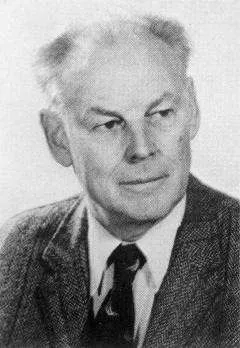
Branch Rickey, the old baseball impresario, had a funny story about a truck driver who, as he approached each turn on a mountain road, murmured to himself, “Trouble ahead, trouble ahead.” Whereupon the driver would make the turn only to discover that the road stretched fair and free.
For the past decade we have been like the truck driver. We were threatened with the “population bomb” in the lugubrious works of Paul R. Ehrlich. DDT and other insecticides would kill all the birds, giving us a “silent spring” (Rachel Carson). Our oil leakages and spills in the Santa Barbara Channel and off the coast of
To cap it all, the world’s supply of food was supposed to be at the mercy of coming drought and cold cycles, and even the productive acreage would be ruined by liberal applications of commercial fertilizers that break down the soil structure.
Adding all the dire prophecies together, the “zero growth” movement has taken on a frightening momentum. It takes a bold man to buck the prevalent tide of opinion. Fortunately, for our sanity, we have such a bold man in Herman Kahn, who runs the Hudson Institute. With his associates William Brown and Leon Martel, Kahn has just issued a heartening book called The Next Two Hundred Years: A Scenario for America and the World (William Morrow & Co., Inc.,
Population and Energy
First, there are the population statistics. In the Nineteen Sixties, when the overpopulation theory was riding high, the rate of reproduction was definitely slowing down in fifteen developing countries and there was a “probable” decline for eight more. In preindustrial lands, where children are potential farm hands, couples will have seven or eight babies in order to achieve a primitive level of old-age security. But in industrial societies the reproductive “norm” recedes to 2.2 or 2.4 per family. The irony is that the “planned parenthood” movement reached its crest when it was no longer needed. Herman Kahn expects most of the world will repeat the experience of Western Europe and the
A stabilized population will still need lots of energy if it is to grow in ways necessary to expanding the good life. Kahn’s section on energy is subtitled: “Exhaustible to inexhaustible.” Contrary to most commentators, Kahn thinks the “historical” trend of energy costs will continue downward, even though the present price of oil will go on fluctuating. As long as oil sold for less than $5 a barrel, it was bound to displace coal. But now that OPEC oil is selling for twice the old price and more, coal is bound to come back. There is plenty of coal to last for a couple of centuries. And when the cost justifies it, we will be getting oil from shale and from tar sands.
Looking ahead to the twenty-second century, Kahn is optimistic for all sorts of supposedly far-out energy sources, from ocean thermal power to windmills, and from solar energy panels to nuclear fusion. The 200-mile electric car battery is already in existence; it has only to be made smaller for introduction into compact car models.
Pollution in Control
Kahn and his associates do not scoff at the current demands for cleaner water and air. But they do not like fanatics who are unwilling to make temporary trade-offs when they are economically necessary. We are already meeting most of the sensible standards throughout the U.S. Automotive pollutants such as carbon monoxide and hydrocarbons have been reduced substantially. A real beginning has been made in cleaning up the rivers, streams and lakes of the nation. We will make progress in the treatment of sewage and waste in general when technology makes it possible to recycle everything from sludge to aluminum cans at a profit.
The main problem, at this moment, is to persuade people that they are being scared by bogeymen. “Indeed,” says Kahn and his associates, “it is the limits to growth position which creates low morale, destroys assurance, undermines the legitimacy of government everywhere, erodes personal and group commitment to constructive activities and encourages obstructiveness to reasonable policies and hopes.”
If Kahn can’t get this message across to a majority, we will perish through a self-fulfilling prophecy. But Kahn, no pessimist even for a short run, is sure that he is going to be heard.
PLAYING THE PRICE CONTROLS GAME
By Mark Skousen
(Arlington House, New Rochelle, New York 10801, 1977)
254 pages
Reviewed by Robert P. Vichas
Even among those who have survived them, surprisingly few individuals really understand the insidious nature and disastrous effects of price and wage controls. Witness the fact that most consumers favor them at one time or another. Many businessmen accept them. Utility and regulated companies prefer them. Black marketeers love them. Political types praise them. And too many economists worship them.
Milton Friedman has observed that “If the
For the theoretically minded, there are the traditional economic diagrams; for others, the message is expressed in plain enough terms. Price controls cause shortages, and shortages occur because businesses reduce production of high-volume, low-profit-margin “necessities” and expand output of low-volume, higher profit-margin “luxuries.”
A survey at the end of Phase IV of the Nixon freeze revealed the reduction or elimination of 240 product lines including paper, steel, animal feed, and mayonnaise. Nearly every business experienced difficulties in obtaining adequate supplies, as suppliers ceased manufacturing certain vital replacements to concentrate on higher profit-margin components.
Efforts to control the cost of housing offer a prime example of an exercise in futility. Paul Samuel-son’s popular textbook clearly describes the long run harm of rent controls in France. “
Students of price control economics know that shortages, malinvestment, and black markets result when an attempt occurs to subvert basic economic laws. An economy survives these shocks mainly because alternative zones of supply (a substitute term for black markets offered by Gary North in the book’s Foreword) keep the system operative—at least for a time.
The last half of the book focuses on these alternatives. The situations discussed by Skousen provide numerous case histories for lecturers, teachers, expert witnesses, and skeptics, demonstrating how creative free market forces emerge even against formidable odds. For the practical minded, the last half of the book contains sound advice for businessmen and consumers who confront present or future price controls.
For over 2000 years societies have experimented with price and wage controls. They have never worked. This book explains why.
JAMES J. HILL AND THE OPENING OF THE NORTHWEST
by Albro Martin
(Oxford University Press, New York, 1976)
676 pages
Reviewed by Clarence B. Carson
St. Paul, Minnesota was little more than a frontier village serving as a shipping point on the
To us they might be problems; to James J. Hill they were opportunities. He was not long in going into the energy and transportation business. His first venture in the energy business was the buying and storing of firewood against the winter. He went into transportation at its core, warehousing. With the river closed so much of the year, it was vital to have large storage facilities. As soon as he could command the resources, he went into the river boat business on the Red River as it makes its way into
The future of
Hill rarely sought to be first, but he always sought to be the most thorough and best. If Hill had lived by a copybook maxim, it would surely have been: “Anything worth doing at all is worth doing well.”
Not just well, either, but superbly. He always insisted that his railroads be built solidly the first time. He paid infinite attention to the details of whatever he was doing. He was, indeed, a master builder and an exemplary entrepreneur.
Albro Martin has told, in this large and impressively printed book, not only the remarkable story of Jim Hill but of his times and of his place in American history. In order to tell the story well Professor Martin had to work on a large canvas, so to speak. The story entails the upper Midwest of the
But the story was hardly confined to this region, for Hill was dependent, too, upon the Eastern United States—
There are so many fascinating tales within this vast story that a reader must long for more detail on many of them. The acquisition by Hill and associates of the St. Paul and Pacific Railroad, which did not make it to the Canadian border much less the Pacific, is a tale worth telling on its own. They got a property worth about $20,000,000 by advancing only a few hundred thousand dollars, some rusty rails, they said, and from this small beginning fashioned a railroad empire. The saga of the building of the Great Northern from
James J. Hill emerges from Professor Martin’s account as an exemplar of free enterprise at its best. Literally, Hill rose from poverty to riches. He had only a few years of schooling, but he gained such knowledge as he needed and was believed to be wise by those who knew him in his later years. In a day when land grants and subsidies were virtually considered a requirement for building transcontinentals, Hill built his Great Northern without subsidy or grant. He built well, too, for when roads around him were bankrupting and going into receivership he was prospering.
Hill lived to witness the railroads beginning to become the plaything of politicians and the bete noire of muckrakers. It saddened him, for he had seen with his own eyes the miracle wrought in the land by dependable and cheap transportation. He contributed much to this development, and was ever surprised if anyone thought that he had sought anything but the good of his fellow man—as well as his own good.
Hill’s charitable contributions were legion, but he gave as much care in selecting those to whom he would give as to the routes over which his rails would pass. (He attempted to improve the breeding of cattle in his region by raising and giving away bulls to farmers but stopped doing so when he could perceive no good results.)
The story of James J. Hill is inspiration and confirmation for those who believe that the way to solve problems is to allow freedom for men of vision and energy to work on them. A wide reading of this book should increase their tribe.
THE SUPERFLUOUS MEN: CONSERVATIVE CRITICS OF AMERICAN CULTURE, 1900-1945
Edited by Robert M. Crunden
(The University of Texas Press, Austin, Texas 78712, 1977)
289 pages
Reviewed by Allan C. Brownfeld
A society afflicted with contemporaneity faces the danger of a complete loss of the past and all of its lessons. In our own country, even the events of the earlier part of the current century have largely been lost, as have the thoughtful analyses of those who attempted to understand those events and make sense of them.
Professor Robert M. Crunden of the
What is to be found, according to Professor Crunden, is the assumption that the worthwhile things in life cannot be obtained by political means. Conservatives have traditionally opposed governmental interference in society, he concludes, because it impedes the enjoyment of more important concerns.
In an essay entitled “Anarchist’s Progress,” Albert Jay Nock, discussing the tendency of government power to grow and individual freedom to diminish, writes that, “The general upshot of my observations, however, was to show me that whether in the hands of Liberal or Conservative, Republican or Democrat, and whether under nominal constitutionalism, republicanism or autocracy, the mechanism of the State would work freely and naturally in but one direction, namely: against the welfare of the people.” This was written in 1928.
Walter Lippmann, in The Good Society, notes that socialism, collectivism, and all forms of government intervention in the market place lead away from freedom and prosperity: “When the collectivist abolishes the market place, all he really does is to locate it in the brains of the planning board. Somehow or other these officials are supposed to know… what everyone can do and how willing he is to do it and how well he is able to do it and, also, what everyone needs and how he will prefer to satisfy his needs…. If a planning board announced that, henceforth, machines in factories would be run not by electrical power generated in dynamos but by decrees issued by public officials, it would sound absurd. Yet the pretension to regulate the division of labor by abolishing the market and substituting authoritative planners is an idea of the same order.”
In an essay originally published in Harper’s in 1929, John Crowe Ransom, one of the leading Southern agrarian writers, might have been speaking to some of our current educators who think that students rather than teachers should select the curriculum on the basis of “relevance” or convenience. He states that, “The admission that one study is as important as another is a plea in spiritual bankruptcy, and it invites and produces just that ceaseless dissipation of human energies which now defines our intellectual Americanism—it pictures man as a creature without a center, without a substantial core of interests, and unable to give his destiny any direction. In a true society there are historical and philosophical principles which compose the staple of an educational requirement.”
Discussing the merits of individualism and the strength of this trait in the American character, George Santayana, in an essay written in 1920, observed that, “Individualism, roughness, and self-trust are supposed to go with selfishness and a cold heart; but I suspect that is a prejudice. It is rather dependence, insecurity, and mutual jostling that poison our placid gregarious brotherhood; and fanciful passionate demands upon people’s affections, when they are disappointed, as they soon must be, breed ill will and a final meanness… In his affections the American is seldom passionate, often deep, and always kindly… But as the American is an individualist his goodwill is not officious. His instinct is to think well of everybody, and to wish everybody well, but in a spirit of rough comradeship, expecting every man to stand on his own legs and to be helpful in his turn. When he has given his neighbour a chance he thinks he has done enough for him… It will take some hammering to drive a coddling socialism into America.”
H.L. Mencken might have been writing of our current crop of politicians when he discussed the role of politicians in a democratic society in his 1926 book, Notes on Democracy. Professor Crunden excerpts an essay on this subject which includes this thought: “The politician… is the courtier of democracy… For it was of the essence of the courtier’s art and mystery that he flattered his employer in order to victimize him, yielded to him in order to rule him. The politician under democracy does precisely the same thing. His business is never what it pretends to be. Ostensibly he is an altruist… Actually he is a sturdy rogue whose principal, and often sole aim in life is to butter his parsnips.”
Somehow the current generation of college students and teachers seems to be under the impression that the American intellectual tradition is one which has been supportive of government, optimistic about the good politicians can do, and suspicious of freedom, either in the market place or in other areas of life. A careful reading of this volume will quickly disabuse them of this notion. Professor Crunden has done us all a significant service in collecting these essays and making them available for a society which desperately needs to rediscover its own past.
