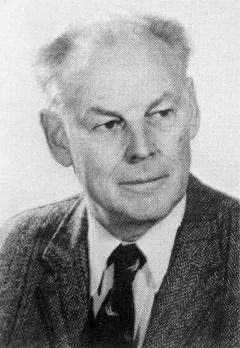
Ernest van den Haag’s Punishing Criminals: Concerning a Very Old and Painful Question (Basic Books) is a wonderfully hardheaded book. Its hard-headedness is of a most enlightened sort: it is devastatingly critical of the latter-day disciples of Rousseau, who still insist that “society” rather than “original sin” is always to blame for the criminal actions of an individual, but it does not completely reject the argument that some crimes are “socially determined:’ And it is skeptical about statistics that purport to prove one thing or another about the efficacy of punishments. Its sense of paradox keeps it rigorously honest, which is unsatisfactory to those who insist on categorical answers to all perplexing questions. Despite its tentativeness, however, Punishing Criminals leaves one with no doubt that “men must act,” even though there must be considerable guesswork when it comes to the predictive value of one’s decisions.
The big headline question of the day is, of course, the desirability of reimposing the death penalty for premeditated murder. Professor van den Haag approaches this thorny matter with a most commendable impartiality. Aside from the moral considerations of justice, the main argument for capital punishment is that it is more effective as a deterrent than such an alternative as life imprisonment. Dr. van den Haag admits the fragmentary nature of statistical research bearing on the question of deterrence, but he cites Professor Isaac Ehrlich’s “simultaneous equation regression model” to show, in Ehrlich’s words, that “an additional execution per year … may have resulted on the average in seven or eight fewer murders.”
Personally, I put my own trust in logic more than in simultaneous equations. Since Dr. van den Haag says “it remains to be seen if further research will support or refute” the Isaac Ehrlich mathematical demonstration, I rather guess that logic is van den Haag’s preference, too.
Logic tells us that if killers are hanged or electrocuted, they will not be around to commit further crimes. Without the possibility of a death penalty, anyone threatened with a life term for hijacking a plane or kidnapping a child or shooting a man in the course of armed robbery would have no reason for refraining from murdering a third person (a policeman or an informer) in order to make a getaway.
Dr. van den Haag quotes the instance of two case-hardened prison inmates, jailed presumably for life, who stabbed the warden and his deputy to death with mess-hall knives. Since one can only be imprisoned for a lifetime once, the prisoners had nothing to lose.
A Risk Either Way
The case for or against the death penalty as a deterrent rests on a preference for one of two risks. If capital punishment does not increase deterrence, we lose the life of an executed convict without saving anyone else. But if the death penalty does add deterrence, and we refrain from pronouncing it, we run the chance of losing the lives of victims who might run foul of murderers in the future.
Dr. van den Haag, who is always willing to look at both sides of a question, admits that there can be miscarriages of justice. Capital punishment is irrevocable, and if a man is hanged he won’t be there to take terrestrial advantage of new evidence proving his innocence. The logical case for the death penalty must rest on the presumption that despite an occasional miscarriage of justice, more innocent lives will be saved than lost by invoking it.
Dr. van den Haag marshals the arguments against the death penalty in a perfectly fair way. But, even in the middle of the chapter called “Arguments Against,” he can’t resist interjecting that “the murder rate in the U.S.—always a multiple of that in Western Europe and Japan—has risen terrifyingly in the last decades.” So what are we to conclude? We turn back to van den Haag’s previous chapter on “Arguments For” in which he observes that “life becomes cheaper as we become kinder to those who wantonly take it.” Latter-day “liberals” who prate about the “sanctity of life” can’t get around this paradox. Oddly enough, many of the people who reject capital punishment on humanitarian grounds have no prejudice against abortion or, in some cases, against euthanasia.
How Much Deterrent?
As a libertarian who could not possibly face incarceration for a lifetime without contemplating suicide, I would be prepared to argue that the prospect of life imprisonment is enough of a deterrent in itself. But the trouble, as Dr. van den Haag says, is that, “as a sentence, ‘life’ today means not life but some years of it.” Murderers are frequently released, for one reason or another, before they have completed their “mandatory” prison sentences. And the modern convict, no matter what his crime, “is entertained by TV” and has access to social workers who may obtain sufficient freedom for him to commit additional crimes.
Dr. van den Haag does not go deeply into questions of ethos. He is just as willing as anybody to admit that crimes are, in many instances, “socially conditioned.” But his lively sense of paradox impels him to turn this argument against the followers of Rousseau. The idea of deterrence, if it becomes part of the expectations of a community, can be part of a “general determinism.” If a criminal can’t help what he is doing, other members of society are equally “determined” in punishing culprits who menace their rights. Says van den Haag, “deterministic views of all kinds are entirely consistent with theories of deterrence, which actually require a causal (though not necessarily ‘deterministic’) view of human behavior”
A Presumption of Responsibility
The truth is that a free society must rest on the presumption that men are moral agents who are responsible, despite their genes or their “social conditioning,” for what they do. Morality has no relevance if all things are fated by environment on the one hand, or by heredity on the other. Some poor people commit crimes; some don’t. Some rich people are responsible; some aren’t. Responsible people can only act on the theory that criminals must be incapacitated if society, in general, is to live in peace.
Unfortunately, the Rousseauists among us have made it more and more difficult to incapacitate thieves and cheaters and murderers. Much of van den Haag’s book is concerned with ways of speeding justice, keeping potential `recidivists” under control, and pre-renting juveniles from becoming hardened adult criminals. He has ideas about utilizing fines as punishment. Why not, he suggests, state fines “in days or years of earnings.” This would mean the rich would suffer commensurately with the poor when convicted of a crime carrying less than a prison sentence.
As a final word to the Rousseauists, Dr. van den Haag remarks that if “somehow bad social institutions always seem to corrupt naturally good men,” none has ever satisfactorily explained “why naturally good men create bad institutions, and by what means revolutionaries manage to remain uncorrupted so as to lead us into the millennium.” The possibility is rarely considered that “naturally bad men corrupt good institutions.”
Knowing human nature, van den Haag says we can only reduce, not eliminate, crime. The task is not to dream up a social order that can do without punishment but, rather, to make the punishment it uses more just and effective.
IN OUR TIME by Eric Hoffer. (New York: Harper and Row, Publishers, 1976) 114 pp.
Reviewed by Allan C. Brownfeld
When his first book, The True Believer, was published in 1951, Eric Hoffer was unknown. Readers recognized, however, that a powerful and original talent had made its appearance and were astonished to learn that Hoffer was a common laborer who had been virtually blind in childhood, who had recovered his eyesight, and who had educated himself entirely by his own efforts.
In The True Believer and the many books which have followed, Eric Hoffer has been an eloquent spokesman for individualism, freedom, and free enterprise. Part of his view is that when individualism dies, tyranny becomes possible and, often, probable. He wrote that, “Faith in a holy cause is to a considerable extent a substitute for lost faith in ourselves … A man is likely to mind his own business when it is worth minding. When it is not, he takes his mind off his own meaningless affairs by minding other people’s business. … In running away from ourselves we either fall on our neighbor’s shoulder or fly at his throat.”
Now, Eric Hoffer has presented us with another volume of his thoughts on the state of the American society and the prospects for the future of freedom. In Our Time is filled with astute observations and insights and represents the approach we have come to expect from Eric Hoffer—one which always begins with a healthy dose of common sense.
The free enterprise system has produced great material abundance in the United States but, in the very height of this accomplishment, faith in the market economy and in freedom itself seems to be diminishing. Society, in many respects, appears to be in a state of dissolution. “Up to now,” Hoffer writes, “in free societies social discipline has been a by-product of scarcity, and the turbulent 1960s have shown us that the most urgent need of an affluent society is a new source of discipline. … It was a shock to a materialist civilization to discover that the most important facts about a human entity are its illusions, its fictions, its unfounded convictions. A society without illusions is without vigor and without order and continuity. It took a triumphant technology to demonstrate that `things which are not are mightier than things that are.”’
Part of the reason for the collapse of values and standards in our affluent society, Hoffer believes, is the abandonment of its proper role by the middle class. He notes that,
“… when the middle class is no longer immersed in a struggle with nature, when it has solved the problems of production … it be comes unsure of its footing and seems to have nowhere to go. Its values, based on scarcity, begin to disintegrate and it no longer feels itself in possession of the true and only view possible for sensible people. The middle class is unprepared and unequipped to lead people to Eden, and it cannot find a substitute for the social automatism induced by unfulfilled needs and fear of want.”
While some have argued that “money is the root of all evil,” Eric Hoffer challenges such a view. He states, instead, that, “… the passage from the nineteenth to the twentieth century saw a shift from a preoccupation with money to a preoccupation with power. … It is part of the sickness of our time that money has lost its magic power. What ails societies at present is not that everybody wants as much money as possible but that everybody wants to do as little as possible. We used to wonder how in the nineteenth century it was possible for so few to have so much at the expense of the many. Now the wonder is that so many get so much at the expense of the few.”
Contrasting free enterprise and collectivism, Hoffer declares that, “Capitalism can produce abundance. It gives full scope to the energies of the individual, and is an optimal milieu for people who can help themselves and want to be left alone … Communism cannot create abundance, and it cannot release a copious flow of spontaneous energies. It cannot utilize the energies of enterprising people who are at their best when left to themselves.”
The dilemma of capitalism at the present time, he writes, is that it has succeeded too well: “Capitalism’s disconcerting predicament is that it gets in trouble when it achieves abundance. Capitalist society is strained to the breaking point not, as Marx predicted, by ever-increasing misery, but by affluence. Once scarcity has been eliminated, capitalism does not know how to induce people to work. Moreover, the erosion of the pre-capitalist authorities of family, church and school leaves capitalism helpless in the face of social anarchy.”
The American welfare system—paying people to do nothing—could learn a lesson, Hoffer points out, from the experience of the Soviet collective farm system and the incredible productivity of the private plots which farmers are permitted to work. He writes that, “an America that has been spending billions on unsuccessful poverty programs would do well to send delegations to Soviet Russia to learn from the lesser peasants how to turn millions of chronically poor Americans into enterprising human beings.”
The intellectuals dislike capitalism, he writes, not because it is inequitable but because they are not in charge: “Where the trader is in power, the scribe is usually kept out of the management of affairs, but is given a free hand in the cultural field. By frustrating the scribe’s craving for commanding action, the trader draws upon himself the scribe’s scorn, but he also releases the scribe’s creative powers. It was not a mere accident that the Hebrew prophets, the Ionian philosophers, Zoroaster, Confucius and Buddha made their appearance at a time when the trader was ascendant…. Where the scribe is in power, the trader is regulated and regimented off the face of the earth. In scribe-dominated Communist countries the legitimate trader has been liquidated.”
Unfortunately, the intellectuals who bid for power by attacking the system of free enterprise and the moral values of the majority, are skilled in the use of language and the communication arts. “The adversary intellectual,” Hoffer writes, “savors power not by building or wrecking but by discomfiting and denigrating, and by rubbing the noses of the majority in dirt.”
There is much more in this volume than its length would indicate. Eric Hoffer is an eloquent defender of freedom and free enterprise. He has been a gold miner, migratory field worker, and longshoreman. He is also a scholar. No one can read his words without being dramatically affected by them.