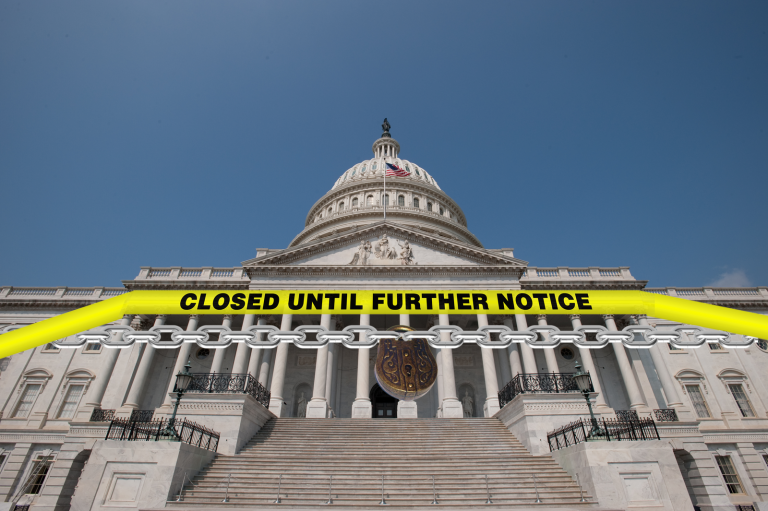

Trump has indicated he plans to cut government waste, but it’s unclear how much he is actually going to change.
One of the ongoing conversations about Trump’s new transition is whether or not he is going to make serious changes to the bureaucratic establishment. While Trump has indicated some anti-establishment tendencies with a few of his picks (such as RFK Jr. and Tulsi Gabbard), he’s also made more conventional selections (such as Marco Rubio). This is reminiscent of his first term where his advisors ranged from Reince Priebus to Steve Bannon.
From the standpoint of making cuts, Elon Musk and Vivek Ramaswamy’s Department of Government Efficiency (DOGE) looks promising. However, the question on everybody’s mind is: Will he get into the Javier Milei territory of actually cutting government agencies in a more permanent sense?
Trump’s plan currently has dozens of government departments and agencies on the chopping block, but will he go through with it? In order to find out, we need to look at Trump’s biggest potential cut, and compare it to how he dealt with the Bureau of Land Management in 2016.
Remove or Renew?
Advocates of small government have been rejoicing over a recent video by Donald Trump where he says he intends to end the Department of Education (ED), but it isn’t clear to me that Trump really wants to end the ED at all. To see why, let’s look at his statement in the video:
Something I’ll be doing very early in the administration is closing up the Department of Education in Washington, DC, and sending all education and all education work and needs back to the states. We want them to run the education of our children because they’ll do a much better job of it. You can’t do worse… We’re going to end education coming out of Washington, DC. We’re gonna close it up—all those buildings all over the place.
This leaves Trump’s position on the matter ambiguous. A simple read-through makes it seem as though Trump’s plan is to get the federal government out of schools completely, but I’m not so sure that’s what he’s saying.
Note that Trump never says here that he is removing the department without qualification. Instead, he says that his administration will be focused on closing up the ED “in Washington, DC.” Along this same theme, Trump talks about closing up “those buildings.” Thinking of the ED as a group of buildings is a bit strange. When I think of the ED, I don’t think of buildings; I think of bureaucrats.
This is where the ambiguity in Trump’s statement lies. I can read him as saying two alternative things:
- We are going to disband the federal Department of Education completely and give all relevant education resources to the states to do with as they will.
- We are going to relocate the Department of Education across the 50 states, and somehow give localities more of a say in the decisions of the department.
Statement 1 is what I think is traditionally meant by people who claim to want to end the ED.
Statement 2 is much more moderate and, interestingly, seems to fit with the clues a little better.
If you think I’m overanalyzing the language here, I don’t blame you. If that were the only clue, I’d agree it seems like a stretch. However, this interpretation of Trump’s language fits better with the overall philosophy Trump has had toward bureaucracy for years now. Trump and his picks are really interested in buildings and physical locations, which may indicate his cuts will be less real than they seem.
The BLM, FBI, and Fifty Washington DCs
In Trump’s first term, he relocated the Bureau of Land Management (BLM) from Washington to Grand Junction, Colorado. (Biden quickly moved it back to DC during his term.)
In reporting for ProPublica on Trump’s BLM relocation, Mark Olalde quotes Trump in 2023 as saying: “[A]s many as 100,000 government positions can be moved out, and I mean immediately, of Washington to places filled with patriots who love America, and they really do love America.”
This same point is repeated in Trump’s “Agenda 47.”
So fans of the idea of shuttering government departments and agencies should hold their applause for a moment. Trump has consistently said that part of his plan to dismantle the deep state is relocating agencies, and in his video he’s very clear that he wants to end the ED in Washington, DC, and send it to the states.
In reality, rather than ending bureaucracies, Trump may be planning to make 50 little Washington DCs across the United States.
Trump’s recent pick to lead up the FBI, Kash Patel, has made a similar statement about the FBI. Patel says he wants to shut down the FBI’s current building and turn it into a “deep state museum.” Rhetorically, you have to hand it to him. It’s a pretty funny idea. But, again, there is a focus on closing physical locations rather than actual bureaucracies.
To be fair, we can’t say Trump officially endorses the ideas of every nominee, but the point is Patel’s idea here fits the pattern of Trump’s philosophy toward cutting government: reshuffle and renew rather than remove.
So, if this is Trump’s plan, is it a good or bad thing for the goal of shrinking the size of government? It’s hard to tell from the outset. Let’s look at how such a policy would change political incentives.
From the perspective of shrinking government, moving agencies and departments out of DC and to the states has a few clear advantages.
First, physical networking seems to be a big advantage for special interest groups who try to lobby for government growth. DC is notoriously home to three major groups: politicians, bureaucrats, and various private lobbyists and think tanks.
For example, the headquarters of teachers’ unions such as the National Education Association (NEA) and the American Federation of Teachers (AFT) are both located in Washington, DC.
The physical proximity to Congress and bureaucrats obviously helps these interest groups accomplish goals; otherwise, they wouldn’t choose the expensive real estate market of DC to locate themselves.
So, if Trump scatters the department across the 50 states, it may be harder for lobbyists and politicians to make relationships with bureaucrats that facilitate their favor-seeking. Some things people say in person they will not say digitally.
The second advantage is, regardless of the restructure Trump is imagining, it seems clear he’s arguing that the decisions should be more decentralized across the states. It’s hard to know how this would operate exactly, given that we don’t know the specifics of his plan, but insofar as Trump allows states to make their own decisions, it strikes me that this will give at least some states the option to take less heavy-handed and less centralized approaches to the use of taxpayer money.
However, if Trump is truly planning to relocate the ED and other agencies across the 50 states, there could be some forces which pull us to a situation where the government grows. I can think of three such issues.
First, consider the effect Washington, DC, has on Virginia. The bureaucrats who work in DC are going to have a natural incentive to support a larger government. It’s in their best interest to do so. However, DC is an expensive place to live, so many people who work in Washington, DC, live in Virginia.
Electorally, this has contributed to Virginia’s turn from a red state, to a purple state, and perhaps even a blue state. DC, for its part, votes overwhelmingly in favor of Democrats (92% voted for Kamala Harris). I suspect DC workers who live elsewhere vote similarly to those who live in DC.
If Trump puts a small version of DC in every state, will this incentivize support for large federal government in typically small-government-supporting states? It seems possible.
The second issue is best illustrated by Trump’s first experiment relocating the BLM. Remember, after Trump’s term ended, Joe Biden brought the BLM main headquarters back to Washington, DC. However, as Jory Heckman writing for the Federal News Network points out, Joe Biden retained the new Grand Junction building to be a “Western headquarters.”
Trump moved the BLM out of DC to fight the swamp, but in just a few years the swamp reclaimed its space in DC and kept its new space in Grand Junction, Colorado.
Admittedly, you can’t make every political decision based on what the other side will do when they take power, but this seems like a relevant consideration.
Finally, Trump’s moves to downsize departments symbolically may diffuse the momentum and pressure from groups seeking a real change in DC.
If your ultimate goal is to end a department or to drain the Swamp, you can’t do this by simply shuffling things around. The inherent tendency of bureaucracies to seek growth takes advantage of people when they try to rearrange things. If Trump merely streamlines bureaucracies he risks making bureaucrats more efficient at intervening in the lives of people.
Bureaucracy is a many-headed hydra. If you cut off one head, two grow in its place.
That’s why, if Trump is interested in ending the bureaucracies, he will actually need to end them rather than reshuffling them. If he doesn’t, we’ll likely end up with government agencies in both Washington, DC, and in all 50 states, and that hardly seems like a win for small-government proponents.