
The goal is for “wonder-based, play-based, nature-based learning” to become the norm.
A decade ago, Tiffany Thenor left the public school classroom in tears.
For seven years, she had been teaching second and third grade at Philip O’Brien Elementary School, a Title I public school serving a high percentage of low-income students in Polk County, Florida. Teaching had been Thenor’s lifelong dream. It was all she ever wanted to do, but as a new mother and a classroom teacher frustrated by the constraints of traditional schooling, she felt increasingly certain that something needed to change.
“I believe in public education,” Thenor told me in a recent interview. “I just don’t always believe in the way it’s done.”
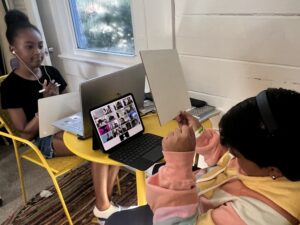
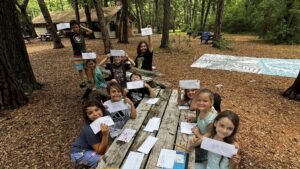
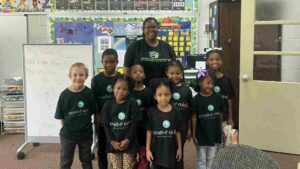
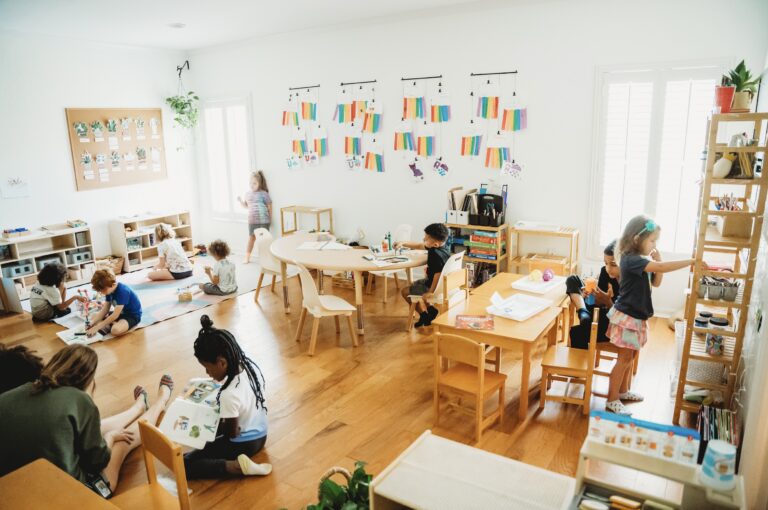
So in 2016, she and a fellow teacher at the school, Jessica Zivkovich, left to launch something different: WonderHere, a play-based, nature-centered learning program in Lakeland, Florida, that began with just seven homeschooled students. Now a state-approved private school, WonderHere serves 120 full-time students in pre-kindergarten through eighth grade, as well as some 300 additional students through its weekly homeschooling and afterschool enrichment programs. WonderHere has two additional microschool locations in Florida and South Carolina, with three more locations scheduled to open in the fall.
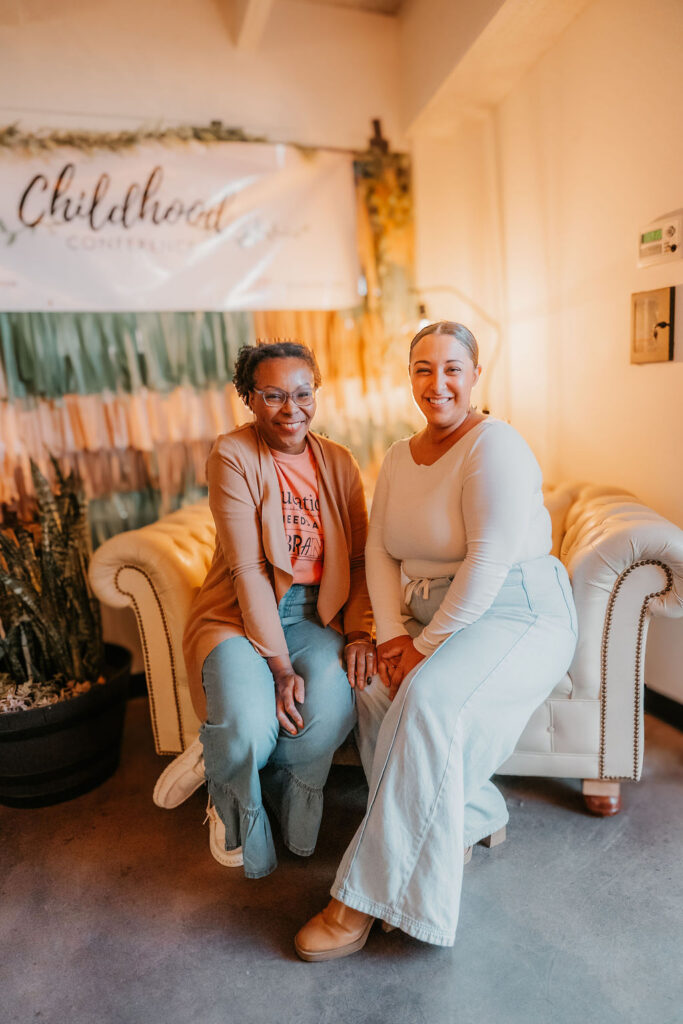
The founders’ goal wasn’t simply to create an alternative to conventional schooling. It was to prove that a different approach to learning could work—and eventually to bring that approach back to the public school system.
“I remember feeling really distraught about leaving, but also extremely hopeful because I really believed I could make a change. I just didn’t think I could do it where I was,” Thenor recalled.
Thenor and Zivkovich are representative of many of today’s new school founders: public school educators who wanted to make change from within the system but ultimately left to build their own innovative learning models. With a decade of proof that a more child-centered, play-filled educational approach can produce happy, successful students outside the conventional classroom, Thenor and Zivkovich are bringing their WonderHere microschooling model inside the public school system. “Our goal has always been to influence public education,” said Thenor.
Last week, the Polk County School Board unanimously approved a two-year contract with WonderHere to integrate their microschooling model into the Philip O’Brien Elementary School. “It is full circle for us,” said Thenor, noting how special it is to be launching the WonderHere pilot inside the school where she and Zivkovich taught.
Beginning this fall, WonderHere will run two of Philip O’Brien Elementary’s combined kindergarten–first grade classrooms, each with about 15 students. Parents and caregivers will be able to opt their children into the program, which will be embedded within the school but will follow WonderHere’s distinct educational model, including four hours of project-based unit studies covering core curriculum areas, narrative teacher assessments instead of traditional grading and two hours each day of outside play time and nature-based learning. Thenor and Zivkovich will identify and train the classroom teachers in the WonderHere approach, and have a WonderHere staff member onsite to support the classroom teachers.
“I am truly energized and excited for the partnership with WonderHere and the incredible vision and leadership of Tiffany Thenor and Jessica Zivkovich,” said Azure Gipson, principal of Philip O’Brien Elementary School, who was Thenor’s intern during her final year of teaching at the school. “This collaboration reflects exactly what is possible when passion and purpose come together,” said Gipson.
WonderHere’s leaders plan to stay true to their learning model even though it will exist within a traditional public school. “We don’t intend to compromise on anything,” said Thenor, explaining that to fully show that the WonderHere model works within conventional schooling it must be allowed to operate the same way it currently does outside of conventional schooling.
How will WonderHere prove it works at Philip O’Brien Elementary? Thenor and Zivkovich are confident that both qualitative and quantitative data will show that the WonderHere model is successful at elevating student engagement and instilling a deep love of learning while also demonstrating clear academic achievement. In addition to happy, satisfied parents, teachers and students, they expect the WonderHere pilot’s students to perform as well as or better than their peers on state standardized tests.
“We’re not afraid of doing conventional paper and pencil testing,” said Thenor. “Our kids will take those tests too, and they’ll kick butt because that’s just what they do when we back off and we give them space to play, create, pace themselves and learn.” The founders have already seen their current WonderHere students perform well on the state standardized tests that many of them take as part of their participation in Florida’s school choice programs, which enable students to use a portion of state-allocated education funding toward the school or learning setting of their choice.
These school choice programs, which were extended to all Florida schoolchildren in 2023, are prompting forward-thinking public school districts to adopt innovative learning models to help attract and retain students. Confronted with declining public school enrollment, and increasingly aware that families are seeking more personalized and creative learning options, some district leaders are eager for change.
“Our school district recognizes and embraces that students benefit from having a variety of different instructional approaches,” said Fred Heid, superintendent of Polk County Public Schools. “Students are unique, and we don’t subscribe to a one-size-fits-all approach to their learning. We are willing to try new and innovative learning environments, and that’s why we are optimistic about our partnership with WonderHere, and exploring its microschooling learning model.”
Heid first met Thenor last winter and was intrigued by the WonderHere learning model, envisioning ways to incorporate it into the Polk County Public Schools. He made the case for a partnership with WonderHere at a November 2025 school board work session, asking: “Why are we not innovating in areas where there’s a high interest or a high desire for a very different type of approach to instruction and teaching and learning?”
WonderHere’s founders are optimistic that their different type of approach will take off within the Polk County Public Schools, expanding beyond the 2026/2027 pilot program at Philip O’Brien Elementary. “There are 65 elementary schools in Polk County, and we’ll participate and partner with as many as we can,” said Thenor, adding that the larger goal is for “wonder-based, play-based, nature-based learning” to become the norm in public schools.
“We are out to prove that all kids deserve this kind of education,” she said.