
What Jimmy Lai teaches us about free markets and free speech.
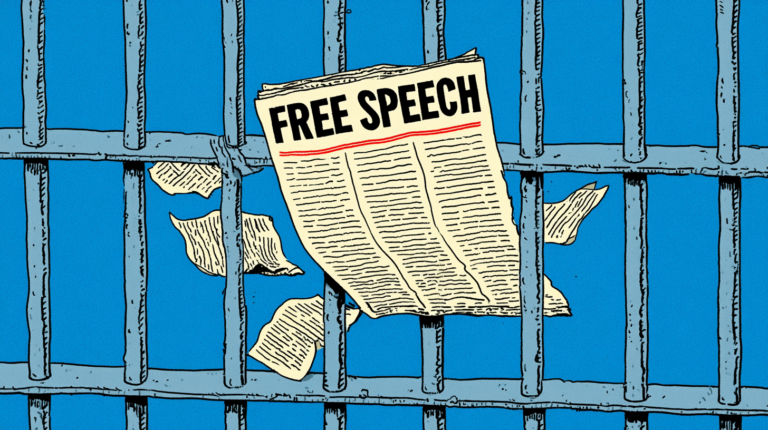
As Jimmy Lai’s imprisonment shows, a country’s economic prosperity means very little if it fails to preserve civil liberties.
In May, President Trump met with Xi Jinping in Beijing, marking the first US presidential visit to China since 2017. Trump returned with agreements to strengthen US–China relations and cooperate on major foreign policy issues. One of the most notable post-meeting developments was the speedy release of Pastor Ezra Jin Mingri, who was detained in October 2025 for leading an underground Christian church. While Jin’s homecoming is a significant victory for religious liberty, Trump was unable to secure the release of another prominent political prisoner: Jimmy Lai, the Hong Kong businessman (and British citizen) who has been in jail for over five years for running the pro-democracy Apple Daily newspaper.
Lai, a self-made entrepreneur and billionaire, had the opportunity to flee before his arrest, but chose to stay to encourage millions of Hong Kongers to keep fighting for the freedom and autonomy that the region has had for decades. His plight resonates strongly with me because of my family’s experiences during the Chinese Communist Revolution, but it should be just as meaningful for every American who believes in the virtues of economic and social freedoms.
In recent years, China has complicated the long-held belief among classical liberals that free markets are key to economic prosperity. Although the country has embraced central planning, it has become the world’s second-largest economy after the United States. Hong Kong is situated in a fragile position: the island has been under British influence and, at times, control since 1842. In 1997, Britain’s lease on the territory ended, and Hong Kong was handed back to China. The “one country, two systems” policy promised that Hong Kong would become part of China while retaining its capitalist economy and partially democratic political system during the 50-year transition period. Activists argue that China has eroded freedoms and punished dissent, leading to major protests in 2014 and 2019.
Yet, as Jimmy Lai’s imprisonment shows, economic prosperity cannot persist unless the country also respects civil liberties. Lai has been detained since August 2020. In February, he was sentenced to 20 years in prison for colluding with foreign forces under the region’s national security law. At age 78, civil rights groups have rightfully called this a “death sentence.” He has been held in solitary confinement, where he has experienced substantial weight loss and health deterioration.
Recently, the Hong Kong government has attempted to confiscate over HK$127 million ($16 million) from Lai, alleging that the funds are linked to his crimes. When a government does not respect civil liberties, economic prosperity reaches only as far as its leaders allow.
Lai represents the change occurring in Hong Kong, from a city that embraced freedoms consistent with British and American systems to one struggling to maintain what it once had. Hong Kong may be thousands of miles away, but the values that Lai and other activists are fighting for are the same ones that Americans believe in: freedom to participate in governance, critique politicians and their decisions, and publish views without fear of retribution. These values should not feel foreign to Americans.
President Trump is set to meet with Xi again next month. The Chinese government’s willingness to free Pastor Jin gives reason to hold onto optimism for Lai, though Trump is correct that it will be “tough” to secure his release. But the United States cannot give up on him. Lai is a hero who has put his own life at stake so that others can continue to fight for our shared values of freedom and human dignity.