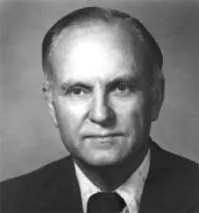
Dr. Sennholz heads the Department of Economics, Grove City College, Pennsylvania. A more elaborate discussion of various efforts at political unification of Europe appears in his book, How Can Europe Survive?, D. Van Nostrand (1955).
The information of the European Economic Community, or Common Market, is another attempt by the governments of Western Europe to escape from the detrimental effects of governmental planning and regulation. Previous attempts took the shape of the Benelux Economic Union, the Economic Commission for Europe, the Organization for European Economic Cooperation, the Council of Europe, the European Payments Union, and the European Coal and Steel Community. All of them reflect the general recognition that high economic productivity and living conditions require some international division of labor and exchange of goods.
The Common Market, which was established by the Treaty of Rome on March 25, 1957, is to be a free trade area consisting of Belgium, France, West Germany, Italy, Luxembourg, and the Netherlands. Its basic features are determined by the following provisions of the Treaty:
1. All foreign trade restrictions among the six member states are to be abolished gradually over a 12 to 15 year transition period. However, where the necessary readjustments are too severe, the transition period may be extended.
2. The member states will impose uniform tariff and other restrictions on the imports from the rest of the world.
3. The movement of labor, capital, and business enterprises among the member states is to be permitted, and all payments are to be freed.
4. Monopolies, cartels, and other trade restrictions are prohibited unless they facilitate improvements in production and distribution or in technical or economic progress.
5. The monetary and fiscal policies of the member states are to be coordinated.
6. The controls of and subsidies to agriculture which will be continued are to be made uniform throughout the Union.
7. The colonies and associated territories of the member states are to be linked to the Common Market.
8. The “Social Fund” is to compensate workers for economic injuries resulting from trade liberalization.
9. The member states, which agree on the need to improve living and working conditions and to equalize such conditions at rising levels, are to establish two investment funds for the advancement of less developed areas, one to be employed in Europe, the other in the associated territories.
A Dubious Terminology
Before we enter into a critical analysis of these community provisions, we must question the use of the adjective “European” in the official name of the Community. The term “European Economic Community” implies a community of all or, at least, most European nations. It suggests some form of unification of Europe. In reality, however, it is an organization of only six nations out of a total of 18 noncommunist nations in Europe. Such outsiders as Great Britain, Switzerland, Norway, Sweden, and others contend, with some justification, that the “European” terminology is misleading if not an outright usurpation. They bitterly reject the implication that their refusal to join is “non-European” or even “anti-European,” or that the Community constitutes the nucleus around which might form a more inclusive European Community. According to most critics in England and other nonmember countries, the “European Economic Community” is but a regional organization that harbors the danger of trade discrimination against nonmembers.
The critical observer also must question the use of the term “market” in the official description of the Community. The term “common market” seems to reflect an objective of a supranational market economy, that is, a large market where economic phenomena are determined and regulated by market forces, such as consumers’ choices and free prices. But such an achievement seems threatened by the existence of numerous non-market factors. Supranational governmental planning, in fact, is to prevail in many phases of the economic life in the Community.
A Subterfuge from the Failure of National Planning
Individual freedom and free trade are opposed to governmental economic planning on every level, be it state, federal, or international. For in every instance, governmental planning means curtailment of individual freedom, interference with the choices and decisions of consumers, and reduction in productivity and output.
But supranational governmental planning, which is a fashionable subterfuge from the disastrous consequences of national economic planning, is subject to a number of additional objections.
It leads to the formation of economic blocs which bring on a further disintegration of the world division of labor and peaceful cooperation. Because supranational economic planning distributes the spoils and privileges of government intervention over different nationalities, it causes strife and conflict among the member states. A planning union, therefore, harbors forces that cause its early disintegration.
When the disastrous effects of national economic planning become apparent to everyone, planners seek solace and hope in international planning. Through international agreements they hope to prevent, or at least delay, the return of competitive capitalism. The European Economic Community is such a delaying action by the planners in Europe.
The imposition of a uniform tariff on imports from the rest of the world is typical government planning. Consumption and production are to be directed and regulated by tariffs. A tariff on Swiss watches, for instance, not only will curtail the enjoyment of Swiss watches by all EEC consumers but also will affect the manufacture of watches within the Community. The protected industry in Germany, France, or Italy will be more profitable than it would be otherwise, and is thus induced to expand. But such an expansion will cause the withdrawal of capital, labor, and materials from other industries and curtail their production. All these adjustments and many indirect effects inevitably result from the tariff intervention.
The Common Market Treaty does not envisage free trade in agricultural products. This limitation affects a vast number of goods which may be called “agricultural.” It is true, governmental regulation of agriculture is to be uniform throughout the union. But this uniformity does not make for free exchange. A uniform subsidy program that is to help the grain farmers, for instance, would be a windfall to farmers in those countries that now pay no subsidy. But it would hardly lead to an unhampered market for agricultural products.
The “Social Fund” to compensate workers for economic injuries resulting from trade liberalization obviously is a nonmarket institution. It is to be financed by the member governments, the funds to be disbursed in a way government officials see fit. As the injury to workers is likely to consist of unemployment caused by market readjustments, the Fund probably will pay a kind of supranational unemployment compensation. But unfortunately, such payments tend to retard the necessary labor adjustments. If they are high, relative to a man’s earnings from labor, they may in fact prevent the readjustment altogether.
The governmental agreement on the need for development is another indication of the nature of the Economic Union. If governments undertake to improve living and working conditions, they usually resort to labor legislation, such as minimum wage laws, to nationalization of industries, formation of governmental enterprises and, above all, intensive labor regulations and controls. The two investment funds for the advancement of less developed areas clearly corroborate this conclusion. For when a government embarks upon investments and developments, it either owns, manages, or controls the enterprise. From the point of view of market adjustment, its investments always disregard the market; the fact that the market hitherto had not provided such investments proves that the government investments are contrary to the market order. The same can be said about the colonial investment fund, The fact that the governments deem it necessary to develop the colonies indicates rejection of the decisions of the market concerning colonial investments and development; thus government planning supersedes the market order.
Another feature of central control over the projected Economic Community is the government control over monopolies, cartels, and other trade restrictions. In order to determine whether such organizations or restrictions “facilitate improvements in production and distribution or in technical or economic progress,” extensive government supervision is required. A new bureaucracy with investigators, prosecutors, and judges is needed to decide on the desirability of certain business organizations. Judging from the American experience with antitrust legislation and regulation, these antitrust provisions of the Treaty will constitute a convenient gateway for government control of big business. Meanwhile, it may be assumed that the numerous government monopolies, cartels, and trade restrictions will be exempt from supranational control by the Community.
The Seeds of Failure
In spite of these new supranational attempts at central planning, there is little prospect for the development of an effective economic bloc. For EEC faces certain difficulties on which all previous attempts at unification have run aground. It harbors the seeds of internal conflict and failure. Supranational coordination of the various governmental policies conflicts with national interests as seen by the planners. Each act of intervention is the result of so-called social considerations and special interests. Governmental intervention is thought to be identical with “social progress.” Therefore, any attempt at supranational coordination necessarily conflicts with national “social progress.” And “social progress” usually prevails over the desire for international coordination.
Take, for instance, the Common Market tariff against the outside world. A supranational agreement on the height of the tariff barriers is most difficult to attain because any change of the present national tariff barriers would conflict with social considerations and special interests. The French automobile industry, for instance, enjoys high tariff protection which safeguards its existence within the French market. On the other hand, Holland, which lacks any significant car production of its own, has no protective trade barriers. How are the two countries to agree on the Common Market tariff? The French will want to continue their protective barriers without which their automobile industry probably could not continue its present operations. The Dutch, on the other hand, will want to import foreign cars.
Import restrictions always cause gains and losses. In a supranational union with outside tariff barriers, the losses and gains are distributed over different nationalities. They become a matter of bargaining, bickering, and conflict between the member governments. It is true, tariff protection is possible within a national economy as long as the majority of the people can be persuaded that some fellow countrymen—for instance, the car makers, wine growers, or dairy farmers—deserve special consideration and protection. But it is quite a different matter to persuade another nation to bear sacrifices for an alien industry clamoring for protection. It is indeed hard to believe that the French and Italian people would consent to higher goods prices because a certain German industry demands protection from American imports. Conversely, German consumers would be reluctant to pay higher prices for certain products merelyto please a French industry clamoring for tariff protection.
Immigration Policy?
The same inherent difficulties exist with regard to the projected freedom of movement of labor, capital, and business enterprises. While the member states will doubtless permit the immigration of capital and enterprises, they may be expected to balk at any emigration. And will a free migration of people ever be permitted? Free migration tends to lower the standard of living of the people receiving the immigrants because it lowers the marginal productivity of labor. Of course, it also increases the marginal efficiency of capital and therefore increases the yields of capital.
In the Economic Union many Italians, whose living conditions are the poorest in the Union, probably would want to seek employment in France, Germany, or Belgium where wage rates are higher and living conditions better. Such a migration would reduce wage rates in France, Germany, and Belgium, although it would improve conditions in Italy. The crucial question is: Are the French, German, or Belgian workers prepared to accept wage reductions, or suffer unemployment, to accommodate an influx of aliens? In my belief, this question must be answered in the negative. The projected freedom of migration within the Economic Union, therefore, is illusory like many other provisions of the Treaty.
The two investment funds for the advancement of less developed areas will face similar nationalistic resistance. Bearing in mind the present pressure for government spending and the resultant government deficits, will any government be willing to contribute to a fund for the development of a “less developed” area in another country? Will the Germans consent to their money being spent on the development of French territories, or the French willingly contribute toward the development of Italy? It is more likely that the German contribution will be used in “less developed” German areas, the French contributions in France, and so on.
Conflicting Monetary Policies
Also, the planned coordination of monetary and fiscal policies will probably meet failure because of national policies in these matters. The various member governments tend to expand credit in various degrees. Depending on the state of business, on unemployment, on the desire for growth, or on mere political considerations, one government will want to “stimulate” its national economy through credit expansion, deficit spending, or both. Another government may endeavor to stabilize its currency through hard-money policies. The former soon will lose its foreign exchange reserves, the latter will accumulate them. A foreign exchange imbalance will arise. Judging from past experience, the foreign exchange shortage probably will be met with foreign exchange controls, import quotas, and other trade restrictions against foreign countries, including the Community countries.
A coordination of fiscal policies—spending and taxation—would require a readjustment of the whole economy. For economic production always adjusts to a given tax structure. One can readily imagine the public protest and political pressure by those people who would be hurt by a tax coordination. It is unrealistic to assume that a Frenchman would consent to new or higher taxes merely to be coordinated with German taxpayers, or vice versa.
The foreign aspect of state intervention is economic nationalism which constitutes a continuous source of international conflict. Two interventionist systems cannot be coordinated unless the coordination is accompanied by a political unification. The latter, however, would necessitate a radical change of national policies and a painful economic readjustment. It is unlikely that anything but brute force could bring this about. And a political and economic unification through force would in turn generate other powerful forces that soon would cause disintegration.
Free Trade Needs No Agreements
EEC as a supranational union for central planning must be expected to meet with failure. But EEC also reflects the growing recognition that economic progress and prosperity require foreign trade and markets. This laudable recognition points toward the only conceivable future for the Community. As a supranational organization for the reduction of trade barriers, EEC could indeed be the forerunner of a growing free trade area.
But, are international agreements and supranational organizations necessary for achieving free trade? Why do not the member governments merely abolish their trade restrictions if they really want the freedom to trade? Let each one abolish its own tariffs, quotas, foreign exchange controls, and other governmental restrictions. There is no need for concerted action. The country that would adopt free trade first would benefit immediately. Its economic growth and prosperity would show the way for others to follow.
International agreements tend to hold back the nations most eager to re-establish the freedom to trade. The member state most reluctant to abandon its controls and restrictions most likely sets the pace for the projected trade liberalization. And all other governments then have a welcome excuse for a continuation of their restrictions “because this or that other government does not participate.” Thus, international agreements tend to shift the responsibility for governmental controls from one country to another and therefore perpetuate them. And this omninous tendency, built into the European Economic Community, precludes its success.
***
Ideas on Liberty
Foreign Policy
George Washington, Letter to Henry Laurens, 1778
It is a maxim founded on the universal experience of mankind that no nation is to be trusted farther than it is bound by its interest…